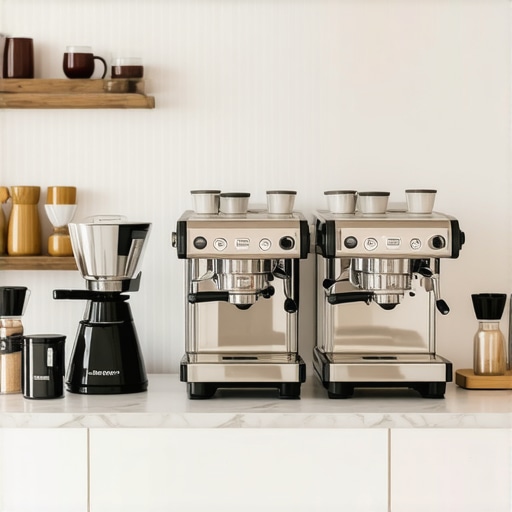
There was a morning not too long ago when I stood in my kitchen, staring at a battered espresso machine that refused to brew a decent shot. The steam wand sputtered, the grinder clattered out of sync, and I realized I was fighting a losing battle—my coffee was turning into a bitter disappointment. That lightbulb moment made me question everything I thought I knew about making café-quality espresso at home.
Why Settling for Less When Great Coffee Is Within Reach
The truth is, we all want that perfect cup—rich, smooth, and bursting with flavor—without having to trek to a crowded café. But with so many options flooding the market in 2025, choosing the right home espresso machine and barista gear can feel overwhelming. I’ve been there, making costly mistakes early on that set me back and left me frustrated. Now, I know that the secret isn’t just in the machine, but in the combination of quality equipment and proper technique. If you’re tired of mediocre coffee, stick around. I’ll share how to cut through the noise and find gear that makes brewing at home a joy, not a chore.
Does All the Hype About Home Espresso Machines Really Matter?
Early in my journey, I bought a fancy-looking espresso machine that promised barista-level results. Turns out, it was more style than substance. I wasted hours trying to get consistent shots, only to realize I was missing crucial accessories and understanding the nuances of grind size and tamp pressure. That mistake taught me a valuable lesson: the right gear makes all the difference, but it has to be paired with knowledge and technique. If you want to avoid my rookie errors, I recommend checking out trusted resources like this guide on barista gear.
So, are you facing the same dilemma—investing in expensive machines but still not getting that perfect shot? Or maybe you’re unsure whether to splurge on top-tier gear or start simple? You’re not alone. The good news is, with a little guidance, you can elevate your home brewing game significantly. Next, I’ll walk you through the key factors to consider, so you can make an informed decision and finally enjoy espresso that rivals your favorite coffee shop.
Choose the Right Equipment for Your Brew
Start by selecting an espresso machine that matches your skill level and budget. For beginners, a semi-automatic machine offers control without overwhelming complexity. If you’re more experienced, consider fully automatic or super-automatic models that simplify the process. Remember, a high-quality machine is the foundation of great espresso; don’t skimp here. Check out the latest top picks in 2025’s best home espresso machines for options tailored to different needs.
Select a Consistent Coffee Grinder
The grinder is your secret weapon for flavor extraction. Invest in a burr grinder with micrometric adjustments, enabling precise control over grind size. A consistent grind ensures even extraction, preventing bitter or weak shots. I once tried to save money with a cheap blade grinder; my shots were uneven and sour. Upgrading to a quality burr grinder turned my mornings around. For guidance, see this comprehensive guide to coffee grinders.
Perfect Your Espresso Technique
Precision is key. Measure your coffee dose using a digital scale—aim for about 18-20 grams for a double shot. Distribute the coffee evenly in the portafilter, then tamp with consistent pressure—roughly 30 pounds of force. Think of tamping as pressing a pancake; even pressure prevents water from channeling through weak spots. I once rushed this step, resulting in a weak, watery shot. When I slowed down and tamped firmly, my espresso became rich and balanced. Practice makes perfect. For detailed tips, check this guide on tamping and extraction.
Master the Extraction Process
Start the machine, then watch the shot closely. A good extraction takes about 25-30 seconds for a double shot. The flow should be a steady, thin stream resembling warm honey. If it drips or takes too long, adjust your grind size—finer for slower flow, coarser for faster. I remember battling with over-extraction, which made my espresso bitter. Fine-tuning the grind and timing helped me achieve that perfect balance. Use a timer and keep notes on your adjustments. For more on perfect extraction, visit this detailed guide.
Froth Milk Like a Pro
A silky microfoam enhances your espresso experience. Pour cold milk into a pitcher, then submerge the steam wand just below the surface. Turn on steam and stretch the milk by creating a whirlpool—listen for a consistent hissing sound. Once it heats to about 150°F, turn off steam and swirl the pitcher to polish the foam. I once struggled with large bubbles until I learned to position the wand correctly and control the steam pressure. For top tips, see this milk frothing tutorial.
Combine and Enjoy
Pour your steamed milk into the espresso slowly, starting from the center, then gently swirl to blend. The art is in the pour—creating latte art is optional but rewarding. With consistent practice, I managed to craft beautiful rosettas and hearts, turning my kitchen into a mini café. Remember, every step counts, from grind size to tamp pressure and milk texture. Keep refining your technique, and your home espresso setup will rival any coffee shop. For a complete setup, explore top-rated machines and accessories for 2025.
Many home baristas fall into the trap of believing that simply owning high-end equipment guarantees perfect espresso. However, there are nuanced mistakes that even seasoned enthusiasts often overlook. For instance, choosing a machine based solely on brand reputation without considering your specific needs can lead to frustration. A common myth is that more expensive equipment automatically produces better results. In reality, the key lies in selecting gear that matches your skill level and learning how to optimize it. For example, a high-end machine paired with an improper grind or tamp pressure can still produce mediocre espresso. To truly elevate your brewing, focus on understanding how each component interacts and invest in proper technique. For insights on selecting suitable equipment, check out this resource on barista gear.
Another overlooked aspect is the importance of grinder calibration. Many assume that a good grinder is enough, but even top-tier burr grinders require periodic adjustments to maintain consistency. Using a dialed-in grinder ensures even particle size, which is essential for balanced extraction. Neglecting this can result in over-extraction or under-extraction, making your espresso bitter or weak. Additionally, many home brewers underestimate the impact of water quality. Hard or impure water can clog your machine and alter the taste. Using filtered water can make a significant difference. For advanced tips on grinder maintenance and water considerations, visit this comprehensive guide.
What Advanced Baristas Know About Temperature Stability
Temperature control remains one of the most misunderstood factors among home espresso enthusiasts. Many assume that simply turning up the boiler temperature will improve shot quality, but this can lead to uneven extraction or burnt flavors. Professional machines often incorporate thermal stability systems, which maintain consistent temperature during brewing. Achieving this at home requires understanding the nuances of heat exchange and machine design. Using a machine with a saturated group head or a PID controller can vastly improve consistency. According to espresso experts, precise temperature management is the secret to extracting maximum flavor from your beans. For more insights on optimizing temperature stability, explore this detailed guide.
Finally, many home baristas overlook the importance of routine maintenance. Regular cleaning of the group head, portafilter, and steam wand prevents buildup that can impair performance and taste. Skipping maintenance might seem trivial but can cause long-term damage and inconsistent results. Remember, investing time in upkeep is just as important as selecting the right gear. Have you ever fallen into this trap? Let me know in the comments.
Keep It Running Smoothly with the Right Tools
Maintaining your espresso setup is crucial for consistently delivering café-quality coffee. Over the years, I’ve found that investing in specific tools makes all the difference. For example, a dedicated cleaning brush set designed for portafilters and group heads keeps your machine’s internals free from buildup, ensuring optimal heat transfer and water flow. I personally use a Pallo cleaning disc to scrub my group head after every few pulls—this simple step prevents bitter flavors caused by residual coffee oils and mineral deposits. To prevent scale buildup, I highly recommend a descaling solution like Dezcal, which I use monthly to keep my boiler and pipes in top shape. These maintenance routines extend the lifespan of your investment and keep your espresso tasting fresh. Regularly replacing worn seals and gaskets also prevents leaks and maintains pressure stability, which is vital for extraction consistency. For detailed maintenance schedules, check this comprehensive guide.
How do I maintain my espresso equipment over time?
Consistency in your maintenance routine is key. Start by cleaning your group head and portafilter daily with a brush and hot water, avoiding harsh chemicals that can damage seals. Once a week, run a cleaning cycle with a specialized espresso machine cleaner—a practice I swear by for preventing flavor contamination. Descaling your machine every 1-3 months, depending on your water hardness, prevents mineral buildup that can impair heat stability and water pressure. I’ve found that using filtered water significantly reduces the frequency of descaling and improves overall taste. Additionally, regularly calibrate your grinder to maintain particle size consistency, which is essential for extraction. For more on grinder calibration and water considerations, visit this detailed guide. Investing in these maintenance habits ensures your machine remains reliable and your coffee stays exceptional.
What Tools Will Elevate Your Home Barista Game
Beyond basic cleaning, there are advanced tools that can help you troubleshoot and refine your brewing process. A digital thermometer is invaluable for dialing in your water temperature—aiming for 198-202°F (92-94°C)—which I do to ensure optimal extraction. I personally use the ThermoWorks Thermapen for quick, accurate readings. Additionally, a tamp pressure gauge helps me apply consistent tamping force, preventing channeling and uneven extraction. For grinder calibration, a particle size tester allows me to verify grind consistency, particularly when switching beans or adjusting settings. As espresso trends evolve, I predict that smart calibration tools and IoT-connected devices will become standard, allowing real-time monitoring and automatic adjustments. For now, I recommend starting with essential tools like a barista gear kit that includes a tamper, knock box, and milk thermometer. These investments improve precision and help you maintain peak performance over the long haul.
Level Up Your Maintenance Routine Today
One of the most impactful steps you can take is to integrate a regular cleaning and calibration routine into your schedule. For example, setting a weekly reminder to run a cleaning cycle with descaling solution and inspecting seals can prevent costly repairs and flavor issues. I encourage you to try using a digital thermometer to fine-tune your water temperature—small adjustments here can dramatically improve shot quality. Remember, consistent maintenance is the backbone of long-term espresso excellence. Want to make a real difference? Start by investing in a high-quality milk frother and a precision grinder, then commit to routine upkeep. This combination will keep your setup performing at its best for years to come, ensuring every shot is as good as the last.
What I Wish I Knew When I Started Brewing
One of the most eye-opening lessons I learned was that even the most expensive espresso machine won’t save a poorly calibrated grinder or sloppy technique. Early on, I spent a fortune on a fancy machine, only to realize that understanding grind size and tamp pressure was far more important. That lightbulb moment made me focus on precision in every step of the process, transforming my coffee from bitter disappointment to café-quality espresso. If I could go back, I’d tell myself to prioritize learning the fundamentals over chasing the latest gear trends.
Tools That Transformed My Home Barista Journey
Over time, I discovered that certain tools made a huge difference. A high-quality digital thermometer helped me perfect my water temperature, while a precision grinder ensured consistency in particle size. A tamp pressure gauge taught me to apply uniform force, which was crucial for even extraction. These tools, combined with routine maintenance, kept my setup running smoothly and my espresso tasting fresh. Investing in the right equipment and maintenance routines is the secret to elevating your home brewing game.
![Why 2026 AI Pressure Profiling Fails on Light Roasts [Fix]](https://espressotechguide.com/wp-content/uploads/2026/04/Why-2026-AI-Pressure-Profiling-Fails-on-Light-Roasts-Fix.jpeg)
Leave a Reply