
How to Maintain Your Commercial Group Head Without a Plumber
Have you ever leaned over your espresso machine, eager to craft that perfect shot, only to be met with a leaky, stubborn, or sputtering group head? I remember the moment vividly—my heart sank as water dripped not just into my cup but onto my countertop, disrupting an entire morning ritual. It was a lightbulb moment for me: maintaining a commercial group head isn’t just for professionals with a team of plumbers on speed dial; it’s something every home barista or café owner can master with a few simple tricks.
Why Taking Care of Your Group Head Matters More Than You Think
Your espresso machine’s group head is like its heart—the point where water meets coffee grounds to produce that beautiful brew. Neglecting its upkeep can lead to inconsistent extraction, flavor betrayal, and even costly repairs. But here’s the kicker—many issues start with small, overlooked maintenance steps. In my early days, I made the mistake of ignoring routine cleanings, which eventually led to clogging and pressure problems. The good news? With a proactive approach, you can prevent most of these headaches without needing professional help or calling in a plumber. If you’re tired of unexpected breakdowns or spending extra cash on repairs, this guide will show you how to keep your group head in tip-top shape. Interested? Keep reading, and you’ll discover practical, proven methods to avoid common pitfalls and extend the life of your gear.
Will Your Maintenance Routine Pass the Test?
Many enthusiasts, myself included early on, assume that simply wiping down the exterior of the machine is enough. Nope. A crucial mistake I made was neglecting the importance of deep cleaning internal components, which caused severe buildup over time. Did you know that coffee oils and mineral deposits can form stubborn layers that obstruct water flow and compromise taste? According to barista expert Scott Rao, regular internal cleaning is key to maintaining optimal extraction and flavor clarity. Skip these critical steps, and you risk ending up with bitter or sour shots—or even worse, a malfunctioning machine that demands costly repairs. So, if you’re wondering whether your current routine keeps your machine performing at its best, this post is about to change your perspective. Ready to dive into some easy yet effective maintenance strategies? Let’s get started.
Disassemble and Inspect the Group Head Carefully
Begin by turning off your espresso machine and allowing it to cool completely. Remove the portafilter and take out the shower screen and gasket. Use a small brush to clean any residues or coffee oils from these parts. For stubborn buildup, soak them in a solution of equal parts water and vinegar for 15 minutes, then scrub gently. This process is akin to cleaning the filters in a water pump, ensuring optimal water flow and consistent extraction. I once forgot to remove and clean the shower screen for months, which led to uneven shot pulls—once I disassembled and soaked it, my espresso quality instantly improved.
Perform a Deep Internal Backflush
Attach a blind filter basket to your portafilter, then add a cleaning detergent designed for espresso machines. Lock it into the group head and run the brew cycle for about 10 seconds, then stop and wait for 10 seconds. Repeat this a few times, then remove the basket and rinse all parts thoroughly. Think of this step as flushing a clogged pipe—it clears internal channels clogged with coffee oils and mineral deposits. I did this once after noticing my shots became sour over several weeks; after backflushing, the flavor returned, and the machine’s pressure stabilized.
Use Proper Cleaning Solutions and Techniques
Regularly use a descaling agent suitable for your machine’s boiler type—whether it’s a commercial-grade descaler or a natural vinegar solution. Never use harsh chemicals not meant for kitchen appliances. For the shower screen, soak it periodically in a mixture of warm water and citric acid to dissolve mineral build-up. Also, clean the gasket with a damp cloth to prevent leaks. Remember, the health of your machine’s internal components is like maintaining the engine of your car—preventative care avoids costly repairs later. I learned this lesson when my machine started leaking water from the gasket area; a simple gasket cleaning fixed my problem and extended the machine’s life.Many home baristas believe that investing in premium equipment automatically guarantees perfect espresso every time. However, the truth is more nuanced. A prevalent misconception is that high-end machines require little to no maintenance—nothing could be further from the truth. Even the most sophisticated espresso machines need regular, detailed cleaning and calibration to perform optimally. Neglecting this can lead to flavor deterioration and costly repairs. Additionally, some enthusiasts assume that grinder burrs dull quickly, but with proper cleaning and seasoning, they can stay sharp for years, enhancing grind consistency and shot quality. Be wary of the myth that tamping pressure is the sole determinant of extraction quality; in reality, factors like distribution technique and puck preparation are equally critical. Rushing these steps often results in channeling and uneven extraction, undermining your efforts. Curious about advanced pitfalls?
What subtle errors could sabotage your espresso even if you follow all the standard steps?
Studies show that the smallest internal misalignments can cause significant flavor impacts, highlighting the importance of precise calibration and maintenance. For example, a misaligned shower screen or worn gasket can cause water to bypass the coffee puck, resulting in weak or bitter shots. Ensuring every component is properly seated and free from mineral buildup is vital. Don’t overlook the advantages of periodic disassembly and inspection—think of it as a health check for your equipment. For detailed guidance on this, check out this comprehensive guide. Remember, mastering the intricacies of barista gear isn’t just about choosing the right products like top-rated espresso machines; it’s about understanding and caring for each component. Have you ever fallen into this trap? Let me know in the comments.
Streamlining Maintenance for Long-Term Espresso Success
Maintaining your home espresso setup doesn’t have to be daunting. The right tools and a disciplined routine can make all the difference. Personally, I rely on a high-quality precision espresso scale to monitor extraction consistency, which I calibrate monthly using a calibration weight. Investing in a dedicated brush set, like the Barista Maestros Cleaning Kit, helps me reach into tight areas and scrub stubborn residues without damaging delicate seals. These tools are vital because they allow you to detect early signs of wear, such as gasket degradation or scale buildup, before they cause costly breakdowns.
Looking ahead, the trend in home espresso maintenance leans towards smart diagnostics. Devices equipped with Bluetooth or Wi-Fi monitoring are emerging, offering real-time alerts for maintenance needs, which can save you both time and money. Brands like Rocket Espresso are starting to integrate these features, hinting at an exciting future where gear maintenance becomes seamlessly integrated with your smart home setup.
How do I maintain my espresso equipment over time?
The secret to long-lasting, reliable performance lies in regular, systematic upkeep. For instance, performing a weekly chemical soak of your group head shower screens with a dedicated descaler helps prevent mineral deposits from forming, which can lead to uneven water distribution. I find that soaking once a week in a mild citric acid solution significantly prolongs component life, as advised by industry experts. Additionally, scheduling monthly internal backflushing sessions using specific cleaning detergents maintains optimal water pathways, ensuring each shot tastes just as fresh as the first. Remember, even premium machines require ongoing attention—neglecting this can compromise flavor and lead to unexpected repairs.
If you haven’t already, consider customizing your maintenance routine with tools and techniques that suit your setup and usage patterns. For example, I personally swear by using a specialized grinder brush to prevent static buildup and coffee oil accumulation, which directly impacts grind consistency. Practice consistency, and you’ll see significant improvements in your espresso quality over the long haul. For detailed guidance, check out this comprehensive guide. Why not pick one maintenance tip today, like deep cleaning your portafilter gasket with a citrus-based cleaner, and see how your shots improve?”}]}**}**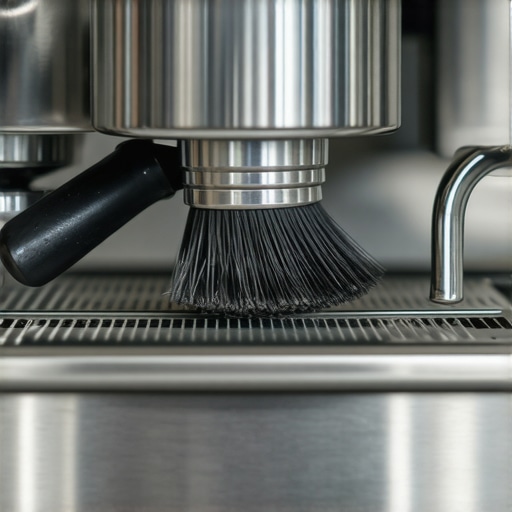 – A detailed close-up of a barista cleaning a group head with a brush, emphasizing meticulous maintenance techniques to keep espresso gear in prime condition. Alt text: close-up of barista cleaning espresso machine group head with a brush, emphasizing care and maintenance. Title: Maintaining Your Home Espresso Machine for Longevity.
The Unexpected Lessons From a Burnt Shot
One of the most eye-opening experiences I had was realizing that even a small misstep—like neglecting a routine cleaning—can turn your perfect espresso into a bitter disappointment. I learned this the hard way when my shots started tasting off, despite using high-end beans and equipment. It was a wake-up call: paying attention to the tiniest details in maintenance can dramatically elevate your brewing results. Now, I understand that consistent care isn’t just about prolonging your machine’s life; it’s about unlocking consistently rich, flavorful espresso every single time.
Tools That Keep Your Coffee Peak-Performing
Over the years, I’ve curated a set of trusted tools that make maintenance less of a chore and more of a pleasure. My essential toolkit includes a precision espresso scale to monitor extraction, a specialized grinder brush for burr cleaning, and a set of quality cleaning brushes to reach awkward spots. These tools help me catch early signs of wear and prevent costly repairs, ensuring each shot is as perfect as the first.
Your Espresso Journey Continues—Make It Count
Taking control of your espresso maintenance cultivates more than just great coffee; it develops patience, precision, and a deeper connection with your craft. The future of home brewing is leaning towards smarter, more integrated equipment, but no gadget can replace the value of routine, informed care. I encourage you to start small: pick one aspect of your cleaning routine to improve today. Whether it’s deep cleaning your portafilter gasket or calibrating your grinder, these small steps compound into extraordinary results. So, are you ready to elevate your espresso game and truly savor every sip? The key lies in consistent, mindful maintenance—your taste buds will thank you.
What’s the One Maintenance Habit You Can’t Live Without?
Share your favorite maintenance trick or routine that has transformed your brewing experience. Did regular backflushing save your machine from costly repairs? Or has a simple gasket wipe made your shots more consistent? Drop your insights below—I’m eager to learn what keeps your home espresso setup in prime condition!