Stop Guessing. Start Measuring Your Espresso Hardware Performance.
Engineering the perfect extraction through objective hardware analysis.
We strip away romanticized marketing to analyze espresso machines and grinders based purely on thermodynamics and mechanics. Access data-driven teardowns, Scace temperature logs, and particle distribution metrics.
Objective Metrics for Precision Extraction
🌡️ Thermal Stability Testing
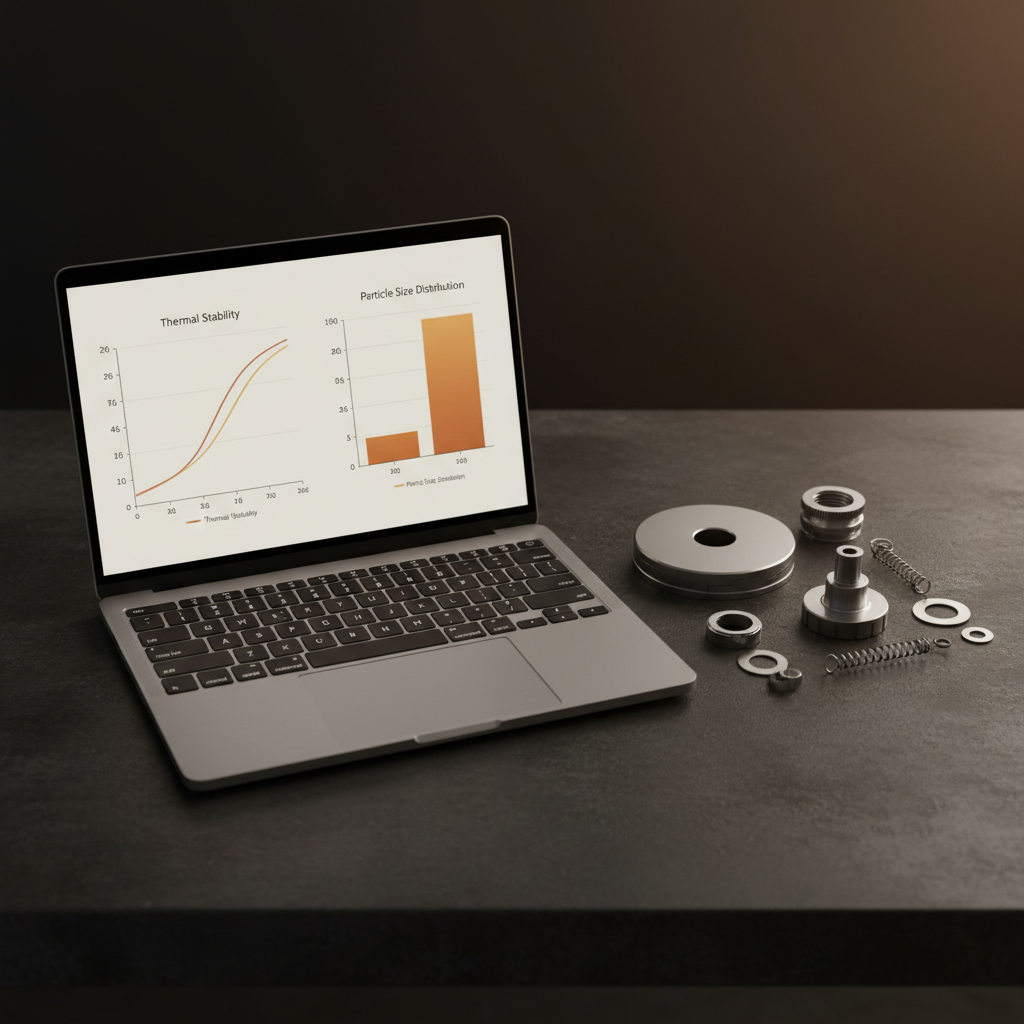
We map group head temperature fluctuations using Scace II thermofilters. You see exactly how a machine recovers after pulling 5 consecutive shots in 10 minutes.
🔬 Particle Size Distribution
Taste is subjective but laser diffraction is not. We measure grinder output to quantify fines production and boulder ratios for flat and conical burr sets.
🔧 Component Teardowns
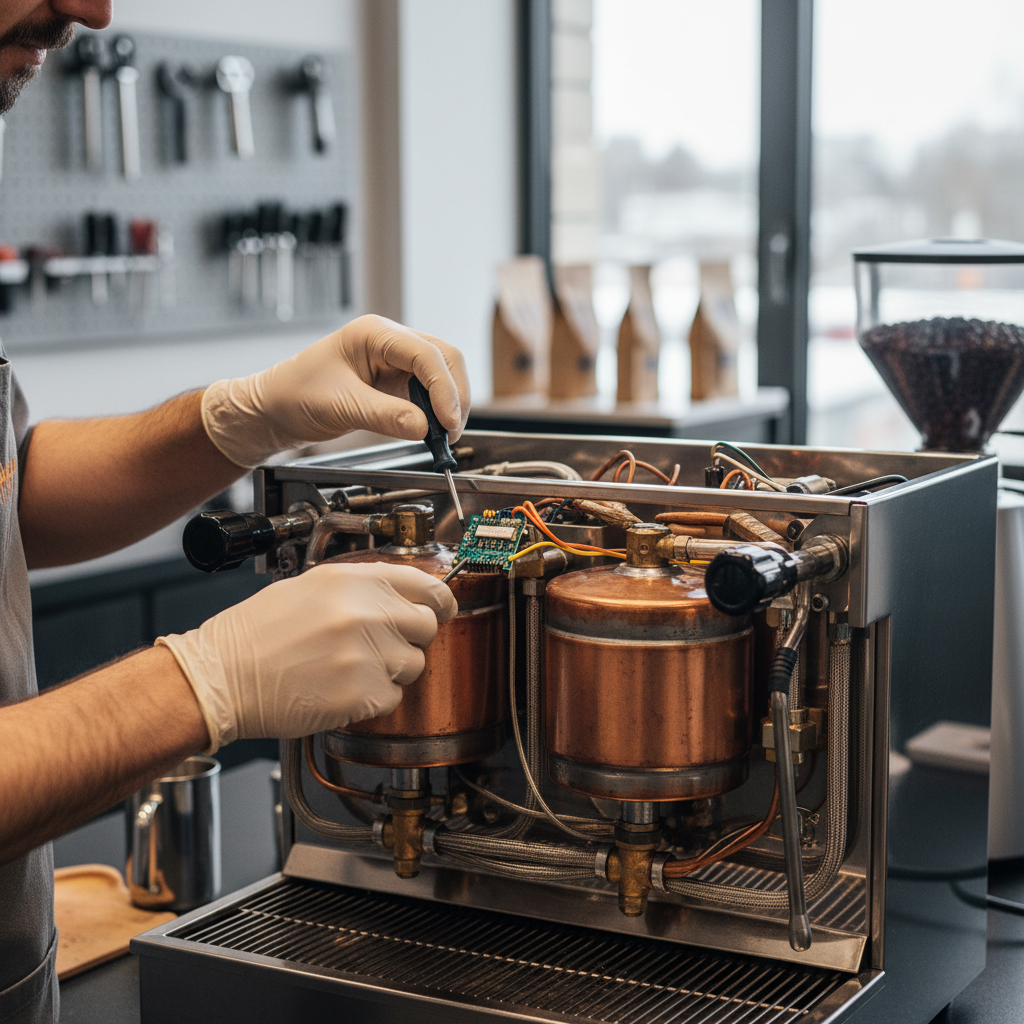
We open the chassis to inspect boiler materials, pump mounting, and wiring harnesses. If a manufacturer uses plastic OPV valves next to a 120°C steam boiler, we document it.
💧 Flow Rate Profiling
Volumetric consistency dictates extraction yield. We chart the exact water debit over 30 seconds to identify pump ramp-up curves and restrictor efficiency.
📅 Preventive Maintenance Schedules
Based on industrial plant experience, we provide exact timelines for descaling, gasket replacement, and burr seasoning to prevent premature hardware failure.
How We Evaluate Espresso Equipment
1
Baseline Benchmarking
We pull 50 shots through a factory-calibrated machine using a control roast. We log baseline TDS, extraction yield, and pump pressure stability.
2
Internal Component Inspection
We dismantle the unit to evaluate the thermal mass of the group head, boiler insulation, and PID sensor placement. We verify if the internal build matches the marketing claims.
3
Stress Testing and Data Publication
We run the equipment under commercial-volume loads for 48 hours. We then publish the raw thermal logs, particle distribution charts, and maintenance warnings.
Hardware Diagnostics and Performance Data
Prosumer Dual Boiler (E61 Group)
Before: User reported sour shots despite a 93°C PID setting.
After: Scace testing revealed a 4°C offset, allowing us to correct the PID to achieve a stable 93.5°C at the puck.
⏱ 48 hours
64mm Flat Burr Grinder
Before: Inconsistent extraction times varying by 6 seconds between shots.
After: Laser analysis showed 18 percent fines variation, prompting a burr realignment that reduced variance to 2.1 percent.
⏱ 14 days
Commercial Heat Exchanger (Austin Cafe)
Before: Flash boiling caused channeling during morning rushes.
After: Installed a 0.6mm flow restrictor, dropping the idle flush requirement from 8 seconds to 2 seconds.
⏱ 7 days
Hardware Analysis Categories
⚙️ Espresso Machine Teardowns
Deep-dive inspections of internal components. We evaluate boiler thickness, pipe routing, and electronic component shielding against heat degradation.
📊 Grinder Particle Analysis
Objective measurement of burr geometry performance. We chart the exact distribution of coffee particles to determine suitability for light versus dark roasts.
📈 Thermal Profiling Reports
Scace II temperature logs for single boiler, heat exchanger, and dual boiler machines. Know exactly what temperature hits your coffee puck.
🧪 Water Chemistry Diagnostics
Hard water destroys boilers. We analyze filtration systems and provide exact ppm targets for calcium and magnesium to prevent scale buildup.
🛠️ Modification Guides
Step-by-step instructions for installing PID controllers, rotary pumps, and flow control devices. We provide the wiring diagrams and pressure metrics required.
🧽 Maintenance Protocols
Industrial-grade cleaning schedules. Learn exactly when to backflush with detergent, replace group gaskets, and rebuild steam valves to avoid downtime.
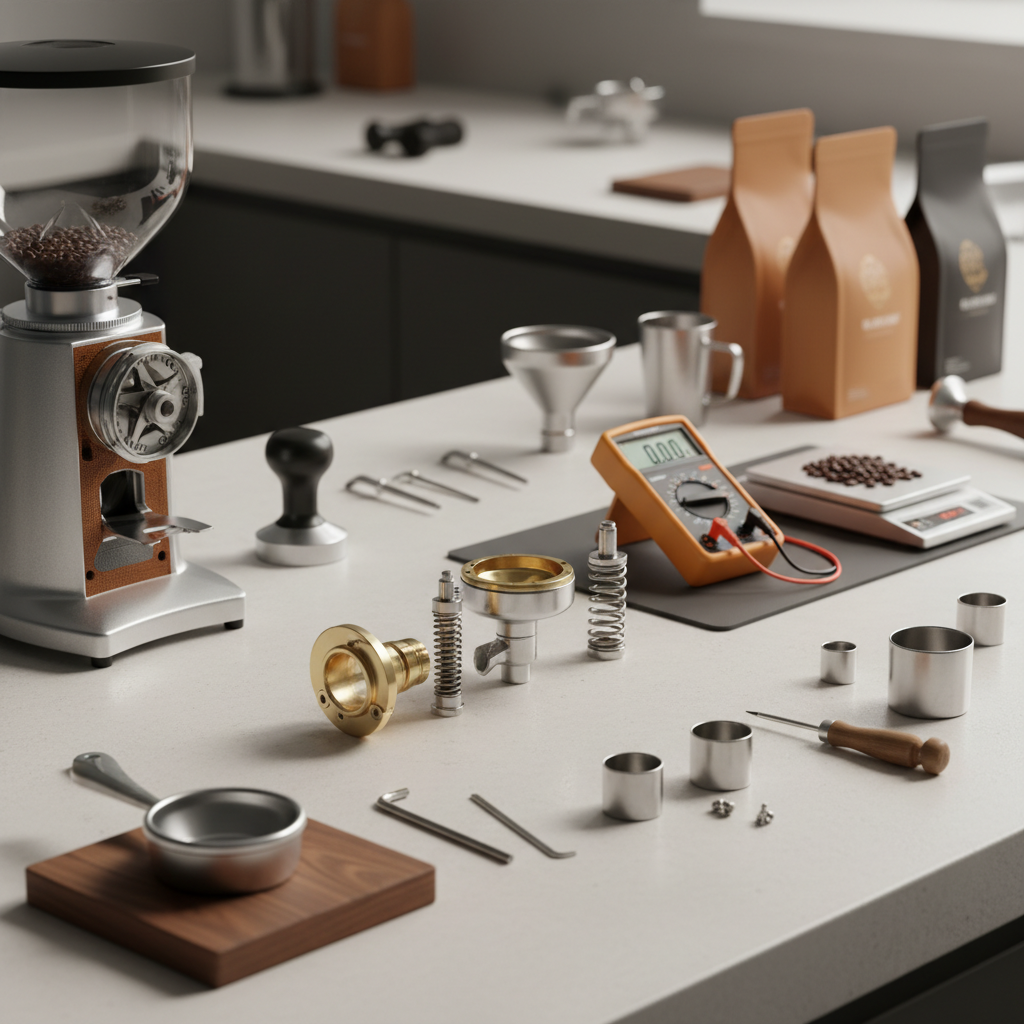
Engineered by Tibor Mondok, Plant Manager at Roastar Zrt.
The espresso industry is plagued by subjective tasting notes and romanticized marketing. When a manufacturer claims their new machine delivers unparalleled temperature stability, consumers are expected to take their word for it. We do not. At Espresso Tech Guide, we measure exactly what happens between the pump and the portafilter.
My background is in industrial coffee production. As Plant Manager at Roastar Zrt., I oversee equipment that runs 24 hours a day, processing metric tons of coffee. In that environment, a 2-degree temperature variance or a 5 percent shift in particle distribution results in massive financial loss. I bring that exact same analytical rigor to consumer and prosumer espresso hardware.
We built this database because home baristas and cafe owners in San Antonio, Austin, and Phoenix were making $3,000 purchasing decisions based on sponsored YouTube videos. We strip away the aesthetic appeal and focus purely on thermodynamics, fluid dynamics, and mechanical reliability. If a $4,000 machine uses a cheap plastic OPV valve next to a 120°C steam boiler, we document it and publish the findings.
Our methodology relies on Scace II thermofilters, laser diffraction particle analyzers, and complete chassis teardowns. We do not care how the espresso machine looks on your kitchen counter. We care about extraction yield, flow rate consistency, and the exact thermal mass of the group head. This is objective hardware analysis for those who demand precision.
Frequently Asked Questions
Why do you use a Scace device instead of just measuring the water from the group head?
Measuring free-flowing water from a group head ignores the thermal mass of the coffee puck and the flow restriction of a real extraction. A Scace II thermofilter simulates a standard 9-bar extraction while logging the exact temperature at the simulated puck surface. This is the only way to measure true thermal stability.
How often should I actually descale a dual boiler machine?
You should prevent scale entirely, not remove it. Descaling acids degrade internal copper and brass components, often dislodging scale chunks that clog 0.5mm flow restrictors. Feed your machine water with a total hardness between 35 and 85 ppm, and you will never need to run a descaling cycle.
Does burr geometry really matter more than burr size?
Yes. A 64mm flat burr designed for high-uniformity filter coffee will produce a completely different particle size distribution than a 64mm traditional espresso burr. We measure these differences via laser diffraction to show exactly how burr geometry dictates fines production and extraction yield.
Why do my extraction times vary by 5 seconds when I haven’t changed the grind setting?
This is typically caused by grinder retention or thermal expansion in the espresso machine. If your grinder retains 3 grams of coffee, your first shot of the day includes stale grounds that flow faster. Purge 3 grams before your first shot and monitor the pump pressure gauge to isolate the variable.
Stop Relying on Subjective Reviews.
Access our complete database of Scace temperature logs, grinder particle distributions, and internal hardware teardowns.
Written & Reviewed By
Tibor Mondok
Plant Manager at Roastar Zrt.
Tibor Mondok is a seasoned professional in the coffee industry, currently serving as the Plant Manager at Roastar Zrt. With extensive experience in the technical and operational aspects of coffee production, Tibor specializes in the after-sales service of high-end espresso machines and grinders. His deep understanding of the mechanical intricacies of brewing equipment ensures that every cup meets the highest standards of quality. Beyond the technical side, Tibor is an accomplished barista who frequently represents his team at international trade fairs, showcasing the synergy between precision engineering and the art of coffee preparation. At espressotechguide.com, Tibor leverages his comprehensive knowledge of roasted coffee and espresso technology to provide readers with authoritative insights into equipment maintenance, selection, and optimization. His dual perspective as both a technical manager and a hands-on barista makes him a unique voice in the specialty coffee community. He is dedicated to sharing his technical expertise to help coffee enthusiasts and professionals alike master their equipment and elevate their brewing experience.
Latest from Our Blog
Why Your Espresso Flow Rate Speeds Up Mid-Shot
It is 6:45 AM on a rainy Tuesday. Your eyes are half-open, but your hopes are high as you lock…
The Best Way to Clean a Grinder Without Taking the Burrs Out
Yesterday morning, I woke up craving a bright, sweet washed Ethiopian brew. I dialed in, pulled the shot, and took…
How to Fix a Wobbly Portafilter Handle for Good
I was right in the middle of pulling a gorgeous, syrupy shot of single-origin Ethiopian coffee last Tuesday morning when…