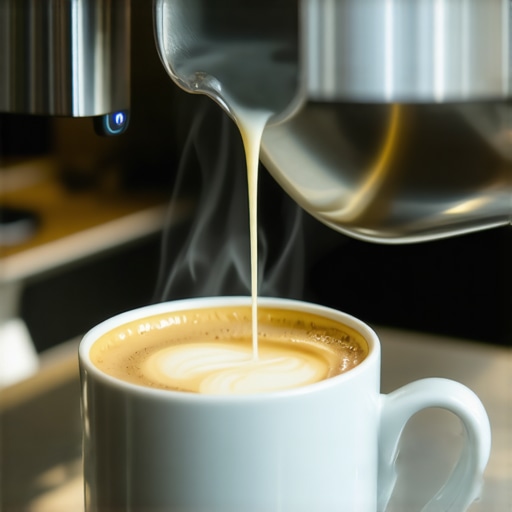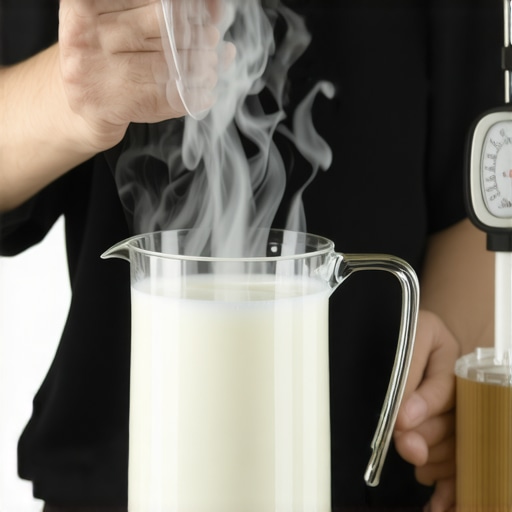
The Hand Position That Stops Your Milk From Swirling Too Early
Have you ever watched your milk swirl into your espresso and felt that familiar twinge of frustration when it spirals out of control, leaving you with a messy drippy pitcher and a latte that doesn’t quite look right? I remember the moment I realized my hand position was the missing piece in my home barista toolkit. It was late one evening, frustration mounting as I struggled with yet another failed milk pour. That lightbulb moment—spotting my own shaky grip—changed everything.
Why Your Hand Might Be Sabotaging Your Milk Foam
Getting perfectly textured milk isn’t just about the right equipment or temperature; it’s also about your hand position. I used to think that I needed stronger wrists or a fancy frothing wand to achieve smooth microfoam. Turns out, a simple adjustment in how I held my pitcher made all the difference. When your hand is positioned just right, it helps control the flow of milk, preventing unwanted swirling and giving you that beautiful, silky pour everyone admires. If you’ve ever faced the issue of milk swirling too early or puddling at the bottom of the pitcher, your grip might be the culprit. Proper hand positioning provides stability and allows for fine control, leading to more consistent pours. For more ideas on choosing the best tools, check out this guide on barista gear.
Is Your Hand Position Actually Worth the Hype?
Early in my barista journey, I made a crucial mistake—assuming that technique was less important than equipment quality. I ignored the importance of my grip and posture, thinking I could just pour faster or colder milk to make up for it. The result? Inconsistent milk textures, messy pours, and a lot of wasted time redoing my drinks. I wish I had known sooner that a small change in hand placement could have saved me so much trouble. Once I started focusing on my grip—keeping my wrist steady and positioning my hand to support a smooth, controlled pour—I saw immediate improvements. It’s a simple tweak, but it’s the kind of detail that separates an amateur pour from a professional-looking latte. If you’re curious about how to improve your technique overall, don’t miss this article on mastering home espresso.
Understanding the significance of hand position is just the beginning. Soon, you’ll see how such a small adjustment can elevate your latte art and milk texture, making your coffee feel just a little more special every morning. Ready to dive into the practical steps that will perfect your milk swirling skills? Let’s get started.
,
Position Your Hand for Control and Stability
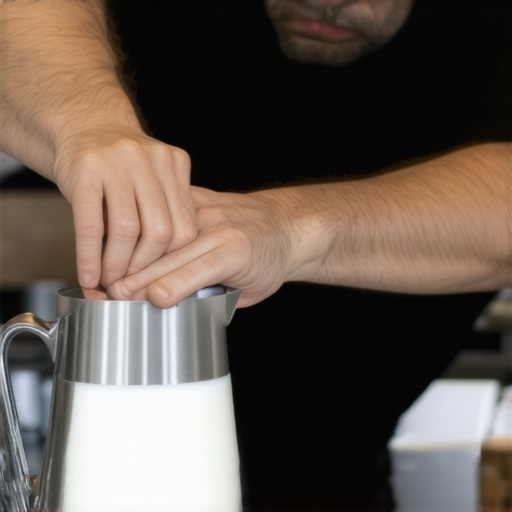
Start by gripping the pitcher with your dominant hand, placing your thumb on top for support and your fingers curled around the handle for stability. Imagine holding a delicate paintbrush; a gentle yet firm grip allows for precise movements. During my first attempt, I held the pitcher too tightly, causing trembling and uneven microfoam. Releasing my grip slightly and aligning my hand to support the tilt of the pitcher enhanced my control and resulted in smoother pouring.
Align Your Wrist for Consistent Flow
Keep your wrist in a neutral position, not bent or rigid. Think of your wrist as a hinge that needs to move fluidly. I used to bend my wrist upward, which disrupted the flow and led to splattering. By maintaining a straight wrist, I could better regulate the milk’s flow rate, leading to a more controlled swirl. Visualize the wrist as a connector between your hand and the pitcher, enabling seamless adjustments.
Use Your Whole Arm as a Support System
Place your elbow firmly on the counter to prevent unwanted movement. This stable support system acts like a tripod for your pouring hand. During one messy trial, my hand trembled because it was unsupported. Anchoring my elbow reduced vibrations, resulting in a steady pour. Think of it as anchoring a camera on a tripod—minimizing shake for a clear, consistent shot.
Position the Pour for Micro-Foam and Art
Angle the pitcher slightly forward and position it close to the cup’s center. This angle creates a vortex that guides the microfoam into the latte, producing a smooth surface. My early attempts lacked this finesse, leading to large bubbles and blobs. By practicing this angle, I could control the swirl and even craft simple latte art. Visualize pouring as a gentle waterfall—steady and controlled—allowing the microfoam to flow smoothly onto the espresso surface.
Practical Drills to Reinforce Hand Technique
Practice pouring into a shallow dish or a white plate, focusing solely on hand position and flow. Mimic the motion without worrying about milk texture. I spent ten minutes daily on this drill, slowly refining my wrist angle and grip. Over time, muscle memory took over, translating into consistent pours in actual drinks. Think of it as practicing a musical scale—it builds the foundation for performance.
Remember, small adjustments in your grip, wrist, and support make a significant difference. Every pour is a chance to observe, tweak, and improve. Mastery is built through deliberate practice—make each practice count.
Many home baristas and coffee enthusiasts operate under misconceptions about espresso machines, grinders, and frothers that hinder progress and sometimes even cause equipment damage. While beginner guides emphasize basic setup and technique, there’s a layer of nuance that often gets overlooked. Let’s dig deeper into some of the most persistent myths and advanced pitfalls that can derail your efforts.
Myth 1: Higher-priced gear guarantees better results
It’s tempting to think that investing in the most expensive espresso machine or grinder automatically leads to superior coffee. However, expertise in operation, maintenance, and understanding your specific equipment’s quirks plays a more crucial role. For instance, even high-end machines can produce mediocre espresso if not properly dialed in or maintained. According to the Specialty Coffee Association, proper calibration and water chemistry are often more impactful than hardware alone. Don’t fall into the trap of equating cost with capability; focus on mastering your current gear and learning its ideal settings.
Oops to Avoid: Neglecting Regular Maintenance
Neglecting routine cleaning—like backflushing your espresso machine or descaling—can lead to clogs, inconsistent shots, and flavor contamination. Many users overlook the importance of maintaining grinders, especially burr alignment and static management, which directly affect extraction quality. Regular maintenance isn’t just about prolonging your equipment’s lifespan; it ensures you get pristine flavor every time.
Advanced Mistake: Over-reliance on Technology Over Technique
While gadgets like automatic milk frothers and programmable grinders are helpful, relying solely on presets can stunt your skill development. For example, many believe that high static in coffee grinders, especially on rainy days, can be fixed simply by using dehumidifiers rather than adjusting grind settings or static suppression techniques. As discussed here, static can affect grind consistency, leading to channeling and uneven extraction. Advanced baristas learn to fine-tune their tools and understand the environment, rather than trusting presets alone.
What about mastering complex brewing techniques without expensive gear?
Many enthusiasts ask if they need top-tier equipment to achieve professional-quality espresso at home. The answer is no; it’s more about technique. Adjusting your tamping pressure, channeling less, and perfecting your grind size matter more than having the latest machine. Consistency in dosing and extraction time consistently produce better results than chasing after the perfect machine. If you’re seeking to refine your skills, check out this guide for practical tips.
Before you invest in new gear, consider if you truly understand your current setup. Small adjustments—like aligning your grinder burrs properly (learn how here)—can dramatically improve your espresso quality.
Have you ever fallen into this trap? Let me know in the comments. Remember, mastering the nuances often matters more than the hardware itself. Explore these deeper insights and refine your process for true espresso excellence.
Maintaining Your Equipment for Long-Term Success
Investing in quality espresso gear is just the beginning; regular maintenance is vital to ensure consistent performance and longevity. For example, I personally swear by using the marker method to align my grinder burrs. It’s a simple yet effective way to keep your grinder running smoothly, preventing uneven grind sizes that can compromise your shots. Establish a routine—daily, weekly, and monthly—to clean and inspect each component. This practice not only preserves flavor quality but also reduces long-term repair costs, making it a wise investment for any home barista.
How do I maintain my espresso machine over time?
Regular descaling is fundamental, especially if you’re using hard water. I set a monthly reminder to run a descaling cycle, following the manufacturer’s instructions meticulously. Additionally, replacing worn-out group head gaskets and checking for leaks ensures your machine operates at peak efficiency. Remember, a well-maintained machine translates to more predictable extraction, better flavor, and fewer breakdowns. For in-depth guidance, consult specific maintenance articles like this detailed troubleshooting guide.
Tools I recommend for effortless upkeep
My top pick is a brush tool set designed for small machine parts; it allows me to clean stubborn coffee grounds from delicate areas without risking damage. I also rely on a precision torque wrench to correctly tighten fittings—over-tightening can cause damage, while under-tightening leads to leaks. For grinders, I prefer static-neutralizing brushes, which eliminate static build-up and static-related clumping, especially during humid seasons. When shopping for replacement parts, always opt for OEM components; they fit better and last longer, reducing the need for frequent replacements.
Preparing for the future: Embracing automation and advanced tools
As technology evolves, automated cleaning cycles and smart diagnostics are becoming more mainstream. I predict a shift toward IoT-enabled equipment that alerts you when filters or gaskets need attention. However, even with these advancements, manual checks remain crucial. Regularly inspecting your gear using trusted methods can prevent minor issues from morphing into costly repairs. For example, frequently testing your milk frother’s temperature consistency helps prevent burning or clogging—and you can find expert tips here on optimizing your steam wand maintenance.
If you’re ready to take your routine up a notch, try implementing one of these advanced maintenance tips today. Consistent upkeep not only preserves your equipment but also elevates your coffee game into a true artisanal experience.
Over the course of my journey as a home barista, the biggest breakthroughs often came from tiny adjustments—like finding the perfect hand position or maintaining a vigilant routine for equipment care. These lessons taught me that mastery isn’t solely about investing in high-end gear; it’s about understanding and refining the nuances of technique, maintenance, and patience. As you fine-tune your approach, you’ll discover that even small shifts can unlock extraordinary flavors and beautiful latte art, transforming your daily coffee ritual into a truly artisanal experience.
Lessons That Didn’t Make the Manual
- The Power of Consistency Over Cost: I used to believe that upgrading to the fanciest espresso machine would solve all my problems. Instead, I learned that dialing in my existing setup through diligent cleaning and calibration had a far greater impact. Sometimes, the simplest step—like properly aligning grinder burrs using the marker method—can make a real difference.
- Listening to Your Equipment: Equipment can tell you when it’s unhappy—clogs, leaks, odd noises. Paying close attention and responding promptly, with resources like this troubleshooting guide, saved me time and prevented costly repairs.
- Small Changes Lead to Big Gains: Adjusting the angle of my pitcher or securing support with my elbow reduced pouring tremors. These tiny tweaks, often overlooked, are what elevate a good pour to an artful masterpiece.
- Mastering Routine Maintenance: Regular cleaning isn’t just maintenance; it’s the foundation of flavor quality. Establishing daily, weekly, and monthly routines prevented static buildup and flavor dullness, making each shot consistently delicious.
- Embracing Education Beyond Gear: Books like this guide on mastering home espresso provided the theoretical underpinning that empowered me to troubleshoot and innovate beyond standard recipes and presets.
My Favorite Arsenal for Coffee Connoisseurs
- Microfoam Mastery Tools: Achieving silky milk requires more than just skill; tools like quality milk pitchers and advanced frothers make all the difference. They help perfect pouring angles and control, essential for latte art.
- Precision Maintenance Kits: From wobble-free drip trays to cleanable steam tips, having dedicated tools—like a precision cleaning brushes—ensures consistent performance and longevity.
- Educational Resources: Quality guides and community forums, including this comprehensive gear selection guide, help inform smarter investments and technique improvements.
- Reliable Measurement Devices: Proper dosing and extraction depend on accurate tools. A good pressure gauge and digital scales can transform your consistency.
Embrace Your Barista Spirit Today
Building a home espresso setup that reflects your personal touch is a rewarding journey filled with discovery. Every adjustment, maintenance check, and practice session sharpens your skills and deepens your appreciation for the craft. Don’t let doubts or misconceptions hold you back—your perfect latte isn’t just a dream but a destination within your reach. With patience and dedication, you’ll not only craft better coffee but also develop a mindful routine that elevates your daily ritual into an art form.
What small technique tweak has made the biggest difference in your coffee brewing? Share your insights below and let’s learn from each other’s journey to espresso excellence!