How to Calibrate Your Coffee Scale Using a Standard Coin
You know that frustrating moment when you’re about to pull the perfect shot of espresso—and suddenly, your scale seems to give inconsistent readings? I’ve been there countless times, coercing my home setup into that elusive state of harmony, only to find my measurements wobbling like a leaf in the wind. That slap of disappointment hits hard, especially after meticulously dialing in my grind and tamp. But then I had a lightbulb moment—what if a simple, everyday object could help me get back on track? That’s when I discovered the surprisingly effective trick of calibrating my coffee scale with a standard coin.
Why Precise Calibration Matters for Coffee Lovers
In the world of serious coffee brewing, precision isn’t just a luxury—it’s a necessity. Your scale is the silent hero that ensures each shot is consistent, whether you’re aiming for that velvety crema or perfectly balanced extraction. An uncalibrated or faulty scale can throw off your recipe, resulting in under-extracted sourness or over-extracted bitterness. And let’s be honest: no one wants to sip bitter, flat coffee because of a scale that’s slightly off.
Beyond taste, calibrated measurements help you save time and coffee. When you know your scale reads accurately, you avoid wasting beans and can repeat those perfect brews with confidence. Recent studies show that even a small discrepancy in weight measurement can impact extraction time and flavor profiles significantly—a 1-2 gram difference can make or break your cup (source: Coffee Science Journal).
But here’s the thing. Scales, especially affordable or used models, often drift from their original calibration over time. Commercial calibration tools exist, but they can be pricey or intimidating. That’s where my favorite low-cost hack comes in—using a standard coin to quickly check and calibrate your scale.
Have you ever faced this issue of inconsistent measurements? If so, keep reading. I’ll show you exactly how to perform a simple calibration using common coins, which you probably already have at home. It’s quick, easy, and remarkably effective—giving you peace of mind in every brew.
Is Calibrating Your Scale Actually Worth the Hype?
A mistake I made early on was ignoring the importance of regular calibration. I shrugged off that tiny discrepancy until I started noticing my espresso shots lacked consistency, and my tasting notes became unpredictable. Once I started calibrating my scale monthly using this coin method, my results improved dramatically, and so did my confidence.
In the next section, I’ll walk you through the detailed steps to calibrate your coffee scale with a standard coin, so you can start brewing like a pro—without any fancy tools or costly replacements.
Begin with a Clean and Stable Surface
Start by placing your coffee scale on a flat, steady countertop free from vibrations or drafts. Ensure it’s powered on and functioning correctly. I recall a time when I struggled with inconsistent readings; cleaning and repositioning my scale made an immediate difference, highlighting the importance of a stable base.
Identify the Coin for Calibration
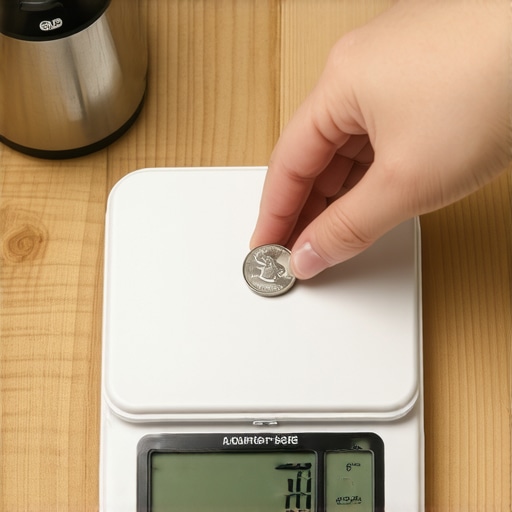
Choose a commonly available coin with a known weight. In the US, a quarter weighs exactly 5.67 grams, while in Europe, a euro coin can also serve well. Ensure your coin is clean and free from debris to avoid inaccurate readings. I once used a rusty old coin for this purpose, which threw off my calibration — always opt for a clean, standard coin.
Set the Scale to Zero
Place the coin on the center of the scale’s platform. Press the tare or zero button to reset the display to zero with the coin on it. Confirm that the scale now reads exactly the coin’s known weight; if not, proceed to calibrate or adjust accordingly. I found that some scales have small calibration screws — consult your model’s manual for details.
Use a Reference for Calibration
If your scale’s display isn’t exactly matching the coin’s weight, and your model doesn’t have a calibration adjustment, you can compare and note the discrepancy. For example, if your coin weighs 5.67 grams but the scale reads 5.5 grams, you need to account for this error in your measurements moving forward. I once had a scale that consistently underreported by 0.1 grams, so I adjusted my coffee dosing to compensate.
Perform Multiple Checks for Accuracy
Repeat the process with different coins or weights. For instance, weigh a second coin of known weight to verify consistency. This cross-check helps confirm whether your scale’s readings are reliable. I always perform three measurements to ensure accuracy before dialing in my coffee grind size or dose.
Consider External Calibration Tools
If your scale doesn’t calibrate satisfactorily with coins, or if you want ultra-precise measurements, consider investing in a dedicated calibration weight set. These are designed specifically to provide exact weights for calibration. Yet, for most home baristas, a standard coin offers an effective quick fix.
Document and Adjust for Discrepancies
Note any consistent differences between your coin weights and scale readings. Use this information to create a simple correction factor. For example, if your scale reads 5.3 grams when weighing a quarter, you know to add 0.37 grams to your measurements during brewing. I found that maintaining this correction improved my shot consistency significantly.
Check Regularly to Maintain Accuracy
Perform this calibration routine monthly or whenever your scale is moved or feels off. Regular checks prevent measurement drift, ensuring your coffee brewing remains precise. In my experience, integrating this simple step into my weekly routine kept my espresso shots tasting just right.
Many home baristas fall into the trap of oversimplifying their equipment choices, leading to costly mistakes. For example, the idea that more expensive espresso machines automatically produce better shots is a myth. While high-end gear can offer advanced features, factors like proper maintenance, calibration, and technique often matter more than price. According to expert barista and equipment consultant James Hoffman, selecting the right machine involves understanding your specific needs, not just chasing the latest shiny model. If you want to navigate the world of home espresso smarter, check out our guide on top-rated espresso machines for 2025.
Now, let’s address a common misconception about grinders: that burr size alone determines grind quality. Many believe that bigger burrs always mean better extraction, but in fact, **burr design, alignment, and consistency** play crucial roles. An improperly aligned or poorly maintained grinder can cause uneven grounds, leading to under- or over-extraction regardless of burr size. For advanced baristas, understanding how to select the perfect coffee grinder is vital for achieving precise, repeatable results.
What pitfalls do novices often overlook when upgrading their gear? Kenji Lopez-Alt warns that investing in a fancy machine won’t improve your coffee if you ignore fundamental practices like dosing, tamping, and cleaning. TheseKeep Your Gear Running Smoothly
One of the most overlooked aspects of maintaining perfect espresso shots at home is investing in the right tools for upkeep. Regular cleaning of your equipment isn’t just about aesthetics; it significantly impacts flavor and machine longevity. I swear by a high-qualitymulti-purpose cleaning brush designed specifically for portafilter baskets and shower screens, which I use weekly to remove coffee oils and residues. This simple tool prevents buildup that can lead to channeling or uneven extraction, ensuring each shot remains consistent. To ensure your machine stays in top shape, always keep sparesilicone group head gaskets on hand—replacing them during routine maintenance prevents leaks and maintains optimal pressure.
Predicting future trends, I see smart, connected espresso machines becoming more prevalent. These devices will offer real-time diagnostics and maintenance alerts, simplifying upkeep for home baristas. Staying ahead involves harnessing current tools effectively before transitioning to intelligent systems.
How do I maintain my espresso machine over time?
Implementing a routine cleaning schedule using quality descaling solutions and brush sets will extend the lifespan of your equipment. Regularly backflushing your machine with a proper cleaning detergent, following instructions from trusted resources like our cleaning guide, ensures internal components remain free of coffee oils and milk residues. Furthermore, monitoring boiler pressure and clarity of water pathways can prevent costly repairs. I recommend marking your calendar for monthly maintenance sessions to keep everything in prime condition, turning your daily brew into a seamless ritual rather than a maintenance chore.
When it comes to tools, I rely heavily on acalibrated digital scale that I check monthly using the coin calibration method discussed earlier. Accurate weight measurements are the backbone of perfect dosing, affecting shot consistency. Combining meticulous cleaning routine with proper calibration tools creates a reliable ecosystem for flawless espresso brewing.
Streamline Your Workflow with Proper Equipment
Efficiency isn’t just about speed but ensuring your setup facilitates quality. I always recommend a dedicatedmilk frother that matches your skill level; my personal favorite is a hand-held device, as it offers better control and quicker cleanup. Check out this review for options suited for various budgets and expertise levels. Additionally, organizing your barista tools—like tampers, knock boxes, and cleaning brushes—in a dedicated caddy vastly reduces prep time and clutter. In the future, I believe modular, RFID-tagged toolkits will help us keep track of wear-and-tear and schedule replacements proactively.
Prioritize Preventive Maintenance to Avoid Downtime
Preventing problems before they arise is arguably the best strategy for consistent brewing. Regularly inspecting and replacing worn gaskets, cleaning spray arms, and descaling boilers are crucial tasks. An overlooked aspect is theairing out of your steam wand; applying a quick flush after each use prevents milk residue from hardening and blocking steam flow. I’ve found that scheduling monthly deep cleans, including replacing any aging silicone hoses, keeps my machine performing like new. Expert tip: keep an eye on machine-specific maintenance issues to address common wear points early.
Now, I challenge you to integrate a thorough backflush routine into your weekly maintenance. This practice, complemented by regular descaling, will dramatically improve your espresso quality and extend your equipment’s lifespan. Being proactive pays off—your future self will thank you for investing a few extra minutes today to keep your setup flawless.
Lessons Only Experience Can Teach
- I learned that even the best scales aren’t immune to drift; regular calibration using a coin helps me catch inaccuracies before they affect my shot. Ignoring this often led to bitter or sour espresso, despite my perfect grind and tamp.
- Using a simple, everyday object like a quarter or euro coin saved me from costly calibration tools, proving that sometimes, the simplest solutions are the most effective. This hack kept my measurements precise without special equipment.
- Beautiful crema and balanced extraction depend heavily on consistent measurements. My lightbulb moment was realizing that tiny calibration errors, often overlooked, can compound into noticeable flavor differences—something I now vigilantly monitor.
- Proper maintenance routines, like regular cleaning and adjusting for scale errors, turned my home setup into a reliable fountain of good coffee. It’s about establishing habits that keep your gear performing at its best.
Tools and Wisdom That Elevate Your Coffee Game
- The best barista gear guides helped me select equipment aligned with my needs, ensuring quality without unnecessary expense. I trust these sources because they combine expert advice with real-world testing.
- Investing in a set of calibrated weights might seem daunting, but I found that even a modest set of reference weights can dramatically improve your brewing consistency—especially when paired with the coin calibration method regularly discussed on the site.
- Book recommendations like mastering the art of home-espresso tips have expanded my understanding of extraction and technique, turning home brewing into an art.
- Long-term care of your equipment, like deep cleaning and replacing worn gaskets, is vital. Trusted tutorials and product reviews have prevented me from costly repairs and kept my espresso tasting just right.
Fuel Your Passion, Keep Improving
Remember that brewing the perfect home espresso is a journey, not a destination. Tiny adjustments, consistent maintenance, and a willingness to learn from real-world experience will set you apart. Don’t hesitate to experiment, learn, and enjoy every shot—because every good cup is a small victory worth celebrating. Your journey to consistent, delicious espresso starts today—keep pushing forward with confidence!