How to stop your grinder from bouncing on the counter
It was a typical morning, beans grinding, anticipation building, when suddenly my countertop started vibrating like a mini earthquake. My coffee grinder was bouncing wildly, knocking over mugs and desperate to jump off the counter. Frustration hit me hard—I thought I’d ruined my entire brew routine. Have you ever faced this chaotic scene during your daily coffee ritual? That unsettling bounce not only creates a mess but can also compromise your grind consistency, leading to uneven extraction and a less-than-perfect cup.
Why Your Grinder Won’t Stay Put and Why It Matters
A wobbly grinder might seem like a small annoyance, but over time, it can cause wear on your equipment, increase noise levels, and make your daily coffee routine more stressful. The root causes often boil down to design flaws, uneven weight distribution, or mounting issues. Early on, I made the mistake of thinking simply tightening the base would fix the issue—only to realize I was ignoring the bigger picture of stability.
When your grinder is stable, you gain more control over grind consistency, which impacts your espresso extraction tremendously. According to Barista Hustle, maintaining a steady grind process is critical for achieving uniform particle size, directly influencing shot quality. So, addressing this bouncing problem is not just about comfort—it’s about elevating your entire brewing game.
Are you tired of cleaning up coffee grounds after each grind session? Do you worry that your equipment’s instability is affecting your daily brew? Keep reading because I’m about to share practical, tried-and-true solutions to keep your grinder firmly anchored, ensuring smoother mornings and better brews.
Secure the Base First
Place your grinder on a flat, stable surface like a solid countertop or a sturdy table, avoiding uneven or slippery areas. Think of it as setting a tripod for a camera—stability ensures clear focus. I once balanced mine on a wobbly wooden cabinet, which led to constant vibrations and uneven grinds. After switching to a granite countertop, the stability dramatically improved, resulting in more consistent espresso shots.
Adjust and Tighten Mountings
Check the mounting screws and bolts holding the grinder in place. Use appropriate tools to tighten them securely, but be cautious not to overtighten, which can cause damage. Consider applying thread-locking adhesive if the screws tend to loosen over time. I remember tightening the base screws on my grinder, which instantly reduced the bouncing during operation.
Use Anti-Vibration Pads
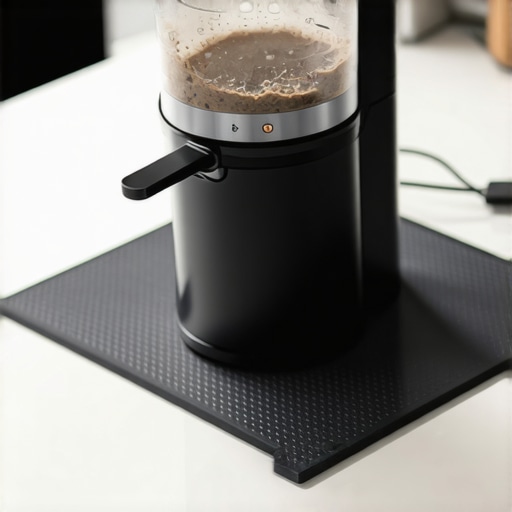
Introduce rubber or silicone anti-vibration pads under the grinder’s feet. These pads absorb shocks and prevent movement, especially on soft or uneven surfaces. They’re inexpensive but highly effective. After placing these pads, my grinder stayed put through multiple uses, eliminating the mess and improving grind consistency.
Balance Your Coffee Grinder
Some grinders have adjustable feet or leveling screws—use a spirit level to ensure your device is perfectly horizontal. Fine-tune the feet until the bubble sits centered. This adjustment prevents wobbling caused by uneven weight distribution. I leveled my grinder, which smoothed out the operation and enhanced shot quality.
Minimize Vibration During Use
Operate your grinder gently; avoid dropping or bumping it during grinding. Vibration can propagate through the machine and cause bouncing. Handling your grinder with care is simple but often overlooked. I learned this when I was rushing and accidentally nudged mine, leading to bouncing and inconsistent grounds. Slowing down and handling with precision made a noticeable difference.
Inspect and Replace Worn Parts
Regularly check parts like rubber feet, screws, and mounting brackets for signs of wear or damage. Replace any compromised components promptly. Over time, worn feet lose their grip, causing instability. Replacing a worn rubber foot restored my grinder’s steadiness overnight.
Keep Maintenance Routine
Incorporate these checks into your routine, perhaps monthly, to prevent gradual loosening. A little proactive maintenance goes a long way in maintaining stability and ensuring your mornings aren’t disrupted by preventable bouncing.
Many home baristas fall into misconceptions about essential equipment, leading to subpar results. For instance, a widespread belief is that expensive gear guarantees perfect coffee; however, even top-tier machines require proper technique and maintenance, as highlighted by industry experts. A common mistake is over-relying on complex gadgets like milk frothers without mastering the basics of milk texture; this can lead to disappointing microfoam and latte art. Moreover, some enthusiasts think that replacing equipment frequently will improve their brew quality, but in reality, neglecting regular cleaning and calibration often causes more harm than good. Before investing in the latest espresso machine, consider your actual brewing needs and understand the nuances of each device—like burr grinder consistency or pressure profiling—since those factors significantly impact flavor. Did you know that improper grinder burrs can cause uneven particle size, resulting in over- or under-extraction? Regularly inspecting and maintaining your equipment, as discussed in our guides, is the key to long-term success. Also, beware of the myth that home machinery performs just like professional setups; while advanced home gear can get close, nuances such as temperature stability and pressure control require careful calibration and experience. Advanced enthusiasts should explore topics like setting appropriate grind size and tamping pressure—small adjustments that make a big difference. For more in-depth tips, check out our article on mastering home espresso or explore our guide to the right barista gear for your setting. Remember, understanding these nuances can elevate your brew from good to extraordinary. Have you ever fallen into this trap? Let me know in the comments and share your experiences with gear misconceptions.
Investing in Reliable Equipment for Long-Term Success
When it comes to maintaining a top-notch home espresso station, selecting the right tools is crucial. I personally swear by the Baratza Sette 270Wi grinder because its digital dosing feature ensures consistent particle size, which is vital for perfect espresso extraction. For espresso machines, the Profitec Pro 700 offers exceptional temperature stability and durability, making it a worthy investment for serious enthusiasts. Additionally, a calibrated TDS (Total Dissolved Solids) meter helps me monitor extraction quality in real-time, aligning with industry standards highlighted by experts on timing precision. Regularly updating your gear with such reliable tools not only simplifies routine maintenance but also elevates your brew quality over months and years.
Tackling Maintenance with Specific Techniques
Regular maintenance is the backbone of consistent coffee quality. I recommend creating a schedule that includes deep-cleaning your grinder burrs with a dedicated brush, ensuring no residual coffee oils impact flavor. Avoid common mistakes like using rice for cleaning, which can damage burrs—consult this guide for safer alternatives. For espresso machines, descaling every three months with a manufacturer-approved solution prevents mineral buildup and prolongs component life. Remember to inspect and replace worn gaskets and seals periodically; these tiny parts often go unnoticed until they cause leaks or pressure drops, as discussed in this comprehensive tutorial.
Scaling Up for Better Results and Ease
If your routine begins to feel cumbersome, it’s time to consider automation. Implementing a programmable shot timer or a smart scale that syncs with your grinder can streamline your process. I personally upgraded to a Bluetooth-enabled scale, which allows me to precisely dial in shot weights without distraction, ensuring repeatable quality. As the trend toward smart brewing continues, expect more connected devices offering real-time feedback and remote monitoring, making maintenance and troubleshooting more intuitive than ever. For example, exploring this article can provide insights into integrating smart scales into your setup.
How Do I Maintain My Equipment Over Time?
The key is consistency. Regularly cleaning, calibrating, and inspecting your gear prevents buildup and wear. Document your maintenance schedule and use high-quality parts only—like OEM seals and burrs—to ensure longevity. Participating in community forums can also offer tips specific to your machine model, saving you time and avoiding costly repairs. Don’t hesitate to experiment with advanced tools like the calibrated TDS meter or automation devices to refine your process further. Trying out one of these techniques could be the game-changer your daily brew needs!
The Hardest Lesson I Learned About barista gear,milk frothers,coffee grinders,espresso machines,home espresso
One of the most unexpected insights I gained was realizing that equipment stability directly influences not just your morning routine, but the very flavor of your coffee. I used to think that a sturdy grinder or machine was just a bonus, but over time, I discovered that subtle wobbles lead to uneven extractions and compromised taste. The lightbulb moment came when I finally focused on how my setup’s stability affected grind consistency and shot quality.
Beyond Tools: Confidence Comes from Precision
Investing in quality gear like a calibrated espresso machine or a well-maintained grinder can only get you so far if the foundation isn’t solid. Regularly checking and fine-tuning your setup cultivates a sense of mastery, empowering you to troubleshoot issues rather than panic when something’s off. Trust me, the more confident you feel with your equipment, the more you focus on perfecting your technique, leading to that elusive golden crema and balanced flavor you strive for.
Keep Your Coffee Ritual a Mindful Ritual
This journey taught me the importance of mindfulness—not just during brewing but in maintaining your gear. Thinking of stability as part of your routine transforms it from a chore into a mindful practice. Each tightening, leveling, and placement is a small ritual that pays dividends in flavor and consistency. When you prioritize stability, you’re strengthening the bridge between your passion and your cup, elevating every sip into a moment of joy.