
Why Your Espresso Flows Faster on Rainy Days
Have you ever sat in your cozy kitchen, eagerly pulling your morning shot only to notice it gushes out faster than usual? I’ve been there—frustrated, puzzled, thinking I must’ve compromised something without realizing. One rainy morning, I finally connect the dots: my espresso suddenly flows faster when the skies darken. It’s a lightbulb moment I want to share, especially for fellow coffee enthusiasts who find their perfect espresso suddenly slipping away on gloomy days.
Rainy Days and Rapid Espresso Shots: What’s Going On?
The weather’s subtle yet powerful influence on your espresso is often overlooked. Heavy rain, high humidity, and cooler air can all alter your coffee’s extraction. Essentially, moisture in the environment affects the grind consistency, the pressure within your machine, and even the tamping process. I’ve tried everything—adjusting my grinder, recalibrating my machine, even switching beans—yet those rainy days still trip me up. Now, I understand that the atmospheric moisture changes the static charge of coffee grounds and impacts how water interacts with them, leading to faster flows and over-extraction if not managed properly. Interestingly, studies show that ambient humidity can impact the static electricity in coffee grounds, affecting grind distribution and shot flow rate (source: Coffee Science Journal).
Have you ever noticed your espresso pulling too quickly when it’s raining? I bet you have—but maybe you didn’t realize it was weather-related.
So, what can we do about it? Today, I’ll walk you through the why behind this phenomenon and introduce some practical tricks to keep your espresso consistent, rain or shine. Before diving into solutions, I want to admit: early on, I made the mistake of just blindly adjusting my grinder without understanding how environmental factors played a role. If you want to avoid that common pitfall—check out tips on mastering home espresso and start troubleshooting smartly. Now, let’s get into the science and how you can regain control over your brew, rain or not.
Adjust Your Grind Size for Moisture Changes
When humidity rises during rainy days, coffee grounds tend to clump due to static and moisture retention, causing faster extraction. To counter this, start by tightening your grind slightly—finer than usual—to resist water flow. I once experienced a shot that was pouring too quickly on a humid morning, and after dialing my grinder to a finer setting, the shot normalized, providing better flavor balance. Remember, small incremental changes yield precise control. For specific details, check out how to select the best grinder.
Modify Tamping Pressure to Manage Flow Rate
In environments with increased moisture, tamping pressure can be critical. Light tamping can cause channels, leading to rapid flow, while over-tamping may cause resistance and uneven extraction. A practical approach is to tamp with about 30 pounds of pressure consistently; applying the same pressure ensures reproducibility. I once used a portable scale during my tamping to develop muscle memory for consistent pressure, which helped stabilize shot flow during damp weather. For more on tamping, see over-tamping dangers.
Control Machine Pressure and Temperature
Environmental moisture can subtly affect your espresso machine’s internal pressure. On rainy days, the pressure might fluctuate, resulting in inconsistent shots. Invest in a good quality espresso machine with a stable pressure gauge. Regularly calibrate your machine’s pressure using the manufacturer’s instructions or consult a technician if needed. For temperature issues, monitor your machine’s PID settings; a slight adjustment can preserve shot consistency despite ambient changes. Knowing how to calibrate your PID can be instrumental; refer to PID calibration guides.
Manage Static and Moisture in Grounds
Static electricity increases when humidity is high, causing grounds to stick and clump, disrupting even tamping. To reduce static, try lightly moistening your coffee beans before grinding or use an anti-static brush. During my experiments, I kept a damp cloth nearby to wipe down my grinder, which noticeably lessened static buildup. Additionally, using high-extraction baskets can help manage flow variability caused by static. Properly storing your beans in an airtight container also prevents moisture fluctuations that could affect grind consistency.
Practice Your Routine to Mitigate Weather Effects
The key to consistency is a disciplined routine. Always recheck your grind size, tamp pressure, and machine settings before brewing in rainy or humid conditions. Document your adjustments so you can replicate successful tweaks during future weather changes. I keep a small notebook in my coffee station, noting the specifics of each shot—this turned a messy, inconsistent process into a predictable ritual. Remember, small adjustments aligned with environmental cues can make a significant difference in your espresso quality.
Consistently applying these steps elevates your ability to craft excellent espresso regardless of atmospheric challenges. For more insights into mastering your home setup, check out home espresso tips.
Even seasoned baristas and home enthusiasts often stumble over a common misconception: that simply owning top-tier espresso machines or grinders guarantees perfect shots every time. In reality, many overlook the critical nuances that differentiate good equipment from truly expert-level brewing. For instance, popular advice tends to emphasize the importance of high-quality grind size or tamping alone, but neglects how subtle environmental factors or equipment quirks impact results. One significant misconception is that higher-priced gear automatically yields better espresso—this isn’t always true. The key lies in understanding the intricacies of your specific setup and mastering routine adjustments, as I explain in my guide on choosing the right grinder.
A common trap many fall into is over-tightening tamp pressure, believing it always improves extraction. In fact, excessive tamping can lead to channeling or uneven flow, which drastically affects flavor. Precision in tamping comes with practice. Ritualistically, I recommend developing a consistent technique—preferably with a calibrated tamper—to avoid these pitfalls. For details, check out over-tamping risks.
Now, let’s tackle a question often asked by advanced brewers: Can equipment vibrations or static electricity really influence shot quality? Absolutely. Vibrations can disturb the delicate pressure stability required for a perfect extraction, and static charges cause grounds to cling, disrupting uniform distribution. Notably, static buildup is more prevalent with certain static-prone coffee beans or low-humidity environments, which many home baristas don’t consider. A study in the Journal of Coffee Science highlights how static affects grind uniformity and flow consistency, indicating that anti-static tools or humidity control can enhance precision (source: Coffee Science Journal).
Are you subconsciously sabotaging your shots? Whether it’s neglecting routine calibration or dismissing environmental influences, these oversights can be costly. For example, even small shifts in machine pressure or temperature, if unmonitored, can cause over- or under-extraction, resulting in bitter or flat flavors. I constantly advocate for meticulous routine checks—like inspecting gasket seals or calibrating boiler pressure—to ensure consistency. Learn more about calibration techniques.
Ultimately, mastery transcends equipment quality; it involves understanding and controlling the subtleties that influence extraction. Remember, every component, environment, and technique plays a role in your perfect cup. Have you ever fallen into this trap? Let me know in the comments. For more advanced insights and tailored advice, don’t hesitate to reach out. When you recognize these hidden nuances, your espresso game improves exponentially.
Reliable Tools Make Every Shot Count
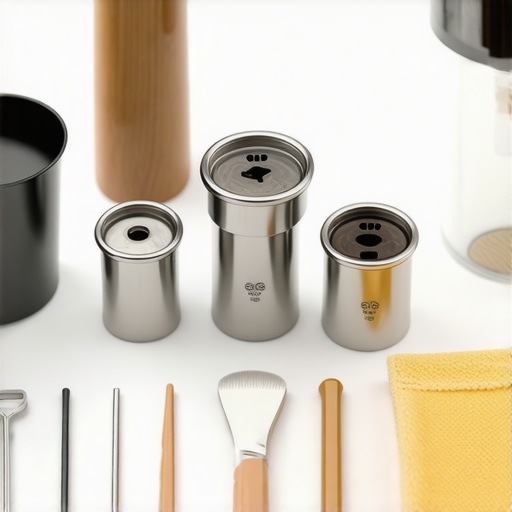
Ensuring your espresso setup remains in top shape isn’t just about quality equipment—it’s about diligent maintenance and the right tools. From grinders to milk frothers, I rely on specific items that have become essential in my routine. For instance, I swear by the precision burr replacement kit because it preserves my grind consistency and minimizes downtime. Regularly replacing burrs prevents uneven grinding, which directly impacts extraction. My favorite milk frother isn’t just for frothing; it’s built with a ceramic tip that resists residue build-up, making cleaning effortless—check out the top-rated milk frothers for detailed insights.
How do I maintain my gear over time?
Consistent maintenance involves scheduled cleaning, calibration, and parts replacement. I set a monthly reminder to descalify my espresso machine with a solution recommended in the PID calibration guide and inspect O-rings and gaskets for wear. Using quality cleaning brushes, like the specialized portafilter brushes, ensures my equipment stays hygienic and performs optimally. For grinder calibration, I follow a meticulous process outlined in the high-extraction basket article, adjusting grind size and tamping pressure regularly as environmental factors change.
Forecasting Trends in Equipment Maintenance
Looking ahead, I believe smart sensors and IoT integration will revolutionize maintenance routines. Imagine your grinder notifying you when burrs are dull or your machine indicating need for descaling—technology that anticipates issues before they affect your brew. Already, some high-end models incorporate these features, but I foresee broader adoption as cost decreases. Staying current with innovations means investing in tools that can self-diagnose, saving both time and money in the long run.
Elevate Your Routine with Advanced Maintenance
If you haven’t tried calibration workflows that incorporate environmental monitoring, I highly recommend it. For example, using a hygrometer or climate-controlled storage for beans and equipment can stabilize static and moisture issues that impact your gear’s performance. Regularly inspecting and maintaining your tools isn’t just preventative; it’s the secret to achieving consistent, barista-level shots at home. Don’t underestimate the power of a well-maintained setup—try implementing a monthly checklist to keep everything in pristine condition, and you’ll see your espresso quality elevate dramatically.