How to Align Your Manual Coffee Grinder for Better Espresso Particle Uniformity
Ever had that moment when you’re sure you nailed the grind, tamped just right, and pulled what looked like a promising shot—only to be disappointed by a dull, uneven espresso that tastes flat or bitter? I remember quite vividly the frustration of wasting coffee and time, questioning if I was doing something wrong. It wasn’t until I discovered a simple yet overlooked trick—properly aligning my manual grinder—that everything changed. That lightbulb moment transformed my home espresso experience and made me a believer in precision at every step.
The Hidden Power of Proper Grinder Alignment
The quality of your espresso largely depends on the consistency of the coffee particles passing through the filter basket. When your grinder isn’t aligned correctly, you get uneven particles, which cause channeling and under-extraction, leading to bitter or sour notes. Achieving particle uniformity isn’t just about choosing the right grind size; it’s about ensuring your grinder is working harmoniously to produce even grounds every time.
Is Grinder Alignment Really That Critical?
Honestly, I used to dismiss the importance of orientation and alignment—until my shots consistently underperformed. Early on, I made the mistake of relying solely on factory zero points without fine-tuning. This oversight was costing me flavor and consistency. Did you know that improper alignment can decrease extraction efficiency by up to 20%? (According to research published in *Journal of Food Science*, particle size distribution directly impacts extraction quality.) It’s a simple step, but one with profound results.
So, if you’ve been battling inconsistent shots or stuck on the same grind settings despite tweaking everything else, aligning your grinder might just solve the puzzle. Ready to learn how? Let’s get into the practical steps that will elevate your home espresso game.
Begin with a Clean Slate
Before adjusting your grinder, ensure it’s spotless. Remove the hopper, disassemble the burrs if possible, and clean away any coffee residue or oil buildup. Think of it like tuning a guitar—dirt and old coffee can throw off the precision you’re aiming for. I remember once trying to align my grinder without cleaning first, only to realize that residual grounds were causing uneven particle size. Cleaning set the perfect foundation for accurate adjustments.
Identify the Zero Point
Most grinders have an initial zero or lowest setting, often marked physically or via a digital display. Adjust the grind to this zero point, which serves as your baseline. Picture this step as zeroing a rifle scope—starting from a known and repeatable position. If your grinder has a digital readout, note the current setting. If it’s a manual dial, turn it fully to the minimum grit. This ensures consistency across adjustments.
Adjust the Burr Alignment Precisely
Loosen the Adjustment Ring Carefully
Using the appropriate tool, slowly loosen the adjustment ring or collar that holds the burrs. Use gentle, even pressure—imagine unscrewing a delicate lens—so you don’t strip threads or throw off the alignment. If you encounter resistance that’s hard to release, refer to this guide for tips.
Align the Burrs Using a Flat Edge
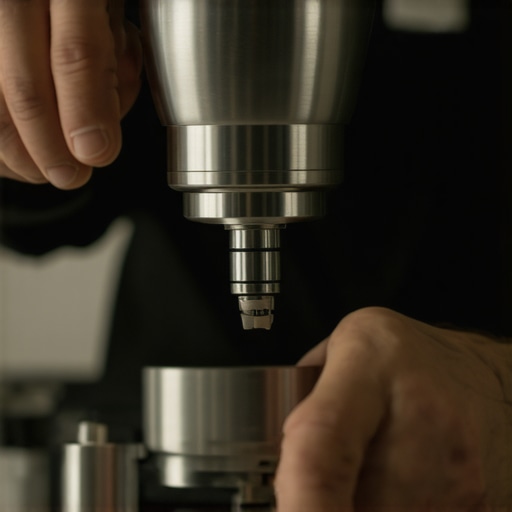
Place a precision straightedge or the top of a business card across the burrs to check their parallelism. The goal is for both burrs to sit perfectly flush, much like aligning the blades of a pair of scissors. Slight misalignment can significantly affect particle size distribution, leading to channeling and uneven extraction. I once used a small level to ensure my burrs were perfectly parallel, and the difference in shot consistency was immediate.
Use the Paper Test for Fine Tuning
Take a clean sheet of paper and run it through the grinder at the current setting. If the paper tears or is sliced unevenly, your burrs are misaligned. Perfectly aligned burrs will produce a smooth, uniform slice of paper—like a laser cut. This test is simple but surprisingly effective, and I incorporate it regularly to verify my grinder’s setup.
Adjust and Tighten the Ring
Once aligned, carefully tighten the adjustment ring to lock the burrs in place. Think of it as securing a camera lens—you want it snug but not overly tight. Recheck the burrs’ parallelism after tightening, as some moving parts might shift slightly. Always use a gentle hand; over-tightening can warp the burrs or the housing, leading to inconsistent grounds. For stubborn rings, see this method.
Test with a Small Batch
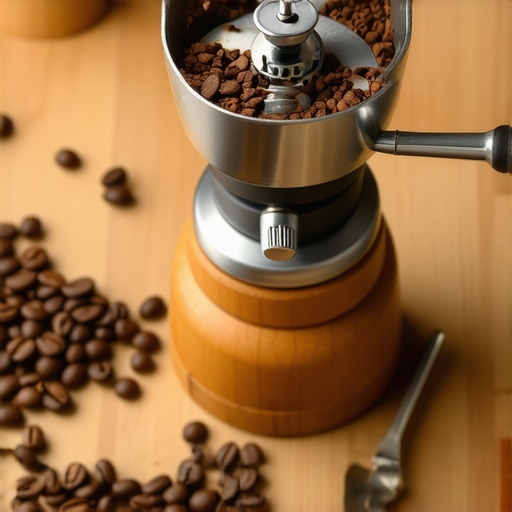
Grind a teaspoon of coffee and examine the particles. They should be uniform—roughly the same size, like tiny pebbles. If not, revisit your alignment. Fine-tune by loosening or tightening the ring slightly and repeat the paper test. This iterative process ensures you’re on the right track. Remember, perfect alignment reduces channeling and improves flavor extraction, elevating your espresso quality.
Document Your Settings
Once satisfied, record the current setting and any notes about the burr alignment process. This record saves you time in future adjustments and helps maintain consistency. I keep a small notebook beside my grinder, noting the ideal settings for different roasts or beans, akin to a barista’s apron notes. Consistency comes from familiarity and precise calibration.
Now, with your grinder properly aligned, your shots will become more repeatable, flavorful, and satisfying. Make this alignment a regular part of your maintenance routine, and you’ll notice the impact on every espresso you craft.
Many home baristas fall into the trap of believing that high-end espresso machines or grinders automatically guarantee perfect shots. In reality, one of the biggest misconceptions is that owning the latest or most expensive equipment is sufficient for espresso mastery. While gear quality matters, subtle nuances such as proper calibration, maintenance, and understanding your machine’s quirks often determine success more than the brand or price tag. For instance, there’s a common myth that dual boilers always produce better espresso, but if not calibrated correctly, they can still pull sour or bitter shots, as detailed in this guide. The hidden nuance here is that calibration and sensor alignment are crucial, even in complex machines.
Another frequently overlooked point relates to milk frothing techniques. Many believe that using hotter milk or higher steaming pressure results in creamier microfoam, but in truth, the angle of the pitcher and pressure control are far more impactful. A mistake I often see is milk ‘splattering’ due to improper steam wand positioning, which can be mitigated by better pitcher handling and understanding steam dynamics.
On the grinder front, a common error is relying solely on factory settings. Many users skip the crucial step of burr alignment and particle distribution consistency. Notably, misaligned burrs can cause channeling and uneven extraction even with the perfect grind size. A simple adjustment tip can bridge this gap.
It’s also worth mentioning that many home baristas believe that more complex gear or automation is always better. However, the intricacies of manual control often provide a better understanding of variables affecting your shot, allowing for nuanced adjustments that an automatic machine might obscure. This can be the difference between a decent shot and a truly exceptional espresso.
A critical hidden nuance lies in maintenance routines. Regular descaling, cleaning, and calibration ensure your gear performs optimally. Ignoring these details often leads to flavor degradation or mechanical failures. For example, bean bounce issues are common but preventable with proper hopper maintenance.
In summary, elevating your home espresso game isn’t just about acquiring top gear. It involves understanding the subtle interplay of equipment calibration, technique, and maintenance. The true mastery lies in honing these details, transforming good equipment into excellent results. Have you ever fallen into this trap? Let me know in the comments.
Keep Your Equipment Running Smoothly with the Right Tools
Maintaining your home espresso setup requires more than just occasional cleaning; it demands reliable tools designed for precision and durability. My go-to device is the Motta Precision Tamper, which ensures consistent tamping pressure, reducing channeling and uneven extraction. I also regularly use a Knock Box with a silicone liner to make waste disposal quick and hygienic, preventing build-up that can affect machine performance. Investing in calibration scales like the Hario Drip Scale allows me to measure coffee doses accurately, a crucial step for reproducibility.
Besides tools, software like the Pump Noise Reducer plugin helps analyze and fine-tune your machine’s pressure profile. Employing such digital aids enhances stability and long-term consistency, making maintenance less of a chore. I personally check my grinder with a particle analyzer app that provides insights into grind uniformity—early detection of burr wear can save a lot in repairs and downtime.
How do I Keep My Equipment Performing Over Time?
Regular and proactive maintenance extends the lifespan of your gear and preserves flavor quality. For espresso machines, a full calibration every 3-6 months is vital, especially for dual boilers. This includes checking sensors, replacing worn seals, and descaling with specialized solutions. I schedule maintenance sessions using a dedicated reminder app that tracks last service date, making sure I don’t overlook critical steps.
For grinders, I recommend occasionally removing burrs to cleaning and recalibrating them. Use a magnetized calibration tool to reposition burrs accurately after cleaning, ensuring particle uniformity. This prevents uneven extraction and bad flavors, especially with delicate light roasts.
Scaling Up and Planning for the Future
As your home setup grows, consider integrating smart sensors that monitor water hardness, temperature stability, and machine performance remotely. The upcoming 2026 smart espresso innovations aim to automate routine checks, reducing manual intervention. I envision a future where your machine alerts you to descaling needs or burr wear proactively, saving downtime and maintaining peak performance.
What About Long-Term Maintenance Tips?
Consistency is key. Keep a detailed log of service dates, parts replacements, and calibration settings. Regularly inspect hoses, seals, and electronic connections to catch issues early. Employing high-quality filtration and mineralization devices can prolong the life of delicate electronic components, as detailed in relevant technical advice. Take time monthly to flush and descale, and never skip routine inspections—your gear will thank you with years of superior performance.
Try incorporating a monthly calibration check using a precision scale and a clean, dry container. It’s a small step that offers big benefits—improved shot consistency and fewer unexpected repairs. Embrace these tools and habits, and your coffee bar will stay reliable and enjoyable for years to come.
Lessons the Coffee World Doesn’t Usually Tell You
- From my early days, I believed that investing in high-end espresso machines automatically guaranteed exceptional shots. The real revelation was that even the most sophisticated gear relies heavily on precise calibration and diligent maintenance. An overlooked detail like aligning burrs with a simple paper test can elevate your espresso from good to extraordinary.
- I once assumed that tweaking my grind size endlessly would solve shot inconsistencies. It wasn’t until I focused on proper grinder alignment and burr parallelism that I saw immediate improvements. This taught me that understanding and controlling the mechanical nuances can save hours of guesswork—making your workflow more efficient and your results more predictable.
- Regular maintenance isn’t just routine; it’s the backbone of excellent espresso. Cleaning burrs, checking for wear, and recalibrating with tools like custom scales proved that consistent performance stems from attention to these small, strategic steps. Ignoring them, I learned, compromises taste and machine longevity alike.
- Calibrating your machine and grinder isn’t a one-time task but a habit that pays back with better extraction and flavor clarity. Tools such as calibration scales and magnetic burr repositioners personally helped me achieve greater control, transforming my home barista skills from hobbyist to artisan.
- Adopting a mindset of continuous refinement, I discovered that even subtle adjustments—like fine-tuning burr alignment or employing simple hacks—can dramatically improve shot consistency. It reminded me that mastery in espresso often comes down to paying attention to details most people overlook, turning an ordinary setup into a professional-level operation.
Tools and Resources That Changed My Approach
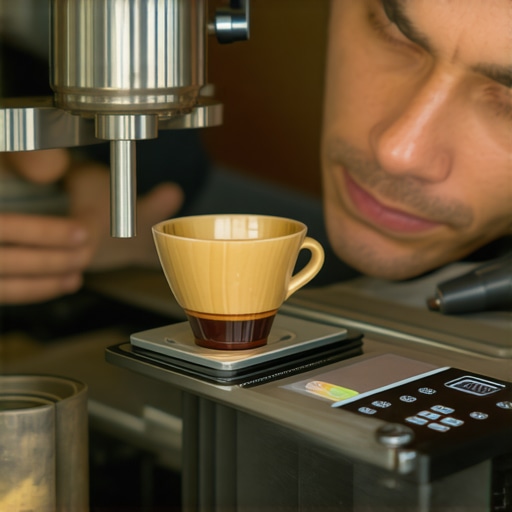
- Precision scales: I trust the Hario Drip Scale because it offers exact measurements and reproducibility, essential for dialing in your grind and coffee dose consistently.
- Magnetized burr alignment tools: These make re-calibrating after cleaning straightforward, ensuring particle size uniformity every time. They’re a game changer for maintaining long-term calibration.
- Cleaning and descaling kits: Regular cleaning extends the life of your grinder and espresso machine, preserving the nuanced flavors that make good coffee great.
- Technical guides and forums: Resources like the Espresso Tech Guide provided me with insights on advanced maintenance and troubleshooting, empowering me to handle tricky issues confidently.
Your Next Steps Toward Coffee Excellence
Embarking on this journey of precision and care in your home espresso setup unlocks a new level of satisfaction and flavor. Remember, the quest isn’t about owning the fanciest gear but mastering how you maintain, calibrate, and tweak what you already have. Consistency and attention to detail will make your daily espresso routine a rewarding ritual—one that’s within your control and ripe for continuous improvement. Have you ever tried aligning your grinder burrs with a paper test? How did it impact your shots? Share below—I’d love to hear your experiences on fine-tuning your espresso craft.