The Danger of Over-Tamping Your Coffee Grounds
It was a morning like any other when I finally snapped. My espresso shot was sour, bitter, and utterly disappointing. After spending hours tweaking my grinder and experimenting with tamping pressure, I realized I had been unknowingly sabotaging my brew. The culprit? Over-tamping. That seemingly minor step in my routine was quietly wrecking my coffee experience.
Why Over-Tamping Your Coffee Noises Can Ruin Your Espresso
When I first started making espresso at home, I thought pressing down firmly was the way to go. More pressure meant more compact grounds, right? Well, not quite. I discovered that applying excessive tamping force not only challenges the machine’s pressure but also creates a barrier that hampers water flow. This leads to uneven extraction, resulting in dull, flat, or over-extracted shots that taste more like bitter mud than rich coffee.
Over-tamping can also put undue strain on your espresso machine, causing parts to wear faster or even leak over time. It’s a sneaky problem because it feels intuitive to press hard, especially when we’re eager for that perfect shot. But my early mistake was over-compressing the grounds, which restricted water flow and prevented me from getting the vibrancy and complexity I craved in my brew.
Correct tamping pressure is critical for consistent results. According to industry expert James Hoffman, a renowned barista and coffee educator, the common mistake is applying too much force, which can be counterproductive. He emphasizes that uniformity in tamping matters more than brute force.
If you’ve been battling flat or sour espresso, or if your machine seems to struggle more than it should, over-tamping might be the hidden issue. Tackling this problem can seem daunting at first, but with the right approach, you can significantly improve your brew. Today, I’ll walk you through how to avoid over-tamping and make your espresso workflow more forgiving and satisfying.
Are you worried that light tamping will lead to under-extraction or weak flavor?
Many skeptics think that applying less pressure might result in a watery shot or underdeveloped flavors. Trust me, I questioned this myself early on. My biggest slip-up was thinking that more tamping meant better extraction — an easy trap to fall into when you’re eager to master your machine. Yet, over-compacting the grounds can prevent water from passing through evenly, causing the shot to trail off or taste sour. Striking the right balance is key, and I’ll show you how to find it.
Applying Consistent Tamping Pressure
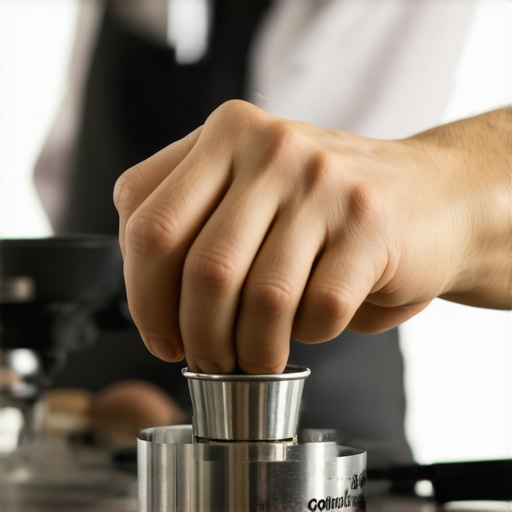
Start with a sturdy, flat surface for tamping, and position your portafilter directly beneath it with the coffee grounds evenly distributed. Use your non-dominant hand to hold the tamping device firmly, while your dominant hand guides the pressure. Think of tamping like pressing down a heavy door handle; you want enough force to secure it without overexerting. Practice by applying a gentle, consistent pressure—aim for about 30 pounds—similar to pressing an apple to check for ripeness. A micro-story: I once used a bathroom scale to measure my tamping force and found that I was applying nearly 50 pounds—way too much. Once I adjusted, I noticed my shots became more balanced and flavorful.
Positioning and Technique for Even Pressure
Straight, vertical force is crucial. When you tilt or use uneven pressure, grounds can be unevenly compacted, leading to channeling—a fancy term for inconsistent water flow. Find a comfortable stance, shoulder-width apart, and keep wrist and elbow aligned over the portafilter. Imagine you’re pressing a button with your whole body, not just your wrist. This helps maintain steady, uniform pressure. I made the mistake of leaning heavily into my tamp, causing me to wobble and unevenly compress the grounds. After correcting my posture—standing tall and pressing straight down—I achieved a much cleaner extraction.
Using Your Body Weight Effectively
Instead of relying solely on arm strength, leverage your body weight for a smoother application. Begin by placing the tamper level on the coffee and gently press down with your hand palm-down, then use your body weight by pressing downward steadily. This distributes force evenly and reduces hand fatigue. Think of your body as a press, not a jackhammer—controlled and deliberate. I remember a day when I was rushing, applying quick, hard presses that caused inconsistent tamping. Slowing down, centering my force, and using my body weight improved shot consistency dramatically.
Fine-Tuning Your Tamping Routine
Consistent practice is the key. Develop a tactile sense by practicing with a bathroom scale or a torque-measuring device designed for espresso enthusiasts. Over time, you’ll develop muscle memory for the right amount of pressure. Also, ensure your tamper is well-matched to your basket size—using a tamper that’s too small or too large can compromise pressure uniformity. Remember, even pressure is more critical than brute force, as discussed in our guide on tips for beginners. Make small adjustments, observe the outcomes, and keep a consistent routine to elevate your espresso game.
Dispelling Myths Around Coffee Grinder Precision
Many enthusiasts believe that investing in the most expensive grinder guarantees flawless espresso, but in reality, precision isn’t solely about price. The common misconception is that pro-level equipment automatically ensures quality, yet factors like consistent burr alignment and grind distribution are equally vital. An overlooked nuance is the importance of regular calibration and maintenance to prevent burr misalignment, which can cause uneven grind sizes and impair extraction quality. Studies, such as those highlighted by industry experts, emphasize that even high-end grinders require routine checks to maintain optimal performance.
Investing in Reliable Equipment for the Long Haul
Building a home espresso setup is just the beginning; maintaining your gear ensures consistent, high-quality results over time. I personally swear by the Barista Hustle Precision Tamping Mat for its durability and perfect size, making tamping more precise and ergonomically comfortable. For grinders, I rely on the Baratza Sette 270Wi; its stepless grind adjustment ensures longevity and perfect calibration, critical for extracting nuanced flavors from your beans.
Routine Maintenance Keeps Everything Running Smoothly
To keep your espresso machine in peak condition, regular descaling is non-negotiable. I recommend using a descaling solution like Urnex Dezcal, which effectively prevents mineral buildup that can impair pump and boiler performance. A monthly cleaning schedule includes backflushing with a standard cafiza and wiping down seals and gaskets. The internal water reservoir requires periodic cleaning to remove slimy buildup, ensuring water quality and taste consistency. Don’t forget to replace worn seals; a cracked gasket can cause leaks and pressure drops, ruining shots and risking expensive repairs.
Fine-Tuning and Future-Proofing Your Setup
Temperature stability is one of the most common issues that plague home baristas over time. I’ve found that installing a PID controller can make a huge difference. According to industry expert Clive Coffee, a properly calibrated PID keeps water temperature within ±1°C, resulting in more consistent extractions. This is a worthwhile upgrade if you notice fluctuations during the shot or inconsistent microfoam. Additionally, consider investing in a scale with a timer and auto-tare features, such as the Acaia Lunar, to refine dosing and ensure repeatability. As the trend for smarter, automated systems advances, integrating apps that log your brewing parameters could be the next frontier for serious enthusiasts—stay tuned for developments in IoT-connected espresso gear.
How do I maintain my equipment to extend its lifespan?
Consistent maintenance is key. Schedule weekly wipe-downs, monthly descaling, and yearly inspections of seals and electrical components. Using high-quality cleaning products designed specifically for your equipment, and following manufacturer instructions, will prevent unnecessary wear and costly repairs. For detailed guidance tailored to your gear, visit our contact page for expert advice and part replacements. Remember, a proactive maintenance approach not only prolongs your machine’s life but also ensures every shot tastes as divine as the first. Try implementing a monthly deep clean using a removal and inspection of the group gasket; this small step can unveil hidden cracks or buildup before they become serious issues. Maintaining your gear comes down to attention and consistency—invest a little time today for better coffee tomorrow.
What I Wish Someone Told Me About Tamping Before I Started
One of my most eye-opening moments was realizing that my perfect tamp is less about brute force and more about consistency. I used to think pressing hard was the answer, but it often led to channeling and uneven extraction. The lightbulb came when I measured my pressure and discovered I was applying over 50 pounds—well above the recommended 30. That taught me that finesse trumps force every time, a lesson I wish I’d learned earlier.
Another secret was understanding how body alignment impacts tamp quality. When I leaned or tilted, the grounds became unevenly compressed, causing shot variability. Once I corrected my posture—standing tall and pressing straight down—my extractions became cleaner and more predictable. Small tweaks like these made a huge difference, highlighting how crucial positioning and routine are for espresso excellence.
The third insight was leveraging body weight rather than just arm strength. Using my palms and shoulders to press down evenly reduced fatigue and enhanced consistency. Practicing with a scale further refined my feel—developing muscle memory that ensures each shot is as good as the last. These lessons underline that mastering espresso tamping is less about intense effort and more about mindful technique, patience, and routine.