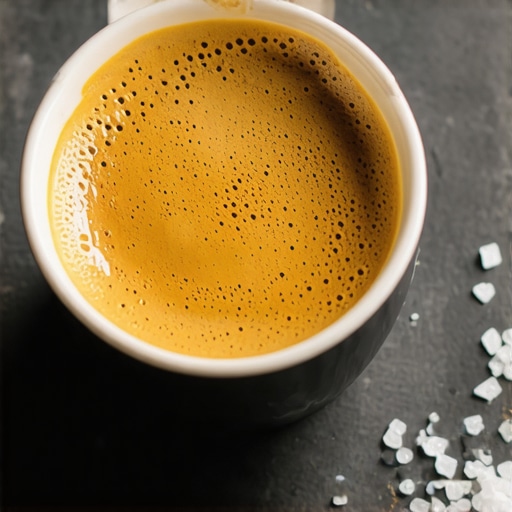
Why Your Espresso Shot Tastes Salty and How to Fix It
I still remember the Tuesday morning I almost threw my portafilter through the kitchen window. I had just cracked open a bag of expensive, light-roast beans that promised “notes of jasmine and peach.” I went through my ritual, pulled a gorgeous-looking shot with a thick layer of crema, and took a big, expectant gulp. It was like drinking a cup of warm sea water. Pure brine. I felt cheated. I felt like a failure as a home barista. But more than anything, I was confused. How could something that smelled so sweet taste so… savory?
[IMAGE_PLACEHOLDER]
Why Your Morning Brew Tastes Like a Salt Lick
When you encounter a salty espresso shot, your brain might try to convince you that your machine is broken or that you’ve somehow contaminated your water tank. I spent weeks over-analyzing my top-rated espresso machines for coffee lovers in 2025 only to realize the culprit was much simpler. Saltiness is almost always a flashing neon sign for under-extraction. In the chemistry of a coffee shot, acids and salts are the first compounds to dissolve. If the water rushes through those grounds too fast, it never gets a chance to pull out the sugars and oils that balance everything out. You’re left with the “front-end” of the flavor profile, which is harsh, acidic, and yes, incredibly salty.
I’ve seen plenty of folks get discouraged and go back to pod machines, but I promise you, this is a fixable science experiment. Whether you are mastering the art of home espresso tips for beginners or you’ve been at this for years, understanding that salt equals “unfinished business” is your first step toward recovery. Have you ever taken a sip of a shot so salty you thought you used the wrong canister for the sugar? It’s a rite of passage, my friend.
Does better gear really solve the flavor crisis?
It’s tempting to think that a more expensive setup is the silver bullet. You might think your current how to select the perfect coffee grinder for your brew just isn’t up to the task. While a consistent grind is vital, even a five-figure setup will produce brine if your technique is off. According to the Specialty Coffee Association, extraction is a delicate balance of surface area, water temperature, and contact time. If your water temperature is too low, the energy isn’t there to break down the complex sugars, leaving you with that sharp, briny bite. I used to pull shots immediately after my machine “clicked” on, not realizing the group head was still stone cold. That mistake alone ruined more bags of coffee than I care to admit.
We’re going to dive into the nuts and bolts of your grind size, temperature stability, and dose weight. Sometimes, the problem is as simple as realizing why your espresso shot smells like sulfur or why your water chemistry is fighting against you. Let’s get your shots back to being the highlight of your morning rather than a kitchen sink drain-pour.
Dialing in Your Way Out of the Brine
Think of water moving through coffee grounds like a hiker moving through a forest. If the trees (coffee particles) are huge boulders with massive gaps between them, the hiker sprints through in record time. This is exactly what happens when your grind is too coarse. The water doesn’t spend enough time touching the coffee to extract the sweetness, leaving you with nothing but the initial salts and acids. To fix this, you need to shrink those boulders into fine sand. When I first started, I was terrified of changing my settings, fearing I’d never find the sweet spot again. I once spent an entire Saturday morning chasing a ‘perfect’ setting on my perfect coffee grinder for your brew, only to realize that a tiny, two-millimeter shift on the dial was the difference between a salt lick and a peach cobbler.
Shrink Your Grind to Buy More Time
If your shot is flowing out like an open faucet, your first move is to grind finer. You want the texture to feel like powdered sugar or very fine table salt. A finer grind creates more surface area for the water to hit and increases the resistance, forcing the water to stay in the basket longer. If you notice why your grinder settings feel like they changed overnight, it’s usually due to humidity or bean age, meaning you have to be ready to tighten that dial daily. Aim for a total extraction time of 25 to 30 seconds. Anything less than 20 seconds is a one-way ticket to Salt City.
Kill the Salt with More Heat
Temperature is the engine of extraction. If your water is too cool, it lacks the energy to pull out those stubborn sugars. I remember a particularly frustrating week where every shot tasted like a battery terminal. I had the best barista gear for coffee enthusiasts, but I was being lazy with my warm-up routine. I started implementing the benefit of pre-warming your portafilter head by running a blank shot of hot water through it first. The result? The saltiness vanished instantly because the water stayed at the target 200°F (93°C) instead of losing 10 degrees the moment it hit a cold piece of brass. If your machine allows for PID temperature control, bump it up by two degrees and see if that briny edge softens into a chocolatey finish.
Measure Every Gram Like Your Morning Depends on It
Consistency is the only way to troubleshoot flavor. If you are ‘eyeballing’ your dose into the portafilter, you are essentially gambling with your taste buds. Use a scale to ensure you’re putting in exactly 18 grams (or whatever your basket is rated for) every single time. If you find why your espresso scale is jumping numbers while the shot is pulling, stabilize it, because even a half-gram difference can change the resistance of the puck. A larger dose with the same amount of water will often taste more acidic/salty, while a slightly smaller dose allows for a higher extraction. When I finally committed to weighing my output—aiming for a 1:2 ratio—my ‘sink shots’ dropped by 90%. You can’t fix what you aren’t measuring.
Most enthusiasts believe that once they have dialed in their 1:2 ratio, the battle against the brine is won. However, I’ve found that even with perfect numbers, saltiness can linger if you have fallen into the Ultra-Fresh trap. Common wisdom says the fresher the bean, the better the brew. In reality, brewing beans within 48 hours of roasting is a recipe for disaster. Carbon dioxide is still escaping the bean at a high rate, creating a gas barrier that physically prevents water from entering the coffee cells. This leads to massive under-extraction, often resulting in a profile that is both salty and vegetal. If you have ever wondered why your freshly roasted beans are making your espresso taste like grass, this gas-shield is the culprit. I now wait at least seven to ten days before I even think about putting a light roast into my hopper.
Stop Obsessing Over How Hard You Tamp
One of the biggest myths in the home barista community is that you need to put fifty pounds of pressure on the puck to get a good shot. I used to lean my entire body weight into it, thinking I was creating a better seal. In my experience, this actually causes more harm than good. Once the air is squeezed out of the grounds, more pressure doesn’t create more resistance; it just increases the risk of the puck cracking. When the puck cracks, you get channeling—where water rushes through a single point of failure. This leaves the rest of the coffee under-extracted and salty while that one channel tastes bitter and burnt. Instead of tamping harder, focus on the move for better espresso distribution without fancy tools to ensure the bed of coffee is perfectly level before the water even touches it.
Can Water Chemistry Turn Your Sweet Beans Into Brine?
If you have checked your grind, your temperature, and your freshness, but the salt remains, you need to look at your water. This is the hidden nuance that separates the hobbyist from the pro. According to research published by the Coffee Science Foundation, the presence of specific minerals like magnesium and calcium significantly alters how acids are extracted. If your water is too soft or lacks the right mineral content, the acids in the coffee will dominate the profile, mimicking a salty or metallic taste. Before you assume your machine is at fault, I recommend testing your water or trying a dedicated mineral packet. You might find that how to check your espresso machines group head flow rate is less important than what is actually inside the water tank itself.
Break in Your Burrs Before You Judge the Flavor
Everyone talks about buying the best equipment, but nobody talks about the break-in period. When you are choosing the best barista gear for coffee enthusiasts, you might spend a fortune on a high-end grinder only to be disappointed by the first ten bags of coffee. New steel burrs often have tiny microscopic burrs or ‘teeth’ from the manufacturing process that produce a high amount of fines. These fines clog the puck and lead to uneven extraction. I’ve learned that you must properly season new steel burrs for better consistency by running several pounds of cheap coffee through the machine before you try to pull a competition-level shot. It sounds wasteful, but it is the only way to stabilize the flavor profile and eliminate those rogue salty notes that haunt brand-new setups. Have you ever fallen into the trap of blaming your beans when it was actually just a ‘young’ grinder? Let me know in the comments!
You’ve spent the money on the best gear, but now you have to keep it from becoming a very expensive paperweight. I’ve learned the hard way that ignoring the mechanical heart of your setup is the quickest path to sour shots. If you notice why your espresso machine is discharging too much water into the drip tray, it is usually a sign that your 3-way solenoid valve is getting tired or clogged with scale. These small components are the unsung heroes of your morning routine. For those of us with enthusiast-grade hardware, knowing how to properly lubricate your e61 group head cam isn’t just a chore—it’s the difference between a smooth lever pull and a squeaky, grinding mess that ruins the tactile experience. I personally use Molykote 111 because it is food-safe and survives the high-heat environment of a boiler system. According to technical documentation from manufacturers like La Marzocco, failing to backflush and lubricate these internal moving parts can lead to premature gasket failure and inconsistent pressure. It is the move that saves your grinder from unnecessary wear and keeps your machine’s internals pristine.
How do I keep my espresso setup running like new?
Beyond the daily wipe-down, you need a quarterly deep-clean schedule to ensure longevity. I always check my water tank for any bio-film or mineral buildup; learning how to clean a moldy water tank without harsh chemicals saved my palate from some very strange flavors last summer. If you have an older machine, you should also know how to fix a stuck pressure stat in an older machine, as these can fail without warning and cause dangerous over-pressure situations. The trick is to be proactive. Don’t wait for a leak or a weird noise to start investigating. I’ve also started using a high-quality WDT tool with 0.3mm needles, which has completely changed my consistency by breaking up clumps before the tamp. While some call it “extra,” the data on extraction yield doesn’t lie. Consistency is the foundation of flavor.
The Future of Home Brewing is More Connected Than Ever
My prediction for the next few years? We are going to see AI-driven pressure profiling where your machine talks to your grinder via Bluetooth to adjust settings automatically based on the roast date and bean density. We are already seeing the first wave of this automation in top-rated espresso machines for coffee lovers in 2025. However, even with all that tech, the basics of maintenance will never go away. If you want to level up right now, my challenge to you is this: take five minutes today to how to check your espresso machines group head flow rate. It is the easiest way to see if scale is starting to choke your shots before it becomes a major repair bill. Keeping your gear in top shape ensures that the “notes of jasmine and peach” you paid for actually make it into your cup.
The Truth About Why My First Year of Brewing Tasted Like Sea Water
Looking back, I realize that my obsession with equipment was often a mask for my lack of technique. I spent hours reading forums but only seconds actually tasting and adjusting. Here is the reality of the grind: your first shot of the morning is rarely your best, and that’s okay. I’ve learned that the salty phase is just the halfway point to sweetness. Once I stopped fearing the fine setting on my grinder, the flavor opened up. Also, never underestimate the power of a clean machine; taking the time to understand the danger of leaving old coffee oils in your portafilter spouts will prevent yesterday’s bitterness from ruining today’s potential.
[IMAGE_PLACEHOLDER_E]
Gear and Guides to Keep Your Countertop Clutter-Free and Flavor-Full
If you’re ready to move past the troubleshooting phase and into the craft, you need the right foundations. I always recommend choosing the best barista gear for coffee enthusiasts that grows with your skill level rather than just looks good on the shelf. For those days when a straight shot isn’t enough, finding milk frothers that transform your coffee experience can turn a decent espresso into a world-class latte. Most importantly, keep a guide like mastering the art of home espresso tips for beginners handy for those mornings when the variables just won’t behave.
The Perfect Shot Is Only One Dial-In Away
Don’t let a few briny sips discourage you from the incredible world of home espresso. Every salty shot is just data telling you how to get closer to that elusive, syrupy sweetness. You have the science, the technique, and the gear—now you just need the patience to put it all together. Your kitchen is your laboratory, and the prize is the best cup of coffee you’ve ever had. Have you ever had a shot so salty you thought you’d accidentally used sea water instead of tap? Let me know your worst brewing disaster in the comments below!