
The Reason Your Espresso Shot Smells Like Sulfur
I stood in my kitchen at 6:30 AM, portafilter in hand, expecting the aroma of toasted nuts and caramel to wake me up. Instead, I got hit with a scent that belonged in a high school chemistry lab or a stagnant swamp. It was sharp, pungent, and unmistakably like rotten eggs. My first instinct was to blame my beans, but as a long-time enthusiast, I knew something deeper was wrong. I’d spent years perfecting my technique on top-rated espresso machines for coffee lovers in 2025, yet here I was, defeated by a smell. If you’ve ever experienced this, don’t panic. Your machine likely isn’t dying, but it is trying to tell you something very specific about what’s happening inside those pipes. I remember the panic I felt thinking I had just ruined a massive investment, but I promise you, there is a way out of this stink.
Your Morning Coffee Shouldn’t Smell Like a Swamp
I’ve learned the hard way that ignoring off-smells only leads to more expensive repairs down the road. Early on, I made the mistake of assuming my tap water was perfectly fine because it tasted okay to drink at room temperature. I didn’t realize that certain minerals react quite violently to the high heat and pressure of a boiler system. While the reason your espresso tastes like vinegar is often related to high acidity or leftover cleaning agents, that sulfurous funk is a different beast entirely. It matters right now because as we push for more specialized, light-roast beans and precision extraction, our water chemistry becomes the silent partner that can either make or break the cup. We’re going to look at everything from your water source to the way you clean your gear to ensure that every shot you pull is as clean and crisp as it should be. When I first encountered this, I actually found that my specific water filter was failing to catch sulfur-reducing bacteria, a realization that changed my entire maintenance routine.
Is My Machine Permanently Ruined?
It’s the first question everyone asks when their kitchen starts smelling like a volcano: Is it time to buy a new machine? The short answer is almost certainly no. However, a sulfur smell is often a red flag for bacterial growth or a serious mineral imbalance. According to the Environmental Protection Agency (EPA), high concentrations of sulfates in water are a primary cause of aesthetic issues like unpleasant tastes and odors. When these sulfates interact with certain metals or sit stagnant in a warm boiler, they transform into hydrogen sulfide gas—the stuff of nightmares for coffee lovers. Before you start looking into how to get rid of the vinegar smell after descaling, we need to address the root cause of this specific stench. Have you ever pulled a shot and felt like you needed to wear a gas mask just to finish your latte? Drop a comment and let me know, because you are definitely not alone in this frustration. Understanding how to tell if your water is too soft for brewing or carries a heavy mineral load is the first real step toward rescuing your morning routine from the sulfur trap.
Purge the System Before the Smell Settles
To get that rotten egg scent out of your kitchen, you have to treat your machine like a plumbing system rather than just a kitchen appliance. When water sits in a boiler for too long, it’s like a stagnant pond in mid-summer; the heat encourages microbial growth and chemical reactions between the metal and sulfates. I once left my dual-boiler machine sitting for three weeks while I was traveling, and when I returned, the first puff of steam from the wand was basically a chemical weapon. I realized then that stagnant water in a warm environment is a breeding ground for sulfur-producing bacteria. I had to learn the easy way to check if your boiler is actually empty so I could perform a complete, aggressive flush.
Run a Full System Flush
Your first move isn’t a deep scrub; it’s a high-volume purge. Think of this like ‘flushing the lines’ in a new house. For heat exchange machines, you need to run the pump for at least two minutes, resting intermittently to avoid overheating the motor. For dual-boiler setups, you must empty the steam boiler specifically, as that is where water sits the longest without being refreshed by brewing. If you don’t clear the old water, any cleaning agent you add will just be swimming in the source of the stink. 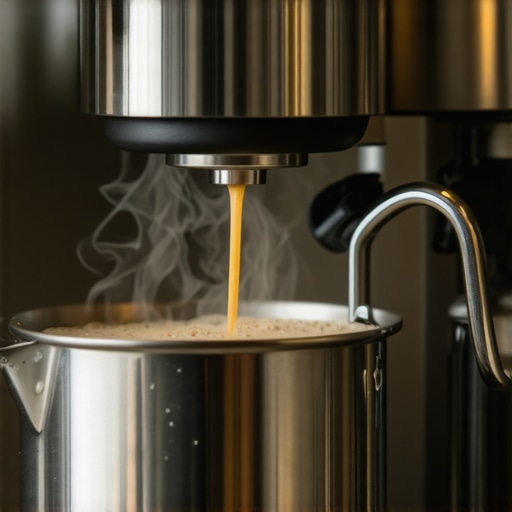
Descale Without Damaging the Internals
Once the lines are clear, you need to address the mineral buildup that provides a ‘home’ for odors. Sulfur molecules love to cling to lime scale. You should look into the best way to descale a boiler without using harsh vinegar, as vinegar can actually react with certain brass components and make the smell worse. Use a citric acid-based cleaner or a commercial product specifically designed for coffee equipment. This process strips the ‘nesting’ sites for bacteria. However, be careful—if you overdo it, you might find the reason your espresso tastes metallic after descaling is that you’ve exposed raw copper or brass to the acidic solution.
Re-evaluate Your Filtration Setup
If the smell returns within a week, your water source is the culprit. Many people use softeners to prevent scale, but you have to know how to tell if your water is too soft for brewing. Over-softened water can sometimes interact with magnesium anodes in some boiler types, creating hydrogen sulfide gas. You might need an activated carbon filter specifically rated for sulfur removal. I found that switching to a dedicated BWT or Mavea filter pitcher specifically for my machine stopped the reaction entirely. Knowing how to tell if your machine boiler is accumulating lime scale is a vital part of mastering the art of home espresso tips for beginners, as it helps you anticipate these odors before they ruin your morning. Every time I refill my reservoir now, I do a quick ‘sniff test’ and check for clarity; it’s a simple habit that saves my palate and my machine.A common mistake I see among enthusiasts is the belief that higher-end equipment is somehow immune to these environmental ‘stinks.’ In my experience, the opposite is true. While you might be focusing on the secret to getting consistent shots on a dual boiler, those large internal reservoirs are actually more prone to stagnation than a simple thermoblock machine. If you aren’t pulling five or six shots a day, that water sits, cooks, and concentrates.
Why Top-Tier Machines Fail Faster With Poor Water
Everyone assumes that if they spend thousands on a machine, it should handle whatever comes out of the tap. But the nuance is that precision engineering requires precision chemistry. I’ve seen enthusiasts install massive filtration systems that strip every single mineral from the water, thinking they are being ‘safe.’ This is a huge mistake. Distilled or RO water without remineralization is ‘hungry’ water; it is chemically unstable and will aggressively leach metals from your boiler, which can sometimes create a metallic, sulfur-adjacent odor. Understanding how to tell if your water is too soft for brewing is just as important as preventing scale. According to the Specialty Coffee Association (SCA) in their Water Quality Handbook, water must have a specific balance of alkalinity and hardness to prevent both corrosion and scale. When you strip all the minerals, you lose the buffer that prevents your boiler from becoming a reactive chemical tank.
How does water chemistry change inside a pressurized boiler over time?
Inside your boiler, water isn’t just sitting there; it’s under constant heat-cycling. Every time you steam milk, you are removing pure H2O as vapor and leaving the minerals behind. This process, known as ‘fractional distillation,’ means the water remaining in your steam boiler becomes more and more concentrated with whatever impurities were in your source water. Eventually, the concentration of sulfates becomes high enough that they react with the heat and the metal, resulting in that dreaded swampy smell. This is why a simple flush isn’t always enough—you have to manage the input. 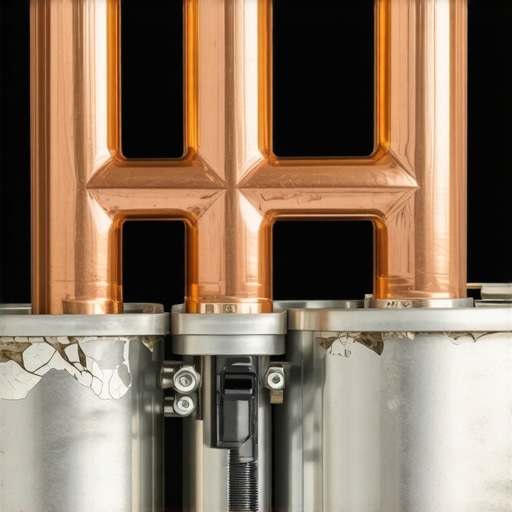
The Descaling Trap That Makes Things Worse
Here is the ‘oops’ factor most people miss: descaling when the machine already smells. If you use a harsh acid when there is already a sulfur-producing bacterial colony or heavy sulfate buildup, you might break those chunks loose without fully dissolving them. These ‘flakes’ of scale get trapped in the tiny orifices of your three-way solenoid valve. Not only does the smell linger, but the reason your espresso tastes metallic after descaling is often because the acid has stripped the protective ‘seasoning’ (a thin layer of oxidation) off the copper, leaving it raw and reactive. Before you reach for the chemicals, consider the move for better espresso without buying a new machine: consistent water rotation. While choosing the best barista gear for coffee enthusiasts often focuses on the flashy tools, your most important piece of gear is actually your water test kit. Even your grinder maintenance matters here; knowing how to select the perfect coffee grinder for your brew is vital, but if your water smells like a chemistry lab, no burr set in the world can save the shot. Have you ever fallen into this trap and spent a weekend tearing your machine apart? Let me know in the comments.
Stop the Sludge with Better Water Rotation
The secret to a swamp-free kitchen isn’t just deep cleaning; it’s constant circulation. When I first started, I thought I could just top off my reservoir and be fine. I was wrong. If you aren’t pulling enough shots to cycle the entire boiler every two days, you’re essentially cooking a soup of minerals and bacteria. I now make it a point to perform the easy way to check if your boiler is actually empty once a week, ensuring I start with fresh water. According to technical guidelines from manufacturers like La Marzocco in their Technical Bulletin #104, water that is excessively soft can lead to sensor failures because it lacks the conductivity needed for the probe to detect water levels. This often results in boilers overfilling or failing to refresh properly, which creates those stagnant pockets where odors thrive. Making water rotation a priority is a key part of mastering the art of home espresso tips for beginners.
The Tools I Use to Prevent Biofilm and Scale
I don’t rely on guesswork anymore. When choosing the best barista gear for coffee enthusiasts, I always tell people to skip the fancy wood-handled tampers until they have a proper GH/KH drop test kit. I personally use the API Freshwater Master Test Kit because it gives me exact parts-per-million readings that digital TDS meters often miss. I’ve found that digital meters often ignore the non-conductive organic compounds that contribute to that pond smell. Even your grinder maintenance plays a role; old, rancid oils trapped in your burr housing or chute can mimic sulfur smells when they get warm. I use the cotton swab trick for cleaning hidden grinder crevices to ensure no old, oily grounds are sitting there rotting near my machine’s intake. If you want to know why your coffee grinder retains more grounds than it should, it usually comes down to static or a clogged exit path—both of which can harbor old smells that ruin your fresh shots. 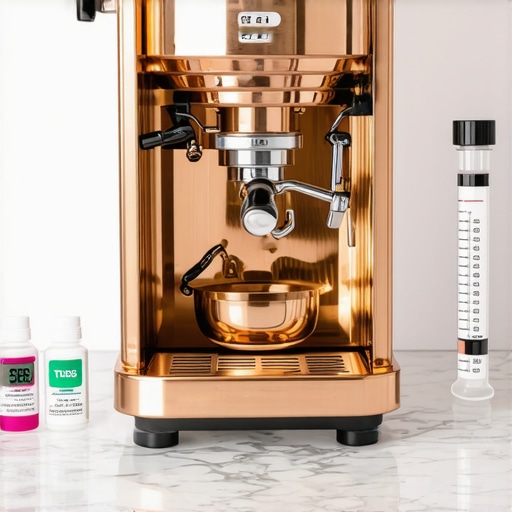
How do I maintain machine hygiene over several years?
Long-term success is all about the soft parts. You might find why your group head gasket is leaking after just one month is due to heat-hardening from leaving the machine on 24/7. I replace my silicone gaskets every six months regardless of their condition. It’s cheap insurance against the high-pressure steam that can degrade the seal over time. If you notice a drip, knowing how to fix a wobbly portafilter gasket in 30 seconds can prevent water from spraying into the internal electronics. Looking ahead, I suspect we will see more machines with integrated real-time water quality sensors and automated boiler-flushing cycles that alert your phone the moment your sulfate levels spike. For now, I strongly encourage you to try the flashlight move for finding hidden channeling paths inside your group head; it’s the best way to spot mineral tracks and scale bridges before they become a full-blown sulfur problem.
The Hardest Lesson I Learned While Sniffing My Steam Wand
When I first faced that rotten egg odor, I realized that stagnation is the silent killer of great coffee. I used to think that simply topping off my reservoir was enough, but I was wrong. I learned that topping off just dilutes a growing problem; you have to flush the system entirely to reset the chemistry. I also discovered that by the time you actually smell the sulfur, a bacterial colony or mineral buildup is likely already well-entrenched. Don’t trust your nose alone—regular maintenance is your only real defense. Most importantly, I found that high-end gear is more sensitive to water quality, not less. If you aren’t careful, you might find the reason your espresso tastes metallic after descaling is that you’ve stripped the machine’s internal seasoning while trying to chase away the stink.
Gear That Keeps My Morning Brew From Smelling Like a Lab
I don’t leave my water quality to chance anymore. To maintain a clean and crisp extraction, I rely on a few specific tools that every enthusiast should consider. First, the API Freshwater Master Test Kit is non-negotiable; it helps me know exactly how to tell if your water is too soft for brewing or if my sulfate levels are spiking. Second, I use citric-acid based cleaners instead of vinegar to avoid lingering scents and unwanted chemical reactions with brass components. Third, I keep a dedicated set of silicone gaskets on hand. Replacing these regularly is the move for better espresso without buying a new machine because it ensures a tight seal and prevents old water from leaking into the internal housing. These small investments in choosing the best barista gear for coffee enthusiasts make a world of difference in the longevity of your setup.
#IMAGE_PLACEHOLDER_E#
Reclaim Your Kitchen From the Swamp
Taking control of your water chemistry is the single most empowering step you can take for your home cafe. Fixing a smelly machine isn’t just about cleaning; it’s a vital part of mastering the art of home espresso tips for beginners. You aren’t just a coffee drinker anymore; you are the technician and the caretaker of a precision instrument. Once you’ve performed the easy way to check if your boiler is actually empty and refreshed your lines, that first clean shot will taste like a massive victory. Don’t let a temporary smell discourage you from the ritual of the perfect pull. Your machine is ready to shine again, and you now have the skills to keep it that way. Have you ever been blindsided by a weird smell in your kitchen after a long weekend away? Let me know your ‘stinky coffee’ horror stories in the comments below!