How to Check Your Espresso Machine’s Group Head Flow Rate
I was standing in my kitchen at 6 AM, staring at a shot of espresso that looked more like dark soy sauce than the “liquid gold” promised by every influencer on my feed. I had just spent a small fortune on top-rated espresso machines, and yet, my kitchen smelled like disappointment. I kept tightening my grind until my coffee grounds were clumping like little rocks, thinking the grinder was the culprit. It wasn’t. It took me three bags of wasted specialty beans to realize the problem wasn’t the bean or the grind—it was the erratic stream of water coming out of my group head. If you have ever felt like your machine was conspiring against you despite having the best barista gear, you are not alone. Today, we are going to fix that by figuring out exactly how much water is hitting your puck every second.
Your Group Head Might Be More Temperamental Than You Think
I used to be the guy who ignored the “flow” because I thought the pump did all the heavy lifting. I once even blamed a bad taste on descaling, wondering why your espresso tastes metallic after descaling, when in reality, my flow rate was so high it was just blasting channels through the coffee puck. A massive mistake I made early on was assuming every machine out of the box was calibrated perfectly. Most aren’t. If your flow is too fast, you get sour, thin shots; too slow, and you’re drinking bitter charcoal. According to the Specialty Coffee Association, a standard flow rate for most vibratory and rotary pumps should ideally sit between 6ml and 10ml per second when unrestricted. If you’re outside that window, your expensive beans don’t stand a chance. Have you ever noticed why your espresso shot is spraying the back of your cup? That’s often the first sign that your flow—and consequently your pressure—is completely out of whack. Tell me, have you faced this specific problem where every variable seems right but the taste is still wrong?
Is checking your flow rate actually worth the hype?
You might think this sounds like overkill. Do you really need a stopwatch and a gram scale just to make a latte? If you want the secret to getting consistent shots on a dual-boiler or any machine for that matter, then yes, it absolutely is. Without a consistent flow, you are just guessing every time you move your grinder’s adjustment ring. It’s the difference between a “good enough” caffeine hit and the best cup of coffee you’ve ever had in your own kitchen. Sometimes the issue is internal, and you need to know how to tell if your machine boiler is accumulating lime scale, because scale is the number one killer of consistent flow. Let’s get into the nitty-gritty of how we actually measure this without needing a degree in hydraulic engineering.
Grab Your Scale and a Dry Towel
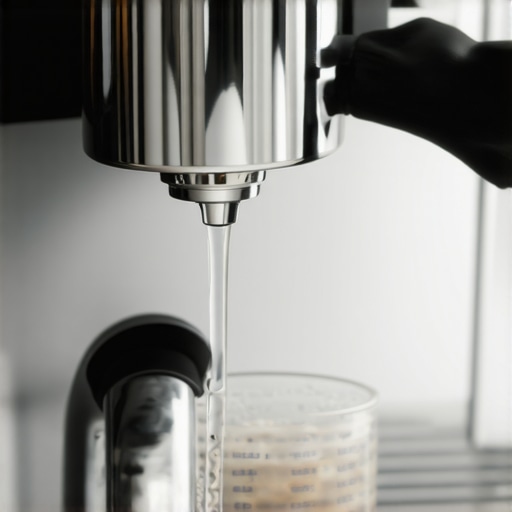
To start, you need two things: a precision scale and a stopwatch. If you are still mastering the art of home espresso tips for beginners, do not overthink the tech. Any scale that measures in grams will do. My biggest disaster happened when I tried to eyeball it using a regular coffee mug. I ended up with water all over my expensive coffee grinder and a scale that started flickering like a horror movie prop. Place your scale on the drip tray, put a vessel on top, and tare it to zero.
Clear the Path for the Water
Remove your portafilter entirely. We want to see how the machine performs without any resistance. If you leave the portafilter on, you are measuring the flow through the spouts, which can be misleading, especially if you have a dirty basket or you are wondering why your espresso shot is coming out of only one spout. The water should fall straight from the shower screen. If it is spraying wildly or coming out in uneven jets, your screen might be clogged with old oils, which is a common reason why your espresso puck has a hole in the center. Give it a quick wipe or a purge before you start the real test.
The Ten Second Measurement Method
This is where the math happens, but I promise it is simple. Get your timer ready in one hand and the pump switch in the other. Hit them both at the same time. Let the water run for exactly ten seconds, then shut it off. You will probably notice a slight delay in the water stopping, but do not worry about it yet; we just want the bulk of the delivery.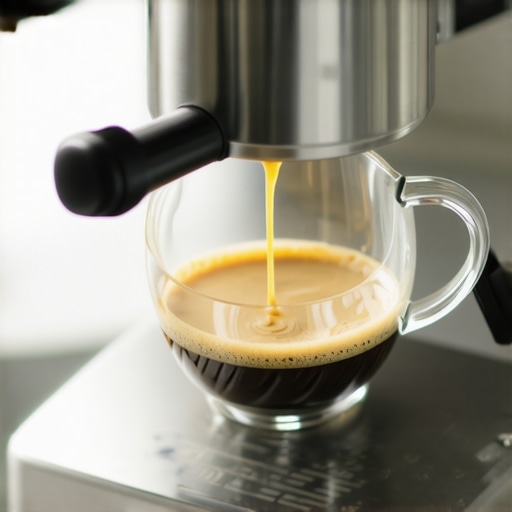 Once the pump is off, look at the weight. If your scale reads 90 grams, your flow rate is 9ml per second (90 divided by 10). If you are seeing something like 150 grams, your pump is essentially a fire hose, and no amount of pressure from the truth about using spring-loaded tampers for even shots will save your extraction from being a watery mess.
Interpreting the Data Before You Brew
If your number is too low—say, under 4ml per second—your machine is struggling. This often points to a scale buildup in the mushroom or a failing pump. You might also notice a lingering leak, which is a good time to learn how to fix the annoying drip after your espresso shot stops. On the flip side, if the flow is too fast, you might need to look into a flow control device or check if your OPV is bypassed. I once spent an entire Saturday morning recalibrating my machine because I found out my flow was 14ml/s. The difference in the cup once I dialed it back to 8ml/s was like going from standard definition to 4K—the flavors actually stayed in their lanes instead of crashing into a bitter wall.Let’s dig deeper into the nuances that glossy manuals usually skip over. Most home baristas treat the ‘9-bar rule’ like a law of nature, but in my experience, chasing that specific number is exactly why your espresso tastes bitter even with a fast pull. When you force 9 bars of pressure through a traditional puck at a high flow rate, the water eventually finds the path of least resistance and blasts a hole right through it. If you have ever used a bottomless portafilter, you have probably seen the horror show of spraying water when this happens. Instead of cranking the pressure, I have found that backing it down to 6 or 7 bars often yields a much sweeter, more balanced cup. A fascinating 2020 study by a team of mathematicians led by Dr. Jamie Foster at the University of Portsmouth actually found that using slightly less coffee, ground a bit coarser, and pulled at lower pressures leads to more consistent and repeatable extractions. It challenges the traditional espresso dogma, but it works brilliantly for home setups where thermal stability is a constant battle.
Does your pump type actually change the flavor profile?
It really does, and it is a nuance many ignore when choosing the best barista gear for coffee enthusiasts. Vibratory pumps have a slow, natural pressure ramp-up which acts like a built-in pre-infusion. In contrast, rotary pumps hit the puck with full force instantly. If you are switching from an entry-level machine to a pro-sumer rotary model and do not adjust your flow expectations, your extraction will fail before the timer hits ten seconds. Another hidden killer of consistency is heat transfer within your hardware. People often overlook why your grinder burrs are getting hot during a single dose. As those metal burrs heat up, they expand, shifting your grind size just enough to ruin your flow rate measurements. 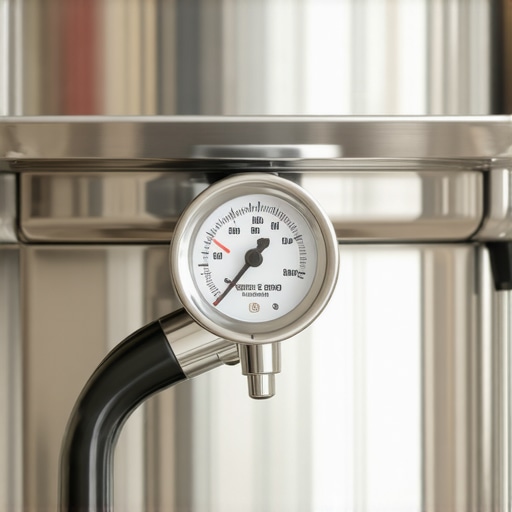 Then there is the common cleaning trap that I see way too often. I have seen people use the same degreasers they use for their kitchen floors to ‘deep clean’ their machine components. This is the dish soap mistake that ruined your group head seal and left a permanent chemical aftertaste that no amount of rinsing can fix. Worse, if you are using harsh descalers without knowing your boiler’s metal composition, you might end up wondering why the reason your espresso tastes like vinegar or metal persists for weeks. Even your specialty accessories can be a trap; while high-end milk frothers that transform your coffee experience are fantastic, they cannot hide the saltiness of an underextracted shot caused by poor flow management. Do not fall for the ‘tamp till it hurts’ method either. Despite the truth about using spring-loaded tampers for even shots being that levelness is what actually matters, many try to fix a fast flow by pushing harder. Coffee is incompressible after a certain point; tamping harder will not fix a machine that is pumping water like a fire hose. We often obsess over the ‘best’ brand, but the best results come from mastering these invisible physics lessons. Have you ever fallen into this trap where you thought more pressure was the answer? Let me know in the comments.
I used to think that once I had my machine dialed in, the hard part was over. I was wrong. The real battle is maintaining consistency over months and years. If you have noticed why your espresso machine takes longer to heat up lately, you are likely dealing with the silent killer: scale. I personally use a specific water recipe—either a commercial mineral packet or a custom DIY concentrate—because the best way to descale a boiler without using harsh vinegar is to never let scale form in the first place. According to the technical research in ‘Espresso Coffee: The Science of Quality’ by Andrea Illy and Rinantonio Viana, mineral deposits do not just slow down heating; they create pockets of thermal instability that ruin shot-to-shot repeatability by absorbing heat that should be hitting your coffee puck.
Small tools that make a massive difference in your workflow
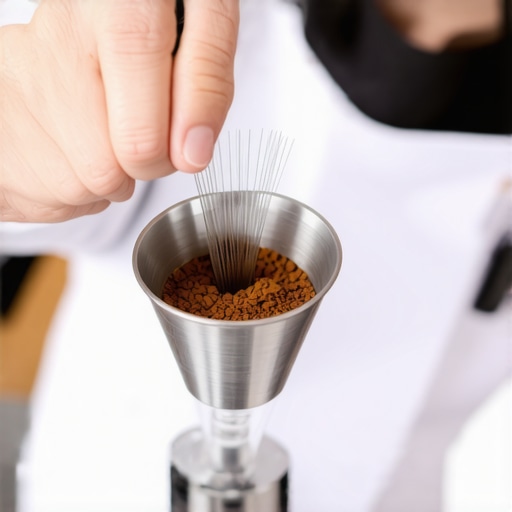
Next, let’s talk about the gear that actually matters for your daily routine. Forget the gold-plated tamps for a second. I swear by a simple WDT (Weiss Distribution Technique) tool. It is just a few 0.35mm needles, but it is the only way I have found to stop why your coffee grounds are clumping together and creating those nasty channels. I also moved to precision baskets because learning how to tell if your basket is too large for your dose is the quickest way to fix a muddy, soggy puck. When you combine these with a high-end coffee grinder, you start seeing the ‘liquid gold’ consistently rather than by sheer luck. High-quality milk frothers that transform your coffee experience are great for aesthetics, but the foundation of the flavor always comes back to these small, mechanical interventions during the puck prep phase.
How do I keep this precision gear running like new?
The secret to a long-lasting setup isn’t a massive deep clean once a year; it is the thirty-second habits you perform daily. I use the cotton swab trick for cleaning hidden grinder crevices every time I finish a bag of beans. It prevents old, rancid oils from tainting your fresh specialty roast. Also, pay attention to your seals. If you find why your group head gasket is leaking after just one month, you might be over-tightening your portafilter or ignoring a build-up of coffee grit on the rim. It is a common mistake that wears down the rubber and the group head metal unnecessarily. Looking ahead, I suspect we are moving toward an era of ‘smart’ profiling where even entry-level machines will have built-in sensors to track flow rate in real-time. But until your machine can talk back to you, you have to be the one listening to its subtle cues. I strongly encourage you to try the WDT method tomorrow morning—it is the single most effective way to improve your extraction without spending another dime on a new machine.
Lessons Learned from a Thousand Wasted Espresso Shots
I wish I could tell you that buying one of the top-rated espresso machines would solve all your problems instantly, but it won’t. The first major lesson I learned is that your environment is alive; a rainy day changes your grind as much as a new bean does because of how coffee reacts to humidity. Secondly, never underestimate the power of ‘clean water.’ If you do not manage your mineral content from day one, you will be constantly searching for the best way to descale a boiler without using harsh vinegar instead of enjoying your morning. Finally, the most expensive gear is useless if you do not trust your tongue. If the numbers say it is a ‘perfect’ shot but it tastes like battery acid, the numbers are wrong. Calibration is a guide, but your palate is the final judge.
The Reliable Toolkit That Actually Lives on My Counter
When you are choosing the best barista gear for coffee enthusiasts, it is easy to get distracted by shiny objects that do not improve the cup. I personally trust my high-precision scale above all else; eyeballing flow is a recipe for disaster. I also never pull a shot without my 0.35mm WDT tool to break up clumps. This is the only way to ensure that how to select the perfect coffee grinder for your brew actually results in a consistent, channel-free puck. For those looking to dive into the actual physics of coffee, the book ‘Espresso Coffee: The Science of Quality’ remains my most trusted source for troubleshooting the complex variables of extraction.
#IMAGE_PLACEHOLDER_E#
Your Journey to the Perfect Extraction Starts Tomorrow
Improving your home espresso game is not about achieving perfection on the very first try; it is about systematically eliminating the variables that cause frustration. By measuring your flow rate and paying attention to these hidden mechanical details, you move from being a spectator to a creator. Whether you are still mastering the art of home espresso tips for beginners or fine-tuning a professional-grade dual boiler, remember that every bad shot is just data for your next great one. Even with the most advanced milk frothers that transform your coffee experience, the soul of the drink is always that perfectly calibrated espresso base. Take it one gram at a time.
Have you ever noticed your machine behaving differently on humid days compared to dry ones? Let me know your experiences with environmental variables in the comments below.