Why Your Espresso Scale Turns Off Right Before the Shot Ends
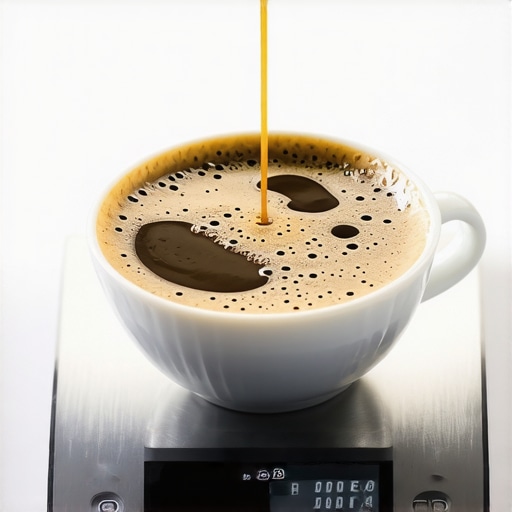
I was staring at the clock, my heart syncopated with the rhythmic thrum of the vibratory pump, watching the first drops of a gorgeous Ethiopian Yirgacheffe hit the cup. My eyes were glued to the digital display—24 grams, 25 grams, 26 grams—and then, in a blink of an eye, the screen went pitch black. I froze. Was the battery dead? Did the steam kill it? In that split second of indecision, my 36-gram target shot past 40, then 50, effectively ruining my morning ritual. If you’ve ever felt that cold wash of annoyance when your gear fails you right at the finish line, believe me, I’ve walked a mile in those caffeinated shoes. Today, we’re going to dig into why your scale is ghosting you and how to ensure it stays awake for the full extraction.
Your Scale Just Quit at the Worst Possible Moment
The first time this happened to me, I made the classic rookie mistake: I blamed the batteries. I replaced three perfectly good sets of AAAs before I realized the hardware wasn’t the problem—the settings were. I even tried to measure my espresso yield without a scale by eyeing the volume, but my taste buds immediately told me that was a losing game. The reality is that most kitchen scales are programmed for baking, not for the slow-motion precision of a 30-second espresso pull. They see a weight that isn’t changing rapidly enough and assume you’ve walked away to let a loaf of bread rise, so they shut down to ‘save’ you. It is a logic gap that turns a helpful tool into a paperweight when you’re mastering the art of home espresso.
Are Budget Scales Actually Worth the Headache?
You might feel like you need to toss your current gear in the bin and buy a professional-grade unit immediately, but hold that thought. While specialized barista scales are great, most of the issues we face stem from environmental factors rather than just price tags. According to the NIST Handbook 44, which sets standards for weighing devices, electronic scales are incredibly sensitive to temperature fluctuations. When you place a hot cup of liquid directly onto a cold load cell, the internal sensors can drift, occasionally triggering a safety shutdown or an error code.
Why Your Countertop Buddy is Ghosting You
Beyond the simple timer settings, your scale might be reacting to the ‘noise’ of your machine. I spent weeks frustrated until I realized that the micro-vibrations from my pump were making the scale think the weight was unstable. If you’ve noticed why your espresso scale is jumping numbers right before it dies, it is likely the scale’s way of saying it can’t get a clear reading. This is common when you are making the move for better espresso and using more sensitive equipment. Have you ever had to stop a shot mid-pour because your scale decided to take an early lunch break? It is a rite of passage for every home barista, but it is one we can definitely troubleshoot.
Stop Your Scale from Falling Asleep on the Job
The most direct way to fix a ghosting scale is to perform what I call a ‘digital lobotomy.’ Most mid-range scales have a hidden configuration menu that allows you to adjust the auto-off timer. When you are choosing the best barista gear for coffee enthusiasts, you want a device that offers a ‘Manual’ or ‘Disabled’ auto-off mode. Typically, this involves holding down the ‘Tare’ or ‘Unit’ button while powering the device on. If your scale stays on for only 60 seconds by default, it might shut down while you are still pre-infusing or waiting for that first drop to hit the glass. Setting this to 180 seconds or disabling it entirely ensures the device stays focused on the task as long as you do.
Kill the Auto-Shutoff Timer for Good
If your scale doesn’t have a menu, it might be reacting to the low weight change. Think of the load cell like a tiny metal spring with a digital memory; if the weight doesn’t increase by at least 0.1g every few seconds, the software assumes it is just ‘noise’ or ‘drift’ and cuts the power. You can often trick these cheaper units by gently tapping the edge of the scale every ten seconds, but that is a distraction you don’t need when you are busy mastering the art of home espresso. The real fix is ensuring the scale is perfectly level. An unlevel scale forces the load cell to work against gravity at an angle, causing the internal processor to second-guess the reading and eventually time out.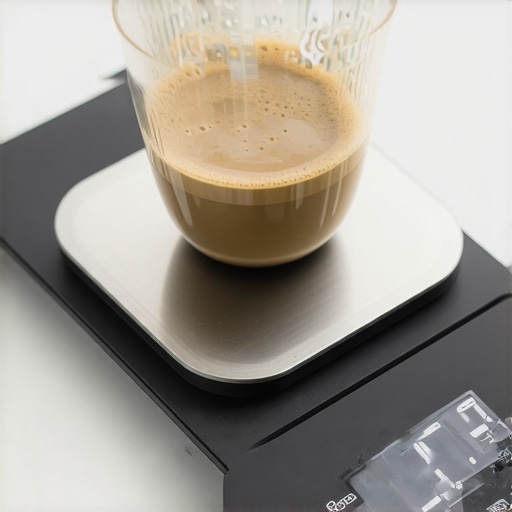
Shield the Sensors from Machine Heat
Heat is the silent killer of accuracy. Your espresso machine’s drip tray is essentially a metal radiator, and sitting a cold scale directly on it creates a thermal bridge. As the scale warms up, the metal components inside expand, causing the numbers to climb or the software to crash. I found that using a thin silicone mat or even a small piece of cork as an insulator makes a world of difference. This is especially true if why your coffee scale doesnt fit under your portafilter is forcing you to wedge it right against the hot group head. By adding just 2mm of insulation, you prevent the ‘thermal drift’ that often precedes a total shutdown.
Stop the Pump from Rattling Your Readings
Vibratory pumps are notoriously loud and shaky. This mechanical ‘noise’ travels through the machine frame, into the drip tray, and directly into your scale’s sensitive electronics. If your scale sees a weight that is vibrating 60 times per second, it gets confused and gives up. To combat this, you can try the simple cardboard trick to quiet a vibrating machine or invest in a thick rubber mat. I remember a particularly frustrating Tuesday where my scale would shut off the moment the pump reached full pressure. I was about to bin it until I realized my drip tray was loose. I jammed a folded business card into the gap to stop the rattle, and suddenly, the scale worked perfectly. It wasn’t a hardware failure; it was just a noisy environment. You might also want to look into how to stop your espresso machines feet from vibration walking to keep the entire setup stable enough for precision measurements.I used to think that spending $250 on a boutique barista scale was the only way to escape the ghosting nightmare. But here is a hard truth most gear reviewers won’t tell you: high-end scales can be even more temperamental than their budget cousins. While we are all busy choosing the best barista gear for coffee enthusiasts, we often overlook the fact that professional load cells are designed for laboratory environments, not the humid, vibrating, and magnetically noisy top of an espresso machine. One thing I learned the hard way is that your dual boiler machine is essentially a giant electromagnet. If your scale isn’t properly shielded, the internal electronics can experience interference. This is especially true when you are trying to uncover the secret to getting consistent shots on a dual boiler; the very components that give you stability can cause your scale to throw an error code or freeze.
Can Static Electricity Actually Break Your Scale?
Advanced users often struggle with drift—where the weight slowly climbs even when nothing is being added. While many blame off-gassing from beans, it is often static. When you use certain grinders, like when you select the perfect coffee grinder for your brew, the friction of the burrs creates a massive static charge. If that charge transfers to your scale, it messes with the voltage readings. According to a technical study on weighing precision by Scientech, environmental static can cause a deviation of up to 0.5g in high-precision sensors, leading to software crashes. 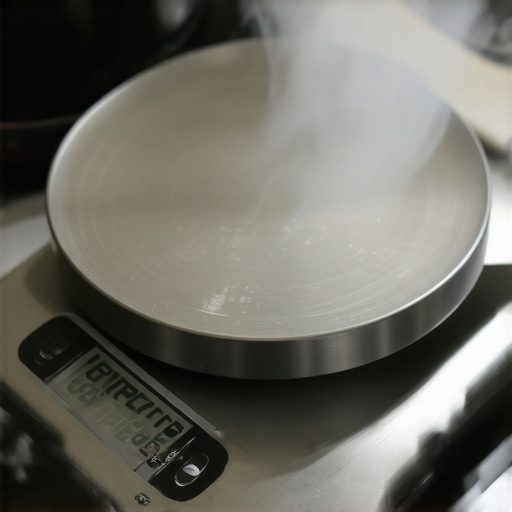 One massive oops factor I see constantly is using the scale as a tamping station. Never, ever do this. Even if the scale is rated for 2kg, the 30lbs of pressure you apply during tamping can permanently deform the load cell—a phenomenon known in metrology as permanent set. This is why your scale might work fine for a week and then suddenly start losing its mind mid-shot. If you want to avoid this, make sure you know the best way to store your tamper to prevent scratches and keep it far away from your weighing surface. We often get frustrated when your grinder settings feel like they changed overnight, but it might just be your scale giving you a false reading due to creep. Creep happens when a load is left on the scale too long, causing the sensor to slightly lose its spring-back. If you leave your heavy portafilter sitting on the scale while you prep your puck, you are setting yourself up for failure. Have you ever fallen into this trap? Let me know in the comments. I am curious if I am the only one who accidentally crushed a sensor by being too lazy to move a portafilter.Once you have tackled the digital glitches of your scale, the real challenge begins: keeping the rest of your setup from degrading. I have seen too many beautiful top-rated espresso machines for coffee lovers in 2025 end up on the secondary market simply because the owner didn’t understand the long-term relationship between water chemistry and sensor health. If your scale is acting up, it is often a canary in the coal mine for other issues like internal moisture or calcium buildup.
How do I maintain my precision tools over time?
The most critical thing you can do is manage your water. While we focus on the scale, the sensors inside your boiler are fighting a constant battle against limescale. According to the Specialty Coffee Association (SCA) Water Quality Standard, your water should have a total alkalinity of around 40 ppm to prevent both corrosion and scale. If you ignore this, you will eventually find yourself looking for the fix for a clogged water filter in your reservoir or, worse, dealing with a dead heating element. I personally use a BWT Bestsave pouch in my tank; it is a small investment that prevents the heartbreak of a machine teardown. Beyond water, your grinder needs a ‘spa day’ once a month. When you select the perfect coffee grinder for your brew, you are buying a precision instrument with tight tolerances. If you don’t use the best way to clean a grinder without taking it apart, old oils will eventually gum up the adjustment threads. I have seen many people search for how to fix a grinder adjustment ring that is stuck only to realize they could have avoided it with a simple vacuuming routine. 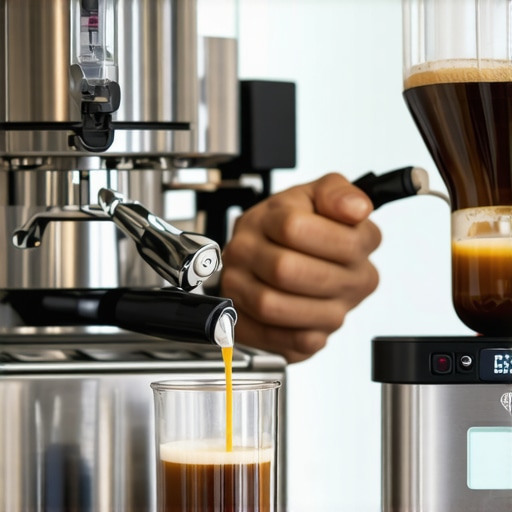 Looking toward the future, I predict we are moving toward ‘smart’ load cells integrated directly into the machine’s drip tray frame, connected via low-latency Bluetooth to our phones. This would eliminate the ‘heat drift’ and ‘vibration noise’ issues entirely by moving the brain of the scale away from the heat source. Until then, you must be the gatekeeper of your gear. If you start to notice the signs of a struggle, like how to tell if your machine boiler is accumulating lime scale, don’t wait for a total failure. Take twenty minutes this weekend to recalibrate your scale and deep-clean your group head. It is the difference between a frustrating morning and a perfect pour. My challenge to you: find your scale’s manual today and see if you can disable that annoying auto-off feature once and for all. You deserve the extra thirty seconds of peace while mastering the art of home espresso.
The Hardest Lesson I Learned About My Gear
After years of trial and error, I realized that precision is a double-edged sword. Here are the lightbulb moments that changed my workflow forever:
- The environment matters more than the price tag. I’ve seen budget scales outperform boutique units simply because they weren’t sitting directly on a vibrating pump.
- Static is a ghost in the machine. If you notice why your espresso scale is jumping numbers while the shot is pulling, check your grinder’s discharge area; a build-up of static electricity can actually interfere with the load cell’s voltage.
- Manual overrides save shots. If your scale allows you to disable the auto-off, do it immediately. It eliminates the anxiety of the ticking clock and lets you focus on the flow.
Tools That Actually Earn Their Spot on My Counter
I don’t just buy gear for the sake of it; I look for things that solve specific friction points in my routine. When I was choosing the best barista gear for coffee enthusiasts, I prioritized thermal stability and simplicity over flashy digital features.
- A 2mm Silicone Mat: This is the cheapest and most effective way to stop heat transfer from your drip tray to your scale’s sensors. It prevents the “drift” that ruins accuracy.
- The SCA Water Standards: Knowing your water chemistry is the only way to ensure the secret to getting consistent shots on a dual boiler doesn’t lead to internal sensor damage.
- Low-Static Grinders: When you how to select the perfect coffee grinder for your brew, look for features like RDT compatibility or anti-static coatings to keep your weighing surface clean and responsive.
Stop Chasing Seconds and Start Sipping
At the end of the day, these tools are meant to serve your experience, not dictate it. Don’t let a glitchy scale ruin the joy of mastering the art of home espresso. If your gear fails at the finish line, take a breath, recalibrate, and remember that even a “technically” imperfect shot can still be the highlight of your morning. Your palate is the ultimate scale, and it doesn’t have an auto-off timer. Have you ever had your scale die right at the 35-gram mark? Let me know in the comments how you handled the “blind” finish!