Why Your Coffee Beans Smells Like Grass and How to Rescue the Shot
I remember the exact moment I realized something was off with my espresso. I had just ground fresh beans, eagerly tamped my portafilter, and pulled a shot. But instead of that rich, caramel aroma I craved, all I could smell was a fresh-cut lawn. It was startling—and honestly, a bit embarrassing, considering I thought I was doing everything right.
That grass-like scent in your coffee beans is a common problem among home baristas and seasoned pros alike. At first, I thought maybe my beans were old or poorly stored. Turns out, the issue can stem from a variety of causes, from improper grinding to machine misadjustments. And the worst part? It can completely ruin your espresso experience.
But here’s the good news: you’re not doomed to serve up shots that taste and smell like a field. Today, I’ll help you understand why this happens and, more importantly, how to fix it. After all, a great espresso should delight your senses, not remind you of a backyard nightmare.
Getting to the Root of That Fresh-Mown Aroma
Before jumping into solutions, let’s talk about what causes that grassy smell. Often, it’s linked to specific compounds in the beans—like chlorogenic acids—that can produce green or hay-like aromas when not properly roasted or stored. Additionally, if your grinder isn’t calibrated correctly or your machine is operating at the wrong temperature, it can extract these undesirable flavors.
In my early days, I made the mistake of trying to troubleshoot without understanding the real culprit. I blamed the beans, adjusted my grind settings, but nothing changed. That’s a common mistake that can lead you down the wrong path. For example, if you’re interested in optimizing your grinder, this article on [fixing a grinder that sprays grounds everywhere](https://espressotechguide.com/the-fix-for-a-grinder-that-is-spraying-grounds-everywhere) might give you some tips.
The key is to start with high-quality, freshly roasted beans stored properly, then ensure your brewing equipment operates within the ideal parameters. This sets the foundation for a shot that’s rich, aromatic, and free of that grassy note.
Now, I want to ask—have you ever pulled a shot only to be hit with an unexpected, almost green smell? If so, don’t worry. You’re about to learn the step-by-step fixes that turned my brewing chaos into café-quality espresso. Let’s dive into how to get your beans back from the lawn and into the realm of deliciousness.
Fine-Tune Your Grinder for Pure Flavors
The first step is ensuring your grinder isn’t contributing to the grassy aroma. A common culprit is uneven particle size, which causes over-extraction of green compounds. To fix this, adjust your grinder’s grind size to a slightly finer setting. If your grinder has an adjustment ring that’s stuck, apply a bit of penetrating oil and follow these tips from this guide to free it without damage. Once adjusted, run a test batch and pull a shot—if the aroma improves, you’re on the right track.
Remember, a grinder that sprays grounds everywhere can undermine consistency. Check if your grinder is spreading grounds, and adjust accordingly. Proper calibration ensures uniform extraction, reducing grassy notes.
Inspect and Clean Your Espresso Machine Components
Misaligned or dirty parts can let green compounds seep into your shot. Focus on the group head and the portafilter gasket. Use a basin of hot water and a soft brush to scrub away coffee residue, especially around the gasket, where oils tend to build up. Replace worn gaskets using instructions from this article — a fresh gasket creates a seal that prevents unclean flavors.
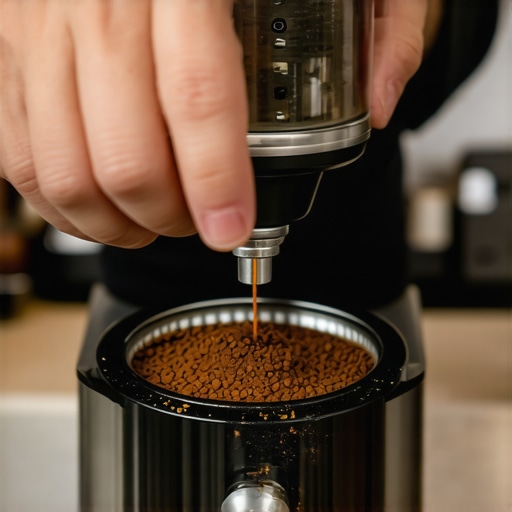
Regular cleaning of the portafilter and basket removes residual oils that can impart grassy tastes. For example, I once had a stubborn smell until I scrubbed my basket with a brush and descaled the brew chamber. A clean machine makes extraction more precise and flavorful.
Perfect Your Roast Profile and Bean Storage
Even the freshest beans can produce undesirable aromas if not roasted or stored properly. Choose beans roasted for espresso, ideally within the past 2-4 weeks. Store beans in an airtight container away from light, heat, and moisture. To recover aroma from beans that sat too long, use a quick ‘revive’ method: lightly roast them again or let them ‘degass’ in a sealed container for a few days. This refreshes their volatile oils and reduces grassy notes.
It’s also worth checking if your beans are roasted too lightly, which can preserve grassy chlorogenic acids. Consider switching to beans roasted slightly darker, which naturally diminishes these green flavors. Learn more about roasting levels at this resource.
Control Brewing Variables Precisely
Even perfect beans and a clean machine need the right brewing parameters. Temperature fluctuations lead to green flavors if too low; aim for 195-205°F (90-96°C). Use an accurate thermometer or a PID-controlled machine for consistency. Also, check your extraction time: too short can under-extract, leaving grassy tastes. Experiment with your shot timing, aiming for about 25-30 seconds for a standard espresso.
Adjust your dosage if your puck becomes soggy or dry. For correct dosing, consult this guide. Proper tamping pressure ensures uniform extraction, preventing green or sour flavors caused by uneven water flow.
Finally, ensure your water quality is good—chlorine or high mineral content can influence aroma. Use filtered water where possible, and run a cleaning cycle regularly. If you suspect your machine’s boiler or flow system is compromised, consider professional servicing or check this troubleshooting.
Many home baristas fall into the trap of assuming that upgrading to the latest espresso machine or a shiny grinder guarantees better results. But the truth is, there’s a common misconception that gear quality directly correlates with shot quality, when in reality, technique and understanding nuances matter far more. For example, many believe that investing in an expensive, commercial-style grinder will instantly improve their espresso, but without proper calibration or understanding of grind settings, that gear may still underperform.
Is Your Grinder Sabotaging Your Espresso Even When It’s ‘High-End’?
Research indicates that even premium grinders can retain residual coffee doses or have internal burr alignment issues that diminish performance. For instance, scale lag can cause timing errors, leading to inconsistent extraction and flavor loss. A common mistake is neglecting routine maintenance—shifting focus solely to the machine’s aesthetics or brand reputation. An often overlooked area is the grinder’s adjustment ring, which, if stuck or misaligned, can drastically affect grind size and shot consistency. You can learn more about fixing such issues from this guide. Another misconception revolves around milk frothers. Many believe that all frothers produce microfoam equally. In fact, improper steaming techniques or incompatible frothing pitchers—like those that are too hot—can cause large bubbles and ruin the velvety texture you desire. Proper pitcher shape, heat control, and steamer wand maintenance are often neglected, yet they are crucial in mastering microfoam. Now, let’s address a more advanced question: How can subtle gear mismatches ruin your shot even if each component looks perfect? It turns out that tiny mismatches—such as a portafilter that doesn’t seat correctly or a basket that’s slightly oversized—can cause uneven pressure and channeling, leading to inconsistent extraction. These seemingly minor issues are where many home baristas stumble, despite using high-quality equipment. According to a recent technical review, such small misalignments can contribute to flavor variability and crema breakdown. So, the takeaway is that optimal results require attention to detail in every gear component—not just investing in top-tier gear. Regular calibration, routine cleaning, and understanding the hidden nuances of your equipment can make all the difference in creating that perfect shot. Have you ever fallen into this trap? Let me know in the comments!,Maintaining your barista gear is crucial for consistently delivering top-tier espresso shots. Investing in the right tools has a direct impact on the longevity of your equipment and the quality of your brew. Personally, I rely on a high-quality calibration scale, like the [Espresso Scale](https://espressotechguide.com/why-your-espresso-scale-lag-is-killing-your-shot-accuracy), which I use daily to ensure precise dosing and extraction times. This small investment has transformed my consistency, revealing subtle issues before they affect flavor. Additionally, a reliable brush set for routine cleaning of group heads and filters prevents buildup and maintains optimal flow.
For grinders, a maintenance kit that includes burr cleaning brushes and lubricant is indispensable. Regularly removing coffee residues, especially from the burrs, reduces the risk of flavor contamination and mechanical wear. When my grinder starts to spray grounds erratically, I follow guidance from [this article](https://espressotechguide.com/the-fix-for-a-grinder-that-is-spraying-grounds-everywhere) to realign the burrs and adjust the grind ring, restoring uniformity.
Beyond physical tools, software plays a vital role. Many advanced espresso machines now include PID controllers that allow fine-tuning of temperature over time. Regularly verifying and adjusting these settings based on ambient conditions ensures stable extraction, especially if your environment varies seasonally.
Looking ahead, I predict that smart maintenance systems integrating sensors and diagnostics will become mainstream, alerting users proactively about component wear or temperature deviations. Such innovations will make keeping your gear in top shape easier than ever.
If you want to elevate your home setup, I highly recommend implementing a scheduled cleaning routine that combines manual tools with software checks. For example, setting bi-weekly cleaning sessions for your group head and gasket, accompanied by daily calibration with your scale, can lead to noticeable improvements in shot consistency.
**How do I maintain my espresso gear over time?** The key lies in routine cleaning, calibration, and paying close attention to subtle signs of wear. Don’t overlook small issues like grinding irregularities or temperature inconsistencies; addressing them early prevents costly repairs and flavor degradation.
For instance, ensuring your grinder’s adjustment ring isn’t stuck is essential—if it is, you can follow [this detailed guide](https://espressotechguide.com/how-to-fix-a-grinder-adjustment-ring-that-wont-budge) to safely free it without damage. Similarly, regularly inspecting your machine’s gasket with guidance from [this resource](https://espressotechguide.com/how-to-tell-if-your-machine-needs-a-new-group-gasket) helps prevent leaks that can compromise extraction quality.
Remember, investing time in maintenance is as important as the initial purchase. It ensures your investment continues to pay off in every shot you pull. Start today by scheduling a weekly cleaning check, focusing on your portafilter, water reservoir, and grinder. For an extra boost, integrate a calibration process with your trusted scale—small steps that yield big results.
What I Wish I Knew When Starting Out and the Surprising Lessons That Changed My Brew
In my early days of home espresso making, I thought that investing in high-end gear would instantly lead to perfect shots. Turns out, even the most expensive equipment is no substitute for knowledge, care, and a keen eye for detail. One of my biggest lightbulb moments was realizing how tiny misalignments—like an improperly seated basket or a slightly off-timing shot—could transform a beautiful brew into a grassy nightmare. These subtle lessons taught me that mastery comes not just from gear, but from understanding every component’s role and maintaining it diligently.
Another revelation was the importance of routine maintenance — cleaning filters, recalibrating grinders, inspecting gaskets—all of these small acts preserve flavor integrity. I’ll admit, I used to overlook the impact of storage; beans kept in poor conditions would always produce unwanted chlorogenic acids, waving green flags in my final cup. The key is consistency—dedicating time regularly to tune your setup ensures that every shot surpasses expectations. These insights became my secret weapons in elevating humble beans into extraordinary espresso, and I hope they inspire your own journey.
My Go-To Tools That Keep My Espresso Spot-On
Over the years, I’ve curated a set of tools that have genuinely transformed my brewing. First, a precise espresso scale is non-negotiable—measuring every dose guarantees consistency, and prevents those frustrating shot inconsistencies. A sturdy cleaning kit, including cleaning brushes and descaling solutions, helps me maintain my equipment’s health and flavor. For grinder calibration, I rely on detailed tutorials like realignment guides that demystify internal adjustments—saving me money and preventing errors.
Lastly, a good-quality bottomless portafilter has revealed flavors I never knew existed, turning routine shots into tasting adventures. These tools, combined with regular check-ins and a mindful approach, make brewing not just consistent but enjoyable, fueling my passion for truly great espresso.
Embrace the Art of Better Brewing and Keep Improving
Your journey with espresso gear doesn’t have to be perfect from Day One—every mistake is an opportunity to learn something valuable. Take pride in small victories, like dialing in your grind or ensuring your machine’s temperature stability. Remember, the path to great espresso is paved with patience, curiosity, and ongoing learning. The more you understand your equipment and its quirks, the more your brew reflects your dedication.
So, why not challenge yourself today? Adjust a minor setting, clean a neglected part, or experiment with a darker roast—you might uncover a new flavor dimension that transforms your experience. The future of your home espresso setup is bright, rich, and waiting for your personal touch. Let that inspire every shot you pull, and you’ll never look back.
Your Turn to Elevate Your Espresso Game
What small change have you been hesitant to make in your brewing routine that could make a big difference? Share your thoughts below and let’s grow together in this flavorful journey!