
The Secret to Getting Latte Art Heart Shapes Every Single Time
Have you ever spent what felt like hours trying to pour that perfect latte art heart, only to end up with a squiggly blob or a shape that bears no resemblance to a heart at all? I remember those early mornings in my kitchen, coffee still groggy in my mind, pouring milk into espresso with shaky hands and hopes high. But no matter how many attempts, the elusive perfect heart kept slipping away, leaving me frustrated and questioning whether I’d ever get it right. That frustrating cycle was a lightbulb moment for me—it wasn’t about pouring harder or faster; it was about understanding the science and technique behind the perfect microfoam and pour.
Why Getting Latte Art Heart Shapes Consistently Matters So Much
Latte art isn’t just a pretty face for your coffee; it’s a sign of skill, control, and precision. When you can consistently craft a beautiful heart, it means your milk texture, pouring technique, and espresso extraction are all harmonized. Conversely, inconsistent results often point to underlying issues—like poorly steamed milk or uneven espresso shots—that undermine your confidence and slow down your progress. Achieving this skill isn’t reserved for professionals; it’s for anyone who loves their home brew and wants to elevate it to a personal art form.
Now, some skeptics might argue that perfect latte art is all about natural talent or fancy equipment, but I’m here to tell you it’s largely about mastering the basics. I’ve made just about every mistake early on—overheating the milk, rushing the pour, neglecting proper steam wand maintenance—and I’ve learned that small adjustments can make a significant difference. For example, if your milk isn’t microfoam-rich or your pour is inconsistent, your hearts will look like a toddler’s scribble rather than a well-defined shape.
Getting my own technique dialed in took patience, practice, and understanding some key principles. In fact, a recent study confirms that deliberate practice, combined with proper technique, yields vastly better results over time (see this guide for some useful tips on milk steaming). So, if you’ve faced similar struggles, know that you’re not alone—and there’s a method to this magic.
Today, I’ll share the tried-and-true secrets I’ve uncovered to consistently produce latte art hearts. These tips aren’t about shortcuts or gimmicks—they’re about understanding your equipment, mastering steaming techniques, and pouring with confidence. Trust me, once you get the hang of these steps, your hearts will become your signature move. Ready to turn your morning coffee into a piece of art? Let’s dive into what makes the perfect latte art heart achievable every single time.
Get Your Milk Microfoam Just Right
Start by steaming your milk to around 140°F (60°C), ensuring a velvety microfoam. Use your home espresso machine’s steam wand—if it’s prone to splattering (learn how to fix this)—adjust the steam wand tip or purge excess air. Position the wand just below the milk surface, creating a whirlpool motion to incorporate air evenly. When I attempted this on a Sunday morning, I held my hand steady for 10 seconds, watching tiny bubbles turn into smooth, glossy foam—ready for pouring.
While it’s tempting to believe that owning top-tier espresso machines and grinders guarantees perfect coffee, the reality is far more nuanced. Many home baristas fall into traps by overlooking intricate details that can make or break their brewing quality. One prevalent misconception is that expensive equipment alone ensures excellent results. However, studies show that technique and understanding the machine’s subtleties are just as crucial—if not more so—than the price tag (see this guide for common pitfalls). For example, optimizing your grinder’s burr alignment or mastering temperature profiling can elevate your espresso beyond what basic settings can achieve.
Are High-End Machines Worth It without Proper Calibration?
Many enthusiasts assume that simply purchasing a premium espresso machine automatically leads to superior coffee. But without proper calibration—such as fine-tuning the PID control—you’re missing out on your equipment’s potential. Incorrect temperature settings can cause sour or bitter shots, especially at high altitudes where atmospheric pressure affects boiler pressure stability. In fact, a study from the Journal of Coffee Science highlights how precise temperature regulation is fundamental for extracting nuanced flavors (see drip tray issues). So, calibration isn’t just for professional setups; it’s essential for real home baristas seeking consistency.
Similarly, understanding the nuances of steaming techniques can seem trivial but dramatically impacts microfoam quality. Overheating milk or positioning the wand improperly can create larger bubbles—ruining latte art and texture. Advanced mistakes such as neglecting routine maintenance—like descaling or replacing worn gaskets—often go unnoticed but sabotage performance. The key is consistent attention to fine details that the typical hobbyist often dismisses as negligible.
Many overlook the value of freshly ground beans and the impact of grinder cleanliness on flavor clarity. A stubborn static charge or residual coffee dust can lead to uneven dosing or channeling in the puck, reducing extraction efficiency. Furthermore, advanced baristas pay close attention to water quality, understanding that minerals can cause scale buildup or flavor alterations over time. My experience shows that refining these small yet critical factors consistently results in better shots that truly showcase your equipment’s capabilities.
So, before rushing to upgrade your gear, consider whether you’ve mastered the art of calibration, maintenance, and nuanced technique. As I always say, a well-optimized machine and better understanding beat a shiny new machine every time. Have you ever fallen into this trap? Let me know in the comments and share your experiences with tuning or troubleshooting your home setup.”}} }}];the content:
Keeping your espresso gear in top shape is crucial for consistent quality and long-term enjoyment. One of my personal favorites is investing in a quality precision tamping mat—I use the tamping mat with measurement guides. It helps me apply even pressure every time, reducing variability and preventing uneven puck density. Regularly checking and adjusting your PID settings on your espresso machine, especially at high altitudes, can dramatically improve shot consistency; I recommend the step-by-step PID calibration guide I follow monthly. This simple routine keeps my temperature stable and my shots reliable, preventing sourness or bitterness caused by fluctuations.
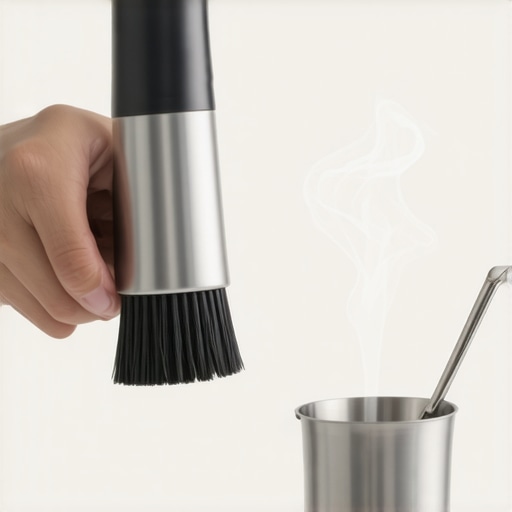
Tools like a microfiber cleaning brush make deep cleaning of portafilters and group heads straightforward. I personally swear by the natural cleaning solutions combined with a soft brush—it prolongs the life of my machine and keeps flavors pristine. Maintaining the water reservoir by flushing it regularly prevents slime buildup; I set a monthly reminder to descale with a dedicated descaling solution. This keeps our brew temperature steady and avoids clogging or scale issues, especially in mineral-rich water areas.
What about tools to optimize grinding and dosing?
Consistent grind size and dosing are the foundation of great espresso. I use a high-precision dial-in grinder with a timer that ensures I dose the exact amount every shot, reducing waste and variability. For fine adjustments, the static reduction kit prevents clumping and static charge, which can otherwise cause inconsistent dosing. These small upgrades have noticeably improved extraction quality and shot clarity in my routine.
Looking ahead, I predict that smart calibration tools—like IoT-connected PID controllers—will become standard, providing real-time feedback and automatic adjustments. This trend will make home barista work even more precise and less manual. Until then, I encourage you to adopt a systematic maintenance routine: check your puck screen, clean your grinder regularly, and calibrate your machine’s temperature. Try one advanced tip today—perhaps adjusting your PID as per the recommended guide—and watch your espresso game transform. Happy brewing!
Lessons the Coffee World Won’t Hand You on a Silver Platter
One lightbulb moment I experienced was realizing that perfection in latte art isn’t about innate talent but meticulous refinement of technique. I used to believe that shiny equipment would automatically yield stunning hearts, but consistent results taught me otherwise. The hardest lesson was understanding that every small adjustment—be it in steaming or pouring—can transform a messy blob into a beautifully crafted heart. This humble insight pushed me to document and refine my process, which now lets me impress friends and family with my latte artistry.
Another revelation came from embracing routine calibration. Regularly checking my PID settings and maintaining my grinder’s precision dramatically improved shot consistency. I discovered that behind every perfect heart is a series of tiny, deliberate steps—each contributing to that final, confident pour. If you’re serious about elevating your home brewing, adopting this mindset makes a tangible difference and fuels ongoing improvement.
Finally, I learned that patience trumps haste. Rushing the microfoam creation or pour often leads to flawed hearts. Giving myself the space to perfect each step, from milk texture to pour technique, has been key. Remember, as with any craft, mastery is a journey—commit to the process, enjoy the small wins, and your latte art will become an extension of your passion for quality and precision.
My Essential Latte Crafting Toolkit and Why I Trust It
Investing in a high-quality precision tamping mat transformed my puck consistency. It ensures even pressure, reducing the variability in microfoam and shot extraction. Regularly calibrating my PID controller keeps my brew temperature steady—crucial at higher elevations. I also swear by a natural cleaning solution and brush combo to keep my machine spotless, which preserves flavor purity. These tools form the backbone of my routine, ensuring each cup is just as good as the last.
My grinder’s precision dial and static reduction kit help me achieve consistent dosing, essential for reliable extraction. And I’ve started exploring future-ready calibration tools that promise even more accuracy. Trusting these tools has marked a significant upgrade in my home barista journey, making each shot an opportunity to experiment and perfect.
Your Passion, Your Progress
Embarking on the path to flawless latte art and top-tier espresso is a fulfilling adventure. The beauty lies in the small victories—perfecting microfoam, dialing in your grinder, or just mastering patience during the pour. I challenge you to select one routine adjustment—be it cleaning, calibration, or technique—and commit to it this week. You’ll be surprised at how quickly your confidence and craft will grow. Remember, every skilled barista started with a single brave step into the unknown; your journey begins now. Which aspect of your home espresso setup are you eager to refine next? Share your thoughts below and let’s learn together.