The Messy Reason Your Bottomless Portafilter Keeps Spraying Your Counter
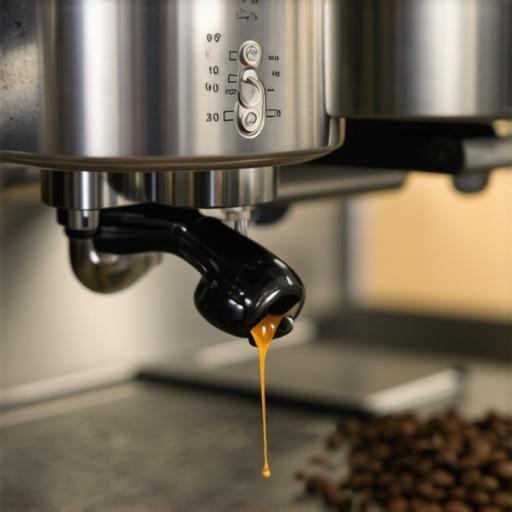
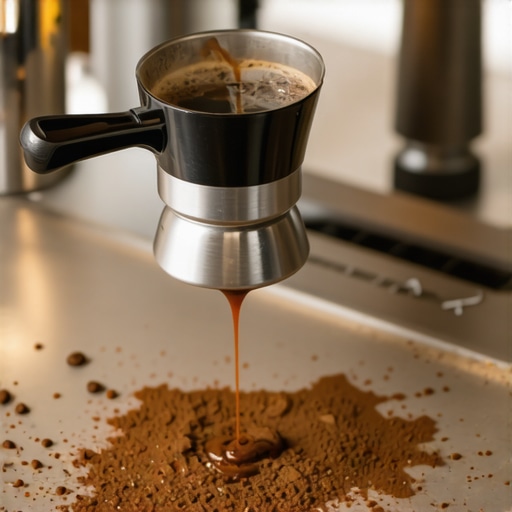
I remember the exact moment I realized my beautiful espresso setup was turning into a mini fountain every time I pulled a shot. It looked like my portafilter had developed a mind of its own — spraying hot coffee grounds and liquid all over my countertop. Frustration mixed with disbelief. It wasn’t just messy; it was a sign I was missing something crucial about my brewing process.
After countless cleanups and a few burned fingers, I dove into research and personal trial and error. What I discovered transformed my approach and saved my mornings. Today, I want to share that knowledge with you, especially if you’ve been battling the same messy curse.
Understanding Why Your Portafilter Doesn’t Play Nice
The fact is, a bottomless portafilter is a powerful tool to improve your espresso—if used correctly. But when it starts spraying, it often hints at underlying issues in your grind, tamping, or machine maintenance. The main culprit usually ties back to how your coffee grounds interact with water pressure and the portafilter’s seal.
One early mistake I made was relying solely on the factory zero point of my grinder. I thought that would produce perfect shots, but it often resulted in channeling and sprays. It turns out, relying on the grinder’s factory calibration can be misleading. For a thorough understanding, I recommend checking out [why relying on your grinder’s factory zero point is ruining your extractions](https://espressotechguide.com/why-relying-on-your-grinders-factory-zero-point-is-ruining-your-extractions). That article opened my eyes to the importance of proper grinder setup.
Now, why does this matter? Because an improperly calibrated grinder or tamp can cause uneven water flow, leading to excessive pressure build-up and spray-outs. Think of it like a garden hose with a kink—pressure builds until it bursts through the weakest point. The same thing happens inside your portafilter.
But don’t worry. Recognizing and fixing this isn’t as daunting as it seems. The key lies in understanding the root causes and adopting some proven techniques.
Are you tired of cleaning up espresso messes every morning? You’re not alone. Many home baristas face this issue, often without realizing the deeper technical causes. The good news is, with a few adjustments, you can stop the spray and start pouring beautiful, clean shots consistently.
Stay with me, because next, we’ll explore specific steps to diagnose and fix the problem, so you can enjoy mess-free espresso sessions that make you feel like a pro.
Start with a Proper Grind and Tamping Technique
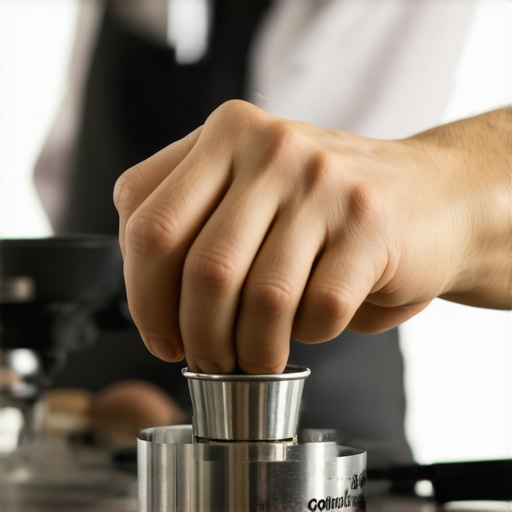
One of the most common causes of spray-outs is uneven pressure caused by inconsistent tamping or grind size. Use a consistent, level tamp applying about 30 pounds of force to ensure uniform density. For grinders, calibrate your burrs accurately, considering their specific quirks—if you’re using a flat burr setup, check out this guide on flat burrs to avoid bitterness and channeling.
Calibrate Your Grinder for Optimal Extraction
Relying solely on the factory zero point can misalign your grind, leading to uneven water flow and sprays. Take the time to calibrate your grinder precisely; this simple adjustment can drastically reduce channeling. If you’re unsure how, this article provides a detailed method.
Maintain a Clean and Dry Portafilter
Residual coffee oils and moisture can cause inconsistent seals, resulting in pressure spikes that lead to spraying. Regularly clean your portafilter with this cleaning technique. Ensure it’s thoroughly dry before brewing to avoid moisture buildup that can compromise the seal.
Adjust Dose Weight for Consistency
Too much or too little coffee can create uneven resistance, affecting water pressure. Use a digital scale to dose your coffee precisely each time—aim for 18-20 grams, depending on your basket. Check out this guide to ensure your basket’s resistance remains consistent.
Test and Fine-Tune Water Pressure
High pressure can cause sprays, especially if your machine’s pressure valve isn’t functioning perfectly. Use a pressure gauge on your machine to monitor and set your brew pressure around 9 bar. If you’re experiencing inconsistent pressure, visit this resource to troubleshoot flow rate issues.
Practice Consistent Pouring and Tamping
Haphazard pouring or tamping can create channels in the coffee puck, causing uneven water flow. Keep your tamp vertical and apply steady, even pressure. When pouring, ensure your coffee bed is evenly saturated from the start. The more consistent your technique, the less chance of sprays or channeling occurring.
Monitor and Adjust Regularly
Espresso brewing isn’t static—what works one day might need tweaking the next, especially as beans age. Regularly inspect and adjust your grind size, tamping pressure, and dose. If spray-outs persist despite these steps, revisit this insight on grinder retention to uncover hidden issues.
While many enthusiasts focus on dialing in grind size or tamp pressure, there’s a less obvious yet crucial nuance that can make or break your espresso experience: the interplay of gear calibration and maintenance. Contrary to popular belief, investing in the latest espresso machine or a fancy grinder won’t guarantee perfect shots if your equipment isn’t properly calibrated or maintained. In fact, many overlook that even high-end machines require meticulous setup, like calibrating your burrs or monitoring boiler pressure for consistent results.
Are You Ignoring the Subtle Signs Your Equipment Needs a Tune-Up?
For instance, flat burr grinders often fail to produce clean extraction on ultra-light roasts, not because the beans are difficult, but due to misaligned burrs that cause uneven particle size distribution. Re-aligning burrs correctly can significantly improve extraction quality and reduce channeling or sprays. Experts suggest regular checks and adjustments—delaying these can lead to compound issues that are hard to diagnose later. For detailed calibration techniques, see this guide.
Moreover, many home espresso machines suffer from overlooked maintenance tasks like descaling or cleaning the flow restrictors. Neglecting these can lead to pressure inconsistencies, which in turn can cause uneven extraction or spurting. Regularly inspecting and cleaning your equipment ensures it performs at its peak. For example, cleaning the portafilter correctly prevents residual oils from affecting the seal, which is critical for maintaining consistent pressure.
Another often-missed aspect is understanding the importance of dynamic pressure profiling, especially when pulling multiple shots in succession. Many assume that setting a fixed pressure suffices, but advanced techniques suggest adjusting pressure during extraction based on bean roast level and acclimation of your machine. This nuanced approach can significantly enhance flavor clarity and body.
Failing to recognize these subtle but impactful details can result in persistent issues like bitterness, sourness, or inconsistent crema—all of which can be traced back to equipment quirks rather than bean quality. The key is to adopt a mindset of ongoing calibration and vigilant maintenance, viewing your gear as an extension of your craftsmanship.
Have you ever fallen into this trap? Let me know in the comments. Improving beyond the basics is what transforms a home setup into a true barista experience. Remember, understanding these nuances allows you to troubleshoot effectively and unlock the full potential of your gear, producing shots that are not only visually stunning but also richly flavorful.Maintaining your espresso gear isn’t just about occasional cleaning; it’s about building a routine that ensures consistency, longevity, and peak performance. Personally, I rely heavily on a few specialized tools that have become indispensable in my setup. First, investing in a high-quality burr calibration kit allows me to verify and recalibrate my grinder regularly, ensuring uniform particle size and preventing issues like trap retention that can cause uneven extraction. Additionally, a precise digital scale is critical for dosing accuracy. I prefer models with tare functionality and built-in timer, helping me replicate shot weights within 0.1 grams consistently. Over time, these small adjustments compound into significant improvements in flavor and shot quality. For cleaning, I swear by a quick basket scrub using a dedicated scrub brush and a cleaning solution that dissolves coffee oils without damaging the metal. Regular descaling is also vital; I schedule this monthly, especially if using hard water, to prevent calcium buildup affecting pressure stability. As for milk frothers, I recommend a pH-balanced cleaning routine that maintains microfoam integrity. These proactive measures extend equipment life and keep your espresso consistently delicious. Looking ahead, I believe the trend is moving towards smarter, connected maintenance tools that send alerts before minor issues become costly repairs. How do I maintain my equipment over time? Consistent calibration of my grinder’s burrs is non-negotiable, especially considering the disruptive effect of misaligned flat burrs on taste and reliability. For instance, revisiting the process outlined in this article has helped me fine-tune my setup without guesswork. I highly recommend trying out the 30-second hack to fix static buildup, which can drastically reduce mess and static-charged coffee grounds during grinding—it’s a small step that makes a noticeable difference. Remember, investing in these tools and routines now saves headaches and money later, keeping your espresso game strong for years to come.
Three Lessons From My Espresso Journey That Changed Everything
Through countless attempts and early messes, I learned that even small tweaks—like calibrating my grinder precisely or maintaining a clean portafilter—make a significant difference. The biggest lightbulb moment was realizing equipment maintenance isn’t just routine; it’s the foundation of consistency. Addressing subtle issues like burr misalignment or pressure inconsistencies unlocked a new level of flavor and shot quality that I hadn’t been able to achieve before.
Another revelation was understanding the importance of controlling water flow pressure during extraction. Adjusting my brew pressure and monitoring flow rate taught me that a steady, predictable environment is key to avoiding sprays and channeling. It’s easy to overlook these details, but their cumulative effect elevates your espresso game from good to exceptional.
Finally, I discovered that investing in the right tools—such as a burr calibration kit and a precise digital scale—empowers me to troubleshoot and refine my setup with confidence. Doing so transforms espresso brewing from a guessing game into a precise craft, giving every shot that professional touch.
My Essential Arsenal for Better Espresso
First, a burr calibration tool is indispensable. Regularly checking and adjusting my grinder ensures particle size remains uniform, preventing channeling and sprays. Second, a dedicated cleaning brush combined with a quality cleaning solution keeps oils and residues from compromising the seal and pressure stability. Third, a precise digital scale allows for consistent dosing, critical for reproducible shots. Lastly, staying on top of regular descaling routines—especially in hard water areas—ensures your machine performs optimally and avoids pressure issues that cause sprays. These tools and habits together keep my setup reliable and my shots consistently fantastic.
Embrace Your Barista Spirit: Keep Pushing Forward
Every espresso shot is an opportunity to learn and improve. Embrace the process with patience, curiosity, and a willingness to experiment. Remember, mastering your home espresso isn’t about perfection from the start but about enjoying the journey of discovery. With the right knowledge and tools, you’re well on your way to crafting coffee that delights every time. So, what small tweak will you try today to elevate your espresso game? Share your thoughts below—I’d love to hear about your progress.