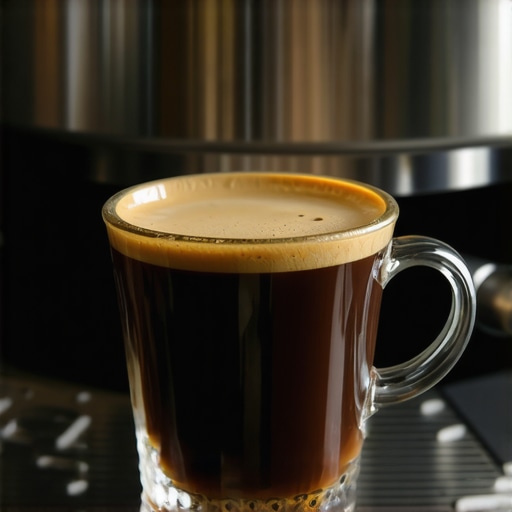
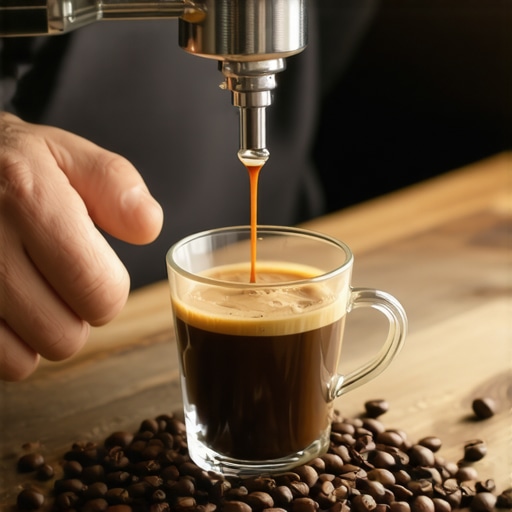
The Secret to Using a Manual Lever Machine for Dark Roasts
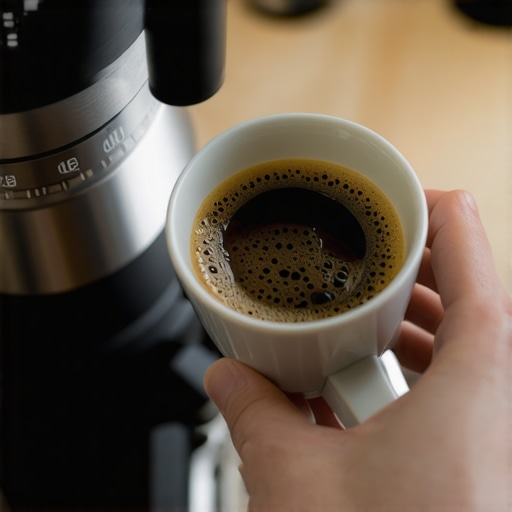
I stood there at my kitchen counter, staring at a cup of what looked like used motor oil. It was my third attempt of the morning, and my kitchen smelled more like a tire shop than a boutique cafe. I had this beautiful, manual lever machine—the kind that makes you feel like a Victorian engineer—and a fresh bag of oily, dark beans. But instead of a rich, chocolatey shot, I was getting a bitter, ashy mess that made my eyes water. I used to think the harder I pulled, the more “espresso-y” it would be. Boy, was I wrong. My early days were a comedy of errors where I treated that lever like a gym machine, and my coffee suffered for it. Today, we’re going to fix that. I’m going to show you how to actually enjoy those dark roasts without the harshness, and why you might need to rethink everything you know about mastering the art of home espresso.
Stop Fighting the Lever and Start Taming the Roast
The biggest mistake I made when I first got my hands on a manual machine was treating it like an Olympic weightlifting event. I thought that to get that thick crema I saw in photos, I needed to lean my entire body weight onto the handle. When you’re working with oily, dark roasts, that’s a recipe for disaster. Darker beans are physically more brittle. They’ve been roasted longer, which breaks down their cellular structure and makes them more soluble. If you slam them with high pressure, you’re not just getting coffee; you’re getting every harsh, carbonized note hidden in the bean. I once spent an entire Saturday trying to figure out why my espresso tasted like burnt rubber, only to realize I was essentially power-washing the flavor out of the grounds. You have to be gentle. You have to treat the lever like a volume knob, not an on-off switch. Have you ever felt like your lever was fighting back against your favorite dark roast? It’s a common frustration, especially when you start to wonder why your manual lever feels harder to pull than usual during the middle of a shot. According to the Specialty Coffee Association (SCA), the increased porosity of dark roasts means they give up their solubles much faster than light roasts, often requiring water temperatures as low as 190°F to stay balanced. If you’re pulling at boiling temps, you’ve already lost the battle before the first drop hits the cup.
Is a Manual Machine Actually the Wrong Tool for Dark Roasts?
There is a segment of the coffee world that will tell you to only use manual levers for light, acidic roasts. They argue that the temperature stability is too finicky for the dark stuff. I used to believe them. I thought I needed a fancy dual-boiler with PID control to get a decent cup of Italian-style espresso. But here’s the truth: a lever gives you a declining pressure profile naturally. This is the holy grail for dark roasts because it reduces the pressure as the puck gets weaker, which prevents that bitter tail at the end of a shot. If you’ve ever noticed why your manual lever coffee pulls feel too light, it might be that you’re finally hitting that sweet spot where the coffee is flowing freely without being forced. It’s not that the machine is wrong; it’s that we usually try to force it to behave like a pump machine. Once you let the lever do what it’s built to do, the dark roast transforms from a bitter mess into a syrupy, chocolatey dream.
Handle Your Grinder with Care When Working with Oily Beans
Dark roasts are a different beast for your burrs. Because they are more porous and oily, they tend to create more static and clump together easily. I remember the first time I tried a French Roast in my new high-end grinder; I didn’t realize why my grinder makes more mess with dark roast beans until I saw the oily residue coating the chute. You need a coarser setting than you’d use for a medium roast. Think of the coffee bed like a sponge: a dark roast is a sponge that’s already half-full of water—it takes very little effort to get the flavor out. If you grind too fine, you’ll end up with a muddy puck and a clogged machine. If you’re still in the market for equipment, learning how to select the perfect coffee grinder for your brew is the single best investment you can make for shot consistency.
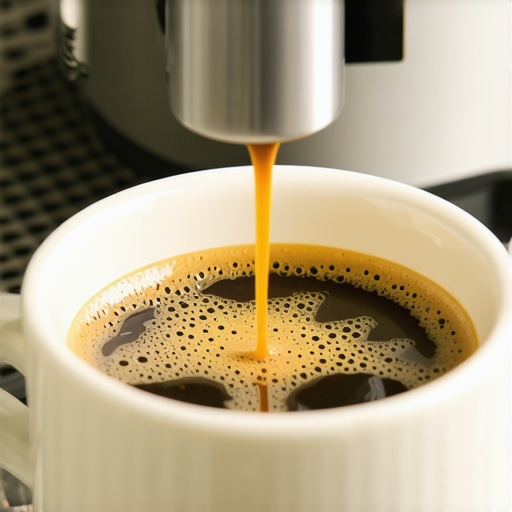
Cool Down the Temperature to Avoid the Ashy Aftertaste
Most people assume hotter is better, but with dark roasts, heat is the enemy of nuance. When you’re using one of the top-rated espresso machines for coffee lovers in 2025, you have to actively manage the group head temperature. I used to pull back-to-back shots on my lever machine, only to find the third shot tasted like a campfire. I learned to use a wet towel or even the ice water hack for stopping a bitter extraction by cooling the group head between pulls. Aim for a water temperature around 190°F. Anything higher, and you’re just extracting the burnt charcoal flavors of the roast process.
Master the Pre-Infusion for a Balanced Body
On a manual lever, the pre-infusion is your secret weapon. Instead of slamming the puck with 9 bars of pressure immediately, lift the lever and let the water saturate the grounds for 10 to 15 seconds at low pressure. This softens the shock to those brittle dark beans. I once rushed this step and ended up with a shot that was both sour and bitter—a phenomenon called uneven extraction. If you find why your coffee grounds are clumping together is an issue, the water won’t penetrate evenly, leading to channels where the water finds the path of least resistance.
The Magic of the Declining Pressure Profile
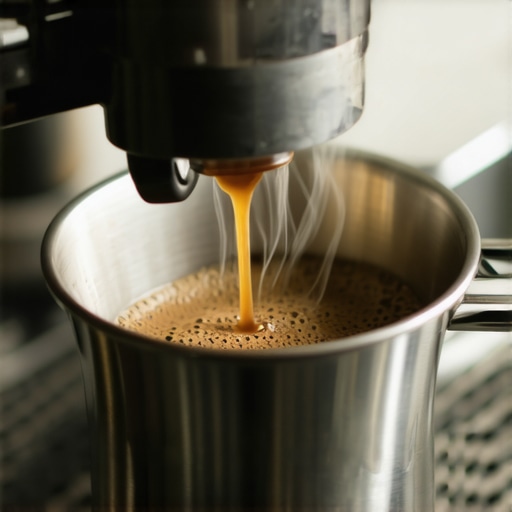
As the shot progresses, you should actually reduce the force you’re applying to the lever. This mimics the physics of the coffee puck as it dissolves. Toward the end of the shot, there is less coffee mass left to resist the water. If you keep the pressure high, you’ll force out the astringent tannins. This is why your espresso tastes bitter even with a fast pull—you’re over-extracting the very end of the puck. By slowly letting the lever rise or easing your hand pressure, you ensure that the final few grams of liquid are sweet and syrupy rather than harsh and watery.
While mastering the pull is a huge part of the battle, many hobbyists get stuck thinking that the machine is the only variable that matters. There is a common myth that spending four figures on a polished chrome beast will automatically result in cafe-quality shots. In reality, I’ve seen enthusiasts struggle with the hidden cost of buying a cheap espresso machine on sale only to find that their entry-level grinder was the true bottleneck. If your grinder isn’t up to the task, even the most expensive lever in the world won’t save your morning. Most people assume that if a grinder is expensive, it’s perfectly aligned from the factory, but that is rarely the case. Precision is earned, not just bought. Learning the chalk trick for checking grinder burr alignment can reveal why one side of your coffee bed is over-extracting while the other stays dry.
Stop Obsessing Over the Machine and Look at Your Burrs
The biggest trap I see advanced beginners fall into is neglecting the ‘unsexy’ parts of their setup. Everyone wants the flashy top-rated espresso machines for coffee lovers in 2025, but they ignore the microscopic alignment of their burrs. If your burrs are even a fraction of a millimeter out of parallel, you will get a mix of boulders and dust. This leads to those frustrating shots that are somehow bitter and sour at the same time. To fix this without a technician, many pros use the tinfoil shim move for perfectly aligned grinders. It sounds like a ‘hack,’ but it’s a standard practice among competitive baristas to ensure a uniform particle size.
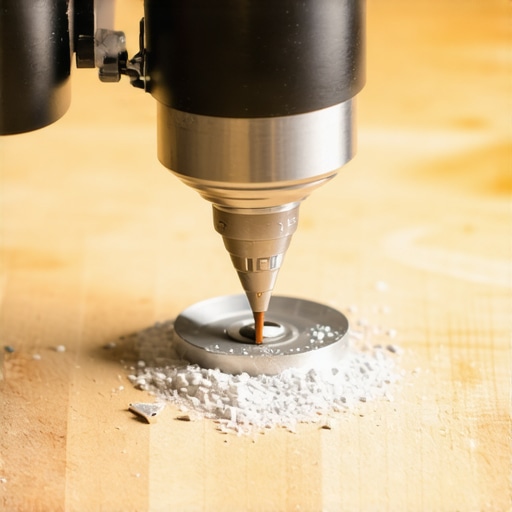
Another massive ‘oops’ factor is maintenance. I once met a guy who thought he was being clever by using white rice to ‘scrub’ his burrs. Please, if you value your motor, listen: why you should never use rice to clean your high-end grinder comes down to the density of the grain. Rice is much harder than coffee and can easily burn out your motor or dull your expensive steel burrs. Stick to dedicated cleaning pellets or a vacuum. Have you ever fallen into this trap or used a ‘life hack’ that backfired? Let me know in the comments!
Is your water chemistry sabotaging your expensive beans?
We spend so much time discussing choosing the best barista gear for coffee enthusiasts, but we often ignore the primary ingredient: water. A study published in the Journal of Agricultural and Food Chemistry highlights how magnesium and calcium ions are essential for pulling flavors out of the bean. However, if your water is too hard, you’ll scale up your machine; if it’s too soft, the coffee will taste flat and lifeless. Knowing how to tell if your water is too soft for brewing is critical because ultra-pure or distilled water can actually be aggressive toward the metal internals of your boiler, leading to long-term damage. For the ultimate shot, you need to manage the mineral balance just as much as the grind size. Sometimes, the simple paper filter trick for better bottomless shots can help mask minor gear inconsistencies, but it will never replace the fundamental chemistry of your brew water.
I used to think my lever machine was invincible because it lacked the complex electronics of a super-automatic. It’s just metal and physics, right? I was wrong. It was a quiet Tuesday when I first noticed why your espresso machine is leaking steam from the top, a small puff that signaled a bigger problem. Neglecting the small seals and the lubrication of the piston can turn a precision instrument into a squeaky, leaking mess. If you want your shots to remain consistent, you have to treat maintenance as a ritual, not a chore.
Don’t Let Your Seals Turn to Stone
The biggest maintenance headache for lever owners is the group head gasket. Standard rubber gaskets eventually bake onto the metal, becoming brittle and nearly impossible to remove without a hammer and chisel. I swapped my old rubber seal for a silicone one because I was tired of wondering why your group head gasket is leaking after just one month. Paul Pratt, the founder of Cafelat and a legend in the lever espresso community, specifically recommends food-grade silicone because it doesn’t harden over time and provides a much better seal with less torque. It’s a five-dollar part that changes your entire experience. While you’re at it, remember the 2-minute habit that prevents clogged steam wands: a quick purge before and after every use is non-negotiable if you want to avoid a deep-cleaning nightmare later.
How do I maintain my home espresso gear for the long haul?
To keep everything running smoothly, you need a tiered approach. Daily, you should be flushing the group head and wiping the steam wand. Weekly, I recommend a deeper clean of the shower screen and checking for any coffee oil buildup. Monthly, you should inspect your piston seals and re-apply a thin layer of Molykote 111 or another food-safe lubricant. This prevents friction from wearing down the metal of the lever arm. If you live in an area with hard water, you also need a schedule for descaling. However, you must be careful; I always suggest finding the best way to descale a boiler without using harsh vinegar to avoid that lingering metallic taste that can ruin your morning coffee for weeks.
Keep Your Grinder Moving Without the Grit
Your grinder needs just as much love as your machine. Over time, coffee dust and oils migrate into the adjustment threads. This is often the reason your grinder adjustment ring feels gritty or stuck. Every month, I take my burrs out, vacuum the internal chamber, and use a soft brush to clear the threads. It makes dialing in your shots significantly easier when the ring moves with a satisfying, smooth glide rather than a crunch. This small step ensures you aren’t fighting your equipment every time you switch bean varieties.
The Future is Smart Levers and Real-Time Data
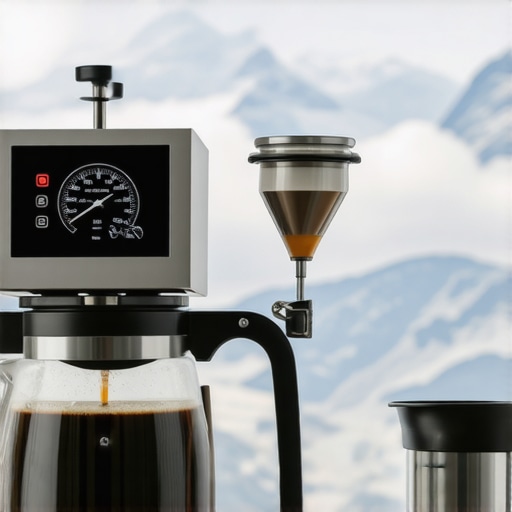
I predict that the next five years will see a massive shift in how we approach manual levers. We are already seeing the integration of Bluetooth-enabled pressure transducers and smart scales that talk to your phone in real-time. This “smart manual” trend allows us to record the pressure profile of a perfect shot and try to mimic it manually every time. It bridges the gap between the soul of a manual machine and the precision of modern technology. If you haven’t yet, I strongly encourage you to try the silicone gasket upgrade this weekend—it’s the simplest way to feel an immediate improvement in how your machine handles. It’s time to stop fighting the gear and start flowing with it.
Dark Truths My Burrs Taught Me the Hard Way
After years of pulling shots, I have realized that the perfect roast is a moving target. I used to blame my machine whenever a shot ran too fast, only to discover how to tell if your coffee beans are too fresh for espresso. Sometimes, the CO2 gas trapped in the bean creates a false resistance that disappears midway through, leaving you with a watery mess. I also learned that understanding how to tell if your basket is too large for your dose is more important than the brand of the machine. If there is too much headspace between the puck and the shower screen, the water will slam into the grounds and cause immediate channeling. Finally, I discovered the move for better espresso without buying a new machine: it is all about meticulous puck preparation and slow, deliberate saturation. Don’t chase gear; chase technique.
My Personal Toolkit for Morning Success
If you want to stop guessing and start enjoying your mornings, you need a few reliable tools. First, a high-precision scale is non-negotiable; it is the only way to ensure your input matches your output every single time. Next, consider investigating milk frothers that transform your coffee experience if you enjoy milk-based drinks; a dedicated standalone frother can often outperform a weak steam wand on an entry-level lever machine. Of course, you cannot overlook how to select the perfect coffee grinder for your brew, as the grinder remains the absolute heart of your setup. I personally recommend the Cafelat silicone gaskets as a mandatory upgrade for any lever owner to prevent leaks and improve the tactile feel of the lock-in.
Make Your Kitchen the Best Café in Town
Don’t let the complexity of pressure profiles or temperature surfing intimidate you. The real joy of mastering the art of home espresso lies in the tactile connection between your hand and the lever. It is a craft that rewards patience, curiosity, and a willingness to drink a few bad shots on the way to greatness. Every time you feel that resistance in the lever, you are learning something new about the bean and the roast. Have you ever found a specific dark roast bean that just wouldn’t behave on your lever machine? Let me know in the comments below!