The Reason Your Pump Makes a Clicking Sound
I remember the first time I heard it. It was a cold Tuesday morning, and I was just trying to get my caffeine fix. I flipped the lever on my machine, expecting that comforting, deep vibration of the pump. Instead, I got a rhythmic, metallic click-click-click. My heart sank. I was convinced I’d just turned my expensive machine into a very heavy paperweight. I’d spent months researching the top-rated espresso machines for coffee lovers in 2025 and here I was, potentially looking at a massive repair bill for a vibration pump. It turns out, that clicking sound is often the machine’s way of crying for help before something actually breaks. If you’re standing over your counter right now in your pajamas, staring at your machine and wondering if it’s about to explode, take a deep breath. We are going to figure this out together.
Stop Worrying and Listen to Your Machine
Most home baristas panic when they hear an unusual noise. I certainly did. In my early days mastering the art of home espresso, I actually replaced an entire ULKA pump because of a clicking sound, only to realize later that the fix was a simple priming issue. Talk about a face-palm moment. Today, I’m going to walk you through exactly why your pump is making that racket and how to silence it without calling a technician. We’ll look at everything from airlocks to scale buildup, and I’ll share the exact steps I use to diagnose the issue before I ever pick up a screwdriver. Have you ever stood over your machine praying that a weird noise would just go away on its own?
Is that clicking sound actually going to kill your machine?
It’s the fear we all have. Is this the end? According to technical teardowns from coffee hardware experts at Whole Latte Love, a clicking sound is often the solenoid valve rapidly cycling or a vibration pump struggling to move water against an air bubble rather than a catastrophic mechanical death. We first need to check if your espresso machine pressure gauge stays at zero or if it’s struggling to move at all. If the pump is clicking but no water is coming out, you likely have an airlock or a blockage. If it’s clicking and water is flowing, we might be looking at a solenoid issue or a loose component vibrating against the frame. Before you panic, try the easy way to test your pump pressure at home to see what you’re actually dealing with.
The Common Culprit of the Clicking Pump
One of the most frequent reasons for a clicking pump is actually air. If you’ve ever let your water reservoir run dry—and let’s be honest, we’ve all done it—the pump pulls in air. Because air is compressible and water isn’t, the internal piston starts hitting the end of its stroke with a sharp click because there’s no water to cushion the movement. It sounds violent, but it’s usually just the pump being thirsty. I once spent an hour trying to take apart my casing only to realize I just hadn’t seated the water tank properly, allowing air to bypass the intake. It’s those little things that get you every time. We are going to look at how to force-prime the system and get that water flowing again, which is usually enough to stop the noise instantly.
Force the Air Out Before You Buy a New Pump
When your pump is clicking, it’s usually because it’s trying to compress air instead of water. Think of it like trying to ride a bicycle with a broken chain; you’re pedaling hard, but there’s no resistance, so the internal piston just slams against the end of its stroke without any hydraulic cushioning. The most effective way to stop this is a technique called ‘force-priming.’ I remember doing this on an old Gaggia. I took a turkey baster, filled it with water, and literally forced it into the intake tube while the pump was running. It was messy—I actually ended up soaking my favorite dish towel—but the moment that air bubble popped, the clicking stopped, and a beautiful stream of water finally hit the drip tray. If you are using one of the top-rated espresso machines for coffee lovers in 2025, they often have more sensitive sensors, but the physics of an airlock remains the same across all vibration pumps.
Use the Turkey Baster Shortcut for Stubborn Airlocks
If your reservoir is full but the clicking persists, the pump is struggling to create enough suction to pull water through the dry lines. You need to provide a little ‘push’ to get the cycle started. Carefully remove the silicone intake hose from the tank and use a syringe or a turkey baster to inject water directly into the line while the machine is attempting to brew or prime. If you hear the pump tone change from a sharp ‘clack’ to a deep, muffled hum, you’ve won. If you still see no movement after several attempts, you might need to check if your espresso machine pressure gauge stays at zero or if a physical blockage is preventing the flow.
Stop the Solenoid Chatter Before It Clogs
Sometimes the clicking isn’t the pump at all, but the solenoid valve. This is the ‘traffic cop’ of your machine, directing water to the group head or the drip tray. If a tiny speck of scale gets lodged in there, the valve will chatter as it tries to open against the obstruction. This often happens if you haven’t been mastering the art of home espresso by keeping up with a strict backflush and descale routine. A quick fix? Rapidly flip the brew switch on and off in one-second intervals. The sudden pulses of pressure can sometimes dislodge the debris. I once saw a machine where the boiler was so choked with calcium that it sounded like a typewriter during every shot. It’s a harsh reminder of the truth about using distilled water in your machine and why maintaining proper mineral balance is critical for the lifespan of your internal components.
Differentiate Case Vibration from Real Mechanical Failure
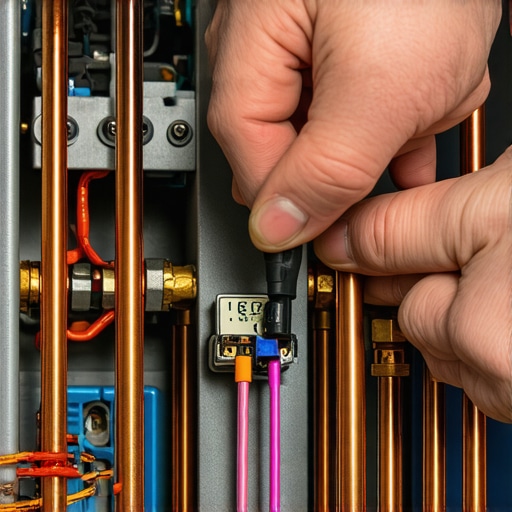
A healthy pump has a rhythmic, low-frequency hum, while a clicking pump sounds metallic and frantic. If the noise doesn’t change after priming, check your barista gear to ensure the pump isn’t just vibrating against the metal casing. I once spent two days diagnosing a ‘failing’ pump only to find a loose screw was making the pump housing rattle against the frame. Tightening that one screw saved me $150 in parts I didn’t need. You can often dampen this noise by using a bit of food-grade silicone tubing or rubber pads around the pump mounts. If you’ve tried everything and the clicking persists, it is time to perform the easy way to test your pump pressure at home. This diagnostic step will tell you if the internal spring or piston in the pump has actually snapped, which is the only time you truly need to order a replacement.
Most people think that a clicking sound is the death knell for their pump, but I’ve found that the real danger is often what we put into the machine. A common contrarian view I hold is that ‘too clean’ water is actually a pump’s worst enemy. While conventional wisdom suggests using the purest water possible, in my experience, the truth about using distilled water in your machine is that it can lead to erratic pump behavior and constant clicking. Without essential minerals, the water level sensors in many prosumer machines fail to register the liquid, causing the pump to dry-fire or cycle rapidly as it searches for a signal. It’s a sophisticated mistake that many high-end owners make, thinking they are being ‘safe’ when they are actually causing a sensor-induced racket.
Avoid the Expensive Trap of Over-Tightening
Then there is the ‘oops’ factor that I see constantly: the phantom leak. If you hear a rattle or clicking that sounds like it’s coming from the front of the machine, don’t immediately assume the pump is failing. A very common trap is over-tightening your portafilter to stop a minor drip or rattle. Understanding why your portafilter handle should never be tightened too far is vital for long-term maintenance. If you’ve already crushed your seal in a panic, you’ll need to learn how to replace a group gasket without scratching the chrome. A hard, dried-out gasket allows the pump’s natural vibrations to transfer directly into the portafilter handle, creating a metal-on-metal clicking that often disappears as soon as you refresh your seals.
Why does the clicking sound only start once the machine is hot?
This is a nuance that puzzles even experienced home baristas, and it’s often related to the pump’s ‘duty cycle.’ Technical data from ULKA, the primary manufacturer of these vibration pumps, indicates a standard duty cycle of 2 minutes on and 1 minute off. When your espresso machine takes longer to heat up recently, the internal case temperature rises significantly. This heat can cause the small plastic check valve inside the pump to expand just enough to stick, leading to a rhythmic clicking as the piston struggles to move against the heat-swollen components. If your machine is older, this heat sensitivity is a precursor to total failure, but often, just improving the airflow around the machine can buy you another year of service.
Fine-Tune Your Expansion Valve to Silence the Chatter
If the noise persists even with fresh gaskets and cooled internals, it’s time to look at the Over-Pressure Valve (OPV). If you know how to adjust the expansion valve on your prosumer machine, you’ll find that a chattering spring inside this valve is a very common culprit for clicking. When scale builds up on the OPV seat, the valve can’t decide whether to stay open or closed, resulting in a ‘machine gun’ click during the extraction. This isn’t a pump failure; it’s a maintenance issue. Many people also mistake a ‘thump’ for a ‘click’ inside the case. While the reason your grinder makes a thumping noise during use is usually a mechanical obstruction, a thumping espresso machine is often just a loose mounting bracket. This is why the best routine for a weekend deep clean should always include a quick visual inspection of the pump’s rubber mounts. Have you ever fallen into the trap of over-diagnosing a simple noise? Let me know in the comments.
I’ve realized over the years that the difference between a machine that lasts five years and one that lasts fifteen is the quality of the toolkit you keep under the sink. After you’ve solved that initial clicking panic, you need to transition from a ‘fixer’ to a ‘maintainer.’ If you are still relying on a damp paper towel and a prayer, you are setting yourself up for another mechanical heartbreak. When I first started choosing the best barista gear for coffee enthusiasts, I ignored the maintenance side of things because it wasn’t as sexy as a new bottomless portafilter. But today, my cleaning kit is just as important as my grinder.
Stop Reactive Fixes with a Proactive Toolkit
You need more than just a brush. My personal setup includes a high-quality group head brush with stiff nylon bristles, a blind filter basket for backflushing, and a set of precision picks for clearing steam wand tips. I personally use Puly Caff for my chemical backflushes because it’s the only cleaner I’ve found that consistently dissolves stubborn coffee oils without leaving a weird chemical aftertaste. Integrating the best routine for a weekend deep clean will save you hundreds in technician fees. It’s about more than just the machine; even your grinder needs love. I’ve found the trick for getting ground coffee out of tight corners is a small, handheld vacuum and a dedicated stiff-bristle artist brush. If you’ve recently upgraded your setup, don’t forget to learn how to properly season new steel burrs for better consistency, as unseasoned burrs can actually strain your motor and cause unwanted vibrations that mimic a failing pump.
How do I maintain my espresso machine’s health for the long haul?
Consistency is your best friend. Every single day, you should purge your steam wand and wipe the shower screen. Every week, you must understand why your machine needs a backflush every single week to prevent the solenoid chatter we discussed earlier. According to the technical archives at Espresso Vivace, maintained by industry veteran David Schomer, even microscopic scale buildup can alter water flow and temperature stability by several degrees, leading to inconsistent shots. This is why I also keep a water hardness test kit nearby; learning how to tell if your water hardness is damaging your boiler is the single most important step in preventing that dreaded pump clicking from returning.
Future-Proof Your Setup Before the Tech Changes
Looking ahead, the trend in home espresso is moving toward ‘smart’ maintenance. We are already seeing the first wave of top-rated espresso machines for coffee lovers in 2025 featuring integrated flow meters and pressure sensors that alert your phone before a part actually fails. In the next few years, I predict we will see AI-driven diagnostics that can listen to the frequency of your pump and tell you exactly which gasket is wearing out. Until then, you are the sensor. Listen to the rhythm, watch the pressure gauge, and don’t ignore the small leaks. My biggest piece of advice? Don’t wait for a noise to start cleaning. Go grab your blind basket right now and perform a chemical backflush. It takes five minutes and could easily add two years to the life of your 3-way solenoid valve.
The Quiet Lessons I Learned While Fixing My First Pump
First off, don’t ignore the change in pitch. If your machine suddenly sounds like a snare drum, it’s telling you something is loose or dry. I’ve found that mastering the art of home espresso means listening as much as tasting. Second, never assume a noise is ‘normal’ just because it’s new. Most clicking issues stem from simple water flow problems, not mechanical death. Lastly, your water is your machine’s lifeblood—too pure is just as bad as too hard. I once stripped a pump trying to find a mechanical fault only to realize I had used water that was so soft it couldn’t activate the tank sensors properly. It’s those subtle nuances that separate the casual drinkers from the true home baristas.
My Essential Kit for a Silent Morning Brew
I rely on a specific set of tools to keep things running smoothly. I always keep a high-quality blind basket on hand because I know why your machine needs a backflush every single week to prevent solenoid chatter. My toolkit also includes food-grade silicone grease for lubricating valves and a precision TDS meter to monitor water quality. When choosing the best barista gear for coffee enthusiasts, don’t overlook the maintenance side; a simple group head brush and a set of Allen keys can save you a $200 technician visit. These aren’t just gadgets; they are the insurance policy for your morning caffeine. #IMAGE_PLACEHOLDER_E#
Your Espresso Machine Deserves a Long Life
Fixing a clicking pump isn’t just about saving money; it’s about the pride of maintaining a beautiful piece of engineering. When you finally silence that racket and pull a perfect, honey-like shot, you’ll know it was worth the effort. Don’t let a little noise stop you from enjoying your top-rated espresso machines for coffee lovers in 2025. You’ve got the tools and the knowledge now—go get that machine back in peak condition and get back to the craft you love. Have you ever managed to fix a weird noise on your own, or did you have to call in a professional? Let me know in the comments below!