How to Set Up a Dedicated Coffee Station in a Narrow Hallway
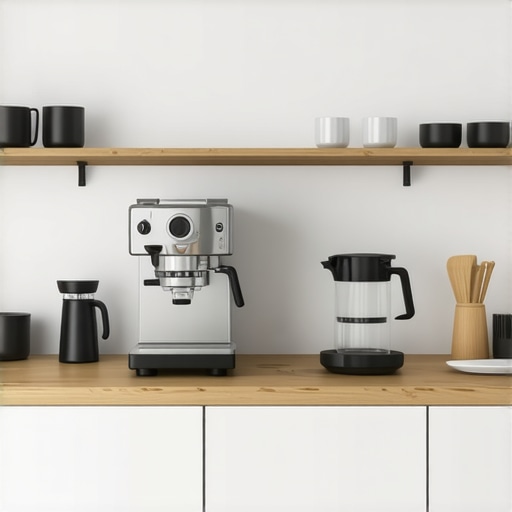
I remember the morning I finally snapped. I was standing in my tiny kitchen, literally tripping over a basket of laundry while trying to steam milk. My bulky espresso machine took up half the counter, leaving no room for a cutting board, let alone a peaceful morning vibe. I stared at the long, empty hallway leading to my bedroom—a stretch of wasted beige space—and realized my caffeine sanctuary didn’t belong in the kitchen. It belonged there. Setting up a dedicated station in a hallway might sound like a recipe for bruised shoulders, but it’s actually the smartest way to reclaim your kitchen’s sanity. In this guide, I am going to show you exactly how I transitioned from a cluttered mess to a sleek, narrow-profile coffee bar that looks like a boutique cafe. We are talking about choosing the right top-rated espresso machines for coffee lovers in 2025 that won’t protrude into your walking path and how to organize your workflow so you aren’t doing a frantic dance every time you pull a shot.
Stop Letting That Dead Space Go to Waste
Most of us treat our hallways like transit tunnels—places we move through but never stay. But when you are mastering the art of home espresso, you quickly realize that you only need about 12 to 15 inches of depth to create a world-class setup. I have spent years tweaking my own “sidewalk cafe” and I have learned the hard way that verticality is your best friend.
Will This Setup Just Get in Everyone’s Way?
This is the number one fear I hear from my neighbors and friends. “Are you not going to knock over your precious ceramic cups?” The answer is no, provided you do not make the same rookie mistake I did early on. When I first started, I bought a bulky, standard-width kitchen cart. It was a disaster. I spent three days apologizing to my shins and blocking the path to the bathroom because I did not respect the narrow flow of the corridor. Since then, I have discovered that the key is shallow-depth furniture. According to the National Kitchen & Bath Association (NKBA), a 36-inch clearance is the gold standard for traffic, but you can successfully operate a task station in narrower gaps if you keep the equipment footprint minimal. I have found that selecting the perfect coffee grinder for your brew is half the battle; many modern grinders are designed with a slim profile specifically for this reason. You also want to learn the move for better espresso distribution without fancy tools because, let’s be honest, in a hallway, you do not have room for a dozen extra gadgets cluttering up your surface. Have you ever tried to squeeze a hobby into a space that felt too small? I would love to hear about your creative solutions! We are going to dive into the specific measurements and mounting tricks that make a hallway station feel like a feature, not an obstacle.
Pick a Surface That Won’t Bruise Your Hips
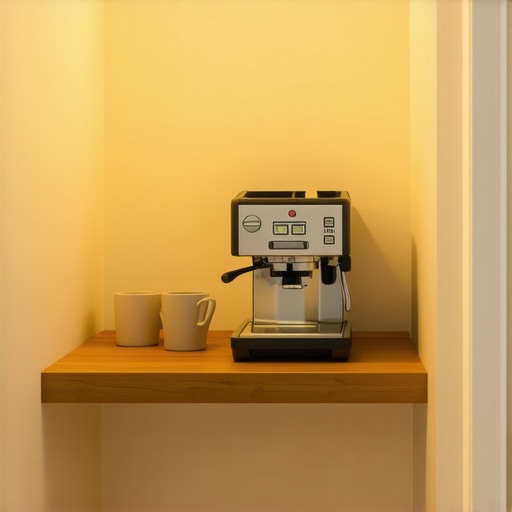
To make a hallway station work, you need to think in terms of ‘shallow depth.’ A standard kitchen counter is 24 inches deep, which will turn your hallway into a choke point. I recommend looking for a console table or a heavy-duty floating shelf that is no more than 12 to 14 inches deep. When I first attempted this, I mounted a beautiful oak slab, but I failed to account for the clearance needed for the steam wand. I ended up with a shelf so low I could not even angle my pitcher correctly. I had to rip the whole thing out and move it up six inches just to accommodate the vertical movement of my hands. Before you drill a single hole, place your machine on a temporary box and practice your workflow. Can you reach the water tank? Is there enough room to knock out the puck? If you are choosing the best barista gear for coffee enthusiasts, make sure you prioritize front-loading water reservoirs or machines that can be easily slid forward on felt pads. 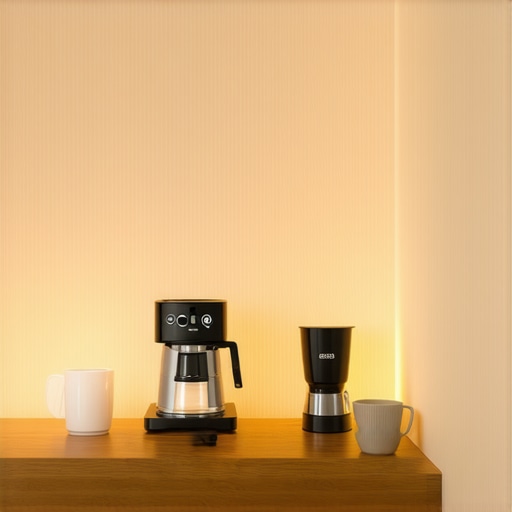
Choose Gear That Respects the Boundary
Your espresso machine is the heart of the operation, but in a narrow space, the grinder is often the space-thief. You want a grinder with a small footprint and a vertical chute. When you how to select the perfect coffee grinder for your brew, look for models that emphasize a ‘slim’ or ‘compact’ profile. I once used a large commercial grinder that stuck out so far I’d hit it with my elbow every time I walked to the bedroom. It was a nightmare of spilled grounds and bruised funny bones. Now, I use a slim-profile burr grinder and I make sure to practice the move that saves your grinder from unnecessary wear by always starting the motor before dropping in the beans. This keeps the station quiet and efficient.
Organize Like a Professional Cockpit
In a tight space, your workflow should be a ‘no-step’ process. You should be able to grind, tamp, and pull a shot without moving your feet. This is why I suggest mounting your knock box under the counter or using a small ‘drawer’ style knock box that your machine can sit on. When tamping in a cramped corridor, ergonomics become even more critical because you cannot always stand at the ideal 90-degree angle to the portafilter. Learning the best angle for tamping to avoid wrist strain will save you from repetitive use injuries when you are working in these tight quarters.
Master the Milk Dance in Tight Quarters
Steaming milk in a hallway requires a steady hand because you do not have the luxury of spreading your elbows out. If you are using a compact machine, you might find that the secret to silky microfoam on a single boiler machine is all about the tilt. I remember a particularly messy morning where I over-swirled a pitcher and sprayed hot milk all over the opposite wall because I bumped my elbow on the doorframe. Now, I keep my pitcher tucked close to my chest. Also, if you’ve just upgraded, don’t forget how to properly season new steel burrs for better consistency so your hallway cafe produces the same quality as the shop down the street.One of the biggest lies the espresso industry tells beginners is that more pressure automatically equals more flavor. I have seen so many enthusiasts hunt for machines boasting 15 or 18 bars of pressure, thinking it is a horsepower race. In reality, according to the Specialty Coffee Association (SCA), the gold standard for traditional extraction is 9 bars, and many advanced home baristas actually prefer 6 to 7 bars for a sweeter, more forgiving shot. When you are looking at top-rated espresso machines for coffee lovers in 2025, do not be swayed by high-pressure marketing. Excessive pressure often leads to compression issues where the water finds the path of least resistance, which is why your espresso shot is extracting from only the edges of the basket instead of through the center.
The Expensive Mistake You Are Probably Making With Your Water
The most devastating ‘trap’ I fell into was not about the gear itself, but what I was putting inside it. I spent thousands on a beautiful setup only to realize I was feeding it ‘liquid rock’ from my tap. Hard water is the silent killer of hallway stations because the limited space makes repairs a massive headache. You absolutely must learn the easy way to test your machines water hardness at home before your internal copper lines look like a limestone cave. If you wait until you hear a strange whistling sound, you might already be looking at how to recover from a failed descaling process, which is a stressful afternoon I wouldn’t wish on anyone. Hard water doesn’t just break the machine; it flatlines the delicate acidity in high-end beans, leaving you with a cup that tastes dull and chalky. 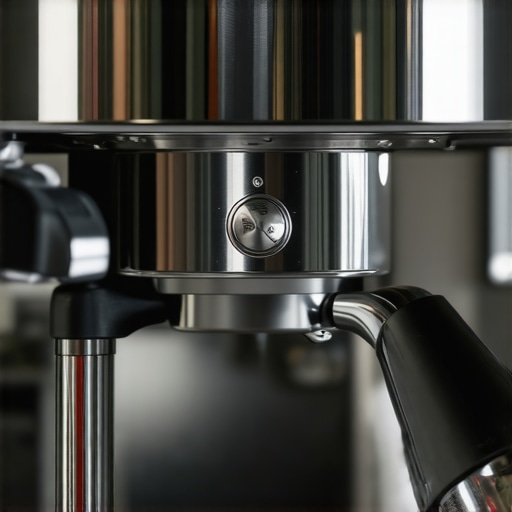
Why Does Your Shot Flow Change Every Single Morning?
This is the nuance that separates the casual drinkers from the true nerds. You dial in the perfect 30-second shot at 4 PM, but at 7 AM the next morning, it’s a 15-second gusher. It is not your machine’s fault; it’s hygroscopy. Coffee beans act like tiny sponges, absorbing humidity from the air. If your hallway gets a draft or the morning dew is heavy, your grind needs to be adjusted. This atmospheric shift is exactly why your shot extraction time changes every single day. To combat this in a narrow space, I suggest keeping your beans in a vacuum-sealed canister rather than the hopper.
Stop Chasing Grinder Speed and Start Chasing Low Retention
Another common myth is that a faster grinder is a better grinder. In a compact home environment, speed is actually your enemy because it often generates more heat, which prematurely cooks the oils in your beans. Furthermore, many high-speed grinders suffer from high retention, meaning yesterday’s stale grounds are sitting in the chute waiting to ruin your fresh morning double. If you notice a musty or flat flavor, that is often why your coffee grinder retains more grounds than it should. Always make sure to purge a few grams before your first shot, and keep a close eye on your equipment’s health by learning how to tell if your espresso grinder burrs are dull. Have you ever fallen into the trap of thinking more pressure or higher speed was the answer to better coffee? Let me know in the comments! I would love to hear how you overcame those early learning curves in your own home cafe.One thing no one tells you about a hallway station is that every tiny spill becomes a major event. Because the space is so visible, I have become borderline obsessive about keeping the group head immaculate. I have found that using a dedicated group brush after every final shot of the day is non-negotiable. If you skip this, you will quickly wonder why your group head shower screen is getting clogged so fast. I personally keep a small squeeze bottle of water right next to the machine to flush the screen without making a mess on the floor.
How do I maintain my hallway coffee station over time?
Maintaining a setup in a high-traffic area is about the Sunday Ritual. Every Sunday, I pull the shower screen entirely to deep clean it. If you have never done this, be careful not to force it; I actually learned the trick to removing a stuck shower screen without stripping the screw after a very frustrated hour with a flathead screwdriver. This is also when I verify my pump health by performing a quick test to how to check your espresso machines group head flow rate. If the flow is uneven, I know I have a scale build-up issue before it becomes a total machine failure. 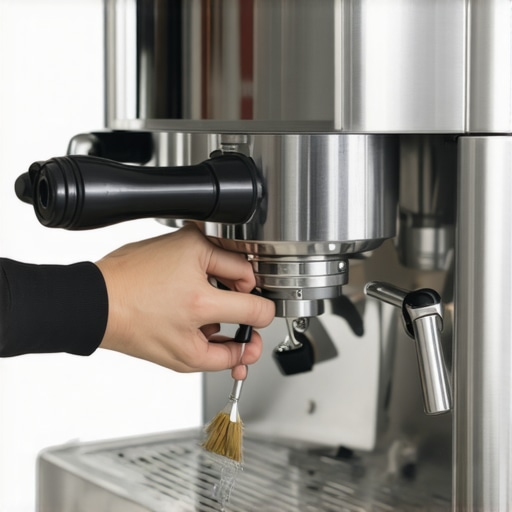 For those of you running an E61 group head, there is a specific technical detail you cannot ignore. As noted in the technical service manuals for professional E61 machines by manufacturers like Rocket Espresso, chemical backflushing strips the food-grade lubricant from the internal brass cam. If you do not learn how to properly lubricate your e61 group head cam, the lever will eventually start to feel crunchy. I use Molykote 111 because it stays put even under high heat and pressure, ensuring that my morning workflow stays silent and smooth.
The Future of High-Traffic Home Cafes
I suspect we are moving toward a modular era for home espresso. We are already seeing machines that separate the boiler from the group head to save space, and I predict the next five years will bring wall-integrated espresso systems that function like a luxury built-in oven but with the precision of a high-end cafe. This will make hallway stations the standard rather than a quirky DIY project. In the meantime, keep an eye on your steam performance. If you notice the reason your steam wand only makes thin hot milk, it is usually a sign of a partial blockage. I highly recommend learning how to clean the inside of your steam wand pipe to keep that microfoam silky. I challenge you to pull your shower screen this weekend—you might be surprised by what is hiding behind it! It is the single best way to immediately improve your flavor profile.
Why My Hallway Coffee Bar Almost Failed Three Times
Building a high-end station in a corridor isn’t just about aesthetics; it’s about anticipating the physics of a narrow path. One thing I didn’t realize initially was that vibration travels through walls. If your machine is against a shared wall, you need to learn how to stop your espresso machines feet from vibration walking or your neighbors will think you’re running a construction site every morning. I also learned that lighting is your best friend in a dark hallway. A small LED strip under your shelf doesn’t just look cool; it helps you see the flow of the espresso so you can spot the simple way to fix a gritty texture in your espresso before you take your first sip. Finally, never underestimate the power of a vertical organizer—stacking your cups saves precious inches of counter depth that your hips will thank you for.
The Tools That Saved My Tiny Caffeine Sanctuary
I’ve tested dozens of accessories, but only a few make the cut for a sidewalk-cafe layout. First, I highly recommend a compact, high-precision scale that fits on your drip tray without hanging over the edge. For those who love milk drinks but lack the boiler power for back-to-back lattes, certain milk frothers that transform your coffee experience can be stored in a nearby cabinet to keep your main surface clear. When you are choosing the best barista gear for coffee enthusiasts, focus on multi-functional tools like a tamping mat that wraps around the edge of your shelf. This prevents scratches on your furniture and keeps your workflow contained within a twelve-inch footprint.
Turn That Wasted Dead Space Into Your Favorite Room
The journey from a cluttered kitchen to a streamlined hallway station was one of the most rewarding home projects I’ve ever tackled. It taught me that you don’t need a massive kitchen to enjoy world-class coffee; you just need a bit of creativity and the right mindset. By selecting the right top-rated espresso machines for coffee lovers in 2025 and respecting the limits of your space, you can create a ritual that feels like a daily getaway. Don’t wait for a bigger house to start mastering the art of home espresso—start building your dream station in that empty hallway today. Have you ever tried to squeeze a hobby into a weird corner or non-traditional spot in your home? I’d love to hear about your creative layouts in the comments below!