Why Your Espresso Flow Rate Speeds Up Mid-Shot
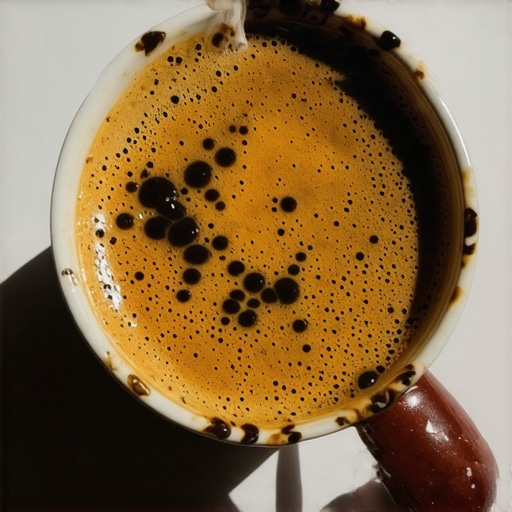
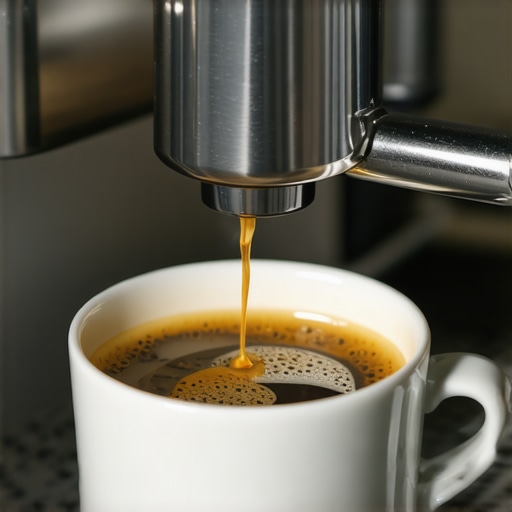
It is 6:45 AM on a rainy Tuesday. Your eyes are half-open, but your hopes are high as you lock the portafilter into your gleaming machine. You press the pump switch. For the first eight seconds, everything looks like a picture-perfect Instagram post: a dark, syrupy stream of rich espresso slowly snakes down from your bottomless portafilter. Then, in the blink of an eye, the tranquil stream turns into a blonde, gushing torrent. The timer is barely at fifteen seconds, but your cup is already overflowing with thin, bitter, watery liquid. I have stood in my kitchen staring at that exact same hot mess, completely defeated, wondering why on earth my shot just suddenly gave up and ran away.
The Heartbreaking Mystery of the Gushing Espresso Shot
When you are trying to master home espresso, this sudden acceleration feels like a personal insult. You did everything right, didn’t you? You bought fresh beans, used a high-end scale, and applied even pressure. Yet, the physical reality inside that basket tells a different story. If you have ever watched your extraction go from a beautiful crawl to a watery race, you are dealing with a phenomenon known as rapid puck degradation. Today, we are going to dive deep into exactly why the structural integrity of your coffee bed collapses halfway through the extraction cycle and how you can stop it from ruining your morning cup.
Are my expensive coffee tools actually making my shots worse?
It is easy to get sucked into buying every shiny accessory on the market to fix your coffee frustrations. However, a common mistake I made early on was using a damp basket immediately after washing it. That tiny bit of moisture on the metal walls created a path of least resistance, causing massive edge channeling. According to physical fluid dynamics studies published by the Scientific Reports journal, water under pressure will actively seek out and expand any microscopic structural inconsistency in a packed bed of powder. This means that if your puck has even a tiny density variation, high-pressure water will turn that minor flaw into an open highway, causing your shot to run incredibly fast. If you are experiencing this, you might also find that your shots start running fast after two seconds due to these structural failures. Our goal today is to stabilize that flow from the first drop to the very last. Have you ever watched your shot suddenly blond and gush mid-extraction, leaving you with a bitter cup of disappointment? Leave a comment below and let me know!
Rebuilding the Coffee Puck Structure for Stable Flow
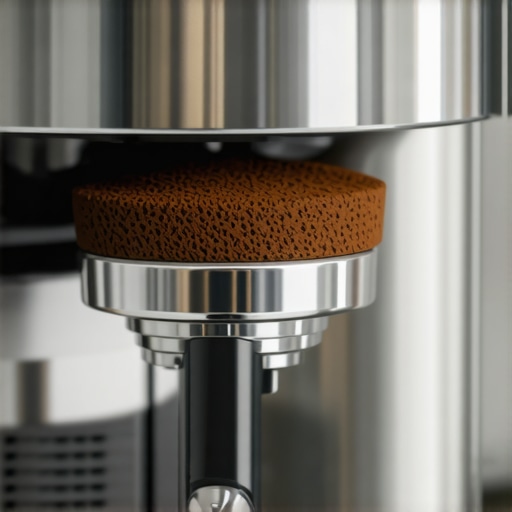
To stop your extraction from collapsing, you must treat the coffee puck like a structural retaining wall. When water at nine bars of pressure hits the bed of coffee, it looks for any microscopic fault line to tear open. If your coffee bed is unevenly dense, the water will quickly widen the weak spots, wash away the surrounding solubles, and run wild. Achieving a flat, uniform, and structurally sound puck is the only way to prevent this sudden breakdown.
Ditch the Clumps First
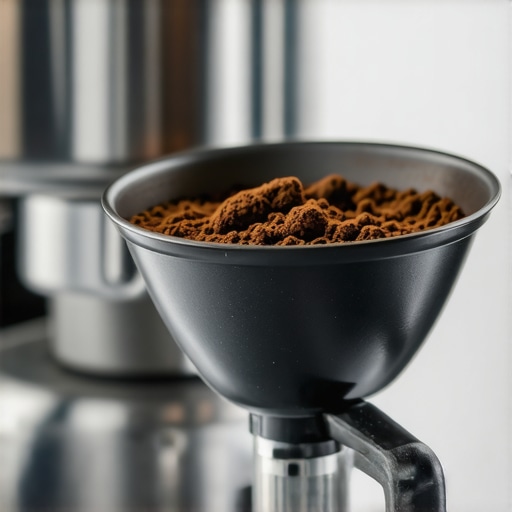
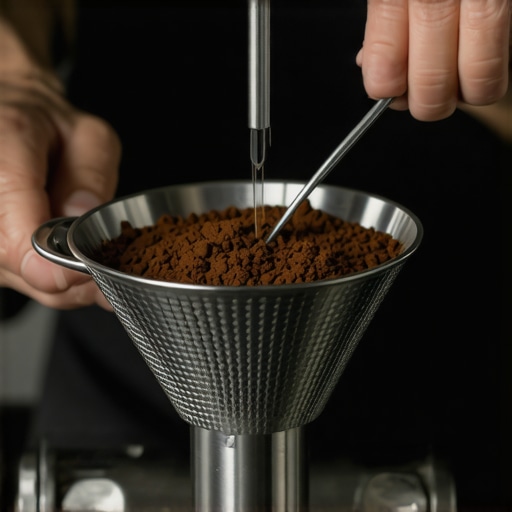
Your journey to a stable extraction begins the moment your grounds fall from your burrs. If you are using high-end coffee grinders, they can still produce static-induced clumps that create pockets of low and high density inside your basket. I remember a frustrating week where my bottomless shots kept spraying everywhere. I realized that my rapid tamping was just compressing those fluffy clumps into hard nuggets surrounded by loose channels. By adopting a systematic distribution method with a needle tool, you break up those hidden pockets and ensure the density is completely uniform from the center to the very edge of the basket. Avoid rushing this step; a few extra seconds of careful stirring saves the entire shot.
The Essential Dry Prep Habit
One of the most easily overlooked culprits of sudden shot acceleration is a damp basket or tamping tool. I learned this the hard way during a busy Sunday morning rush in my own kitchen. I gave my basket a quick rinse, swiped it once with a damp towel, threw in the grinds, and tamped. The result was an immediate, watery blowout along the side of the filter basket. The residual moisture acted as a lubricant, letting the pressurized water bypass the coffee completely. Now, I make it a strict habit to use a dry microfiber cloth before every single pull. To achieve perfect, uniform edge-to-edge compression, you also need to ensure that your tamper fits your basket precisely, as discussed in our guide on why your tamper size actually matters for perimeter extractions. Keeping your work surface dry and your tools clean prevents the water from taking easy shortcuts around your coffee bed.
Dial In Your Grind Size with Purpose
If your puck prep is pristine but the shot still turns into a blond geyser halfway through, your overall grind size is likely too coarse. When coffee is ground too coarsely, there is not enough surface area or resistance to hold back the pressurized water once the initial pre-infusion wetting phase is complete. This is when choosing the right barista gear pays off, as high-quality tools allow you to make micro-adjustments. Finetuning your grind just one notch finer increases the resistance of the coffee bed, allowing the water to extract the rich oils slowly and evenly without the structure collapsing prematurely.
We have all been told that to fix a channeling or gushing shot, we just need to buy a fancier distribution tool or spend more time aggressively stirring our coffee bed. But in my experience, over-manipulating your coffee bed often does more harm than good. Many home baristas fall into the trap of over-processing their dry grounds, thinking that meticulous grooming guarantees a perfect extraction. In reality, too much manual intervention can actually create microscopic fissures in the dry puck before the water even touches it.
Why does your expensive WDT tool sometimes cause more channeling?
It sounds completely backward, but the tool designed to eliminate channeling can actually trigger it if used incorrectly. If your distribution needles are too thick, or if you drag them along the very bottom of the basket in a frantic pattern, you end up creating deep, hidden tracks rather than a fluffy, homogenized bed. According to a seminal study on particulate mechanics by the Journal of Food Engineering, compacting a powder bed that has localized structural shear lines will always result in structural failure under fluid pressure. When you press down with your tamper, those deep tracks left by thick needles do not compress evenly; instead, they remain as hidden, low-density pathways. This is exactly why your WDT tool is actually causing more channeling when your technique is too aggressive or your tools are poorly designed.
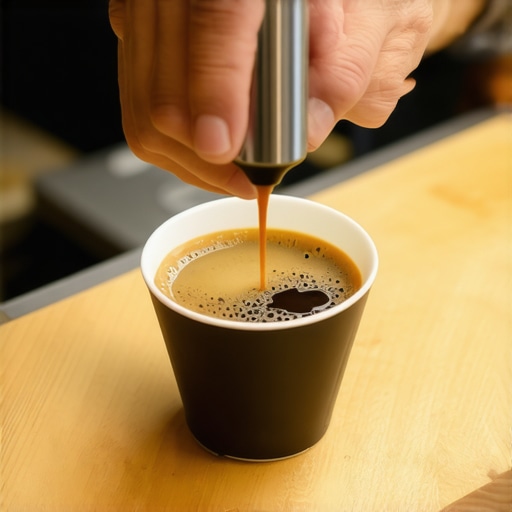
Another massive trap that experienced home baristas fall into is the mistake of pressing a damp metal face onto dry coffee. I have seen enthusiasts wipe down their portafilter basket religiously, only to leave their heavy metal tamper sitting on a damp towel. When you press that cold, slightly humid metal disk onto the dry, finely ground coffee, a microscopic layer of grounds instantly hydrates and sticks to the face of your tamper. When you pull the tamper away, it lifts a tiny fraction of the puck along the edges. This creates a subtle perimeter gap that you can barely see with the naked eye, but pressurized water will exploit it instantly. Understanding the problem with using a wet tamper on dry grounds is a game-changer for consistency. If you want a flawless extraction, every single tool that touches your dry coffee must be bone dry, from the grinder chute to the tamping stand. Have you ever fallen into this trap of over-complicating your puck prep only to watch your shots gush anyway? Let me know in the comments below!
When you finally master the perfect, steady extraction, it feels like winning a marathon. But keeping that flow rate consistent day after day, week after week, is the real challenge. Many home baristas struggle with what I call ‘setup drift’—where their shots slowly get faster, more bitter, or lose their body over time, even though they haven’t changed their coffee beans. Often, this is because of tiny changes in their equipment that happen slowly over time.
How do I maintain my espresso machine and grinder for stable extractions over time?
To keep your extractions perfectly consistent, you need a proactive maintenance routine. Over time, coffee oils build up on the shower screen, and old, stale coffee particles get trapped inside your grinder’s chamber. These hidden factors alter your extraction path. For example, knowing the best way to clean a grinder without taking the burrs out is critical for keeping your grind size consistent without messing up your physical settings. I also recommend following a strict weekly backflushing routine with a dedicated coffee detergent to keep oil buildup from clogging your shower screen. If you ignore this, the water pressure inside the group head will disperse unevenly, leading to instant puck channeling.
Beyond cleaning, you must pay attention to wear and tear. One of the most common causes of slow water pressure drops is a degrading group gasket. Learn how to inspect your group gasket for cracks and hardening before it starts letting steam and water bypass your portafilter basket entirely. If you use a lever machine or a prosumer setup, keeping a strict the e61 maintenance schedule you are probably ignoring will ensure that internal pressure valves open and close with perfect, repeatable timing.
The future of puck prep is automation
As I look at where the home espresso hobby is going, the trend is moving away from manual, error-prone grooming tools and toward highly engineered, automated systems. According to the engineering team at La Marzocco in their technical product documentation, reducing human variables in puck compression is the single biggest factor in achieving commercial-level consistency at home. We are already seeing the rise of auto-tampers and electronic distribution tools that completely eliminate hand tilt, uneven pressure, and damp-tool variables. In the next few years, I predict we will see smart baskets that can detect density variations before the portafilter is even locked into the group head. Until then, my challenge to you for tomorrow morning is simple: pick just one element of your routine—whether it is thoroughly drying your tamper with a microfiber cloth or checking your basket for moisture—and focus on executing it with absolute precision. You will be amazed at how much your flow stability improves.
3 Myths About Home Espresso Puck Prep That Are Holding You Back
When I first started my espresso journey, I fell into several common traps. If you want to achieve professional consistency, you need to discard a few widespread misconceptions about preparing your coffee bed:
- The Myth of High-Pressure Tamping: Many beginners believe that tamping harder fixes a fast shot. In reality, once you compress the air out of the dry grounds, any extra physical force does nothing to change the density. Standardizing your approach is what truly prevents those rapid extractions.
- The Over-Distribution Trap: Spending minutes meticulously swirling and grooming your dry puck often does more harm than good by creating micro-fissures before the brew cycle even starts. Keep your manual prep swift and gentle.
- Ignoring the Damp Edge: Even a microscopic drop of water left on the inside rim of your basket acts as a lubricant under pressure, prompting immediate edge channeling and a watery, fast-running shot.
The Essential Toolkit for Perfect Flow Control
If you want to stop guessing why your shots run fast and start enjoying consistently rich espresso, focus your energy on these specific tools and habits:
- A Precision Tamper: Choosing a tamper that matches your basket diameter exactly ensures you get perfect perimeter compression. Take a look at why your tamper size actually matters for perimeter extractions to understand how a snug fit prevents side-channeling.
- Microfiber Drying Rags: I keep a dedicated stack of dry microfiber cloths next to my machine. Discovering the best way to dry your portafilter quickly is one of the easiest ways to eliminate structural puck failures caused by residual moisture.
- A High-Quality Burr Grinder: A consistent particle distribution is critical. Learning the best way to clean a grinder without taking the burrs out keeps old, stale grinds from ruining your carefully selected extraction parameters.
Bring Commercial Consistency to Your Kitchen Counter
Mastering home espresso is a highly rewarding journey of micro-adjustments. When you focus on puck stability—by ensuring every tool that touches your dry coffee is bone dry and your distribution is completely uniform—you will finally unlock those thick, syrupy extractions that make all the effort worthwhile. Don’t let a temperamental, fast-running shot discourage you; with the right technique, every morning can start with the perfect cup. Have you ever struggled with your espresso shot suddenly running fast halfway through? Let me know in the comments below!