Why You Should Switch to a Lever Handle for Your Steam Wand
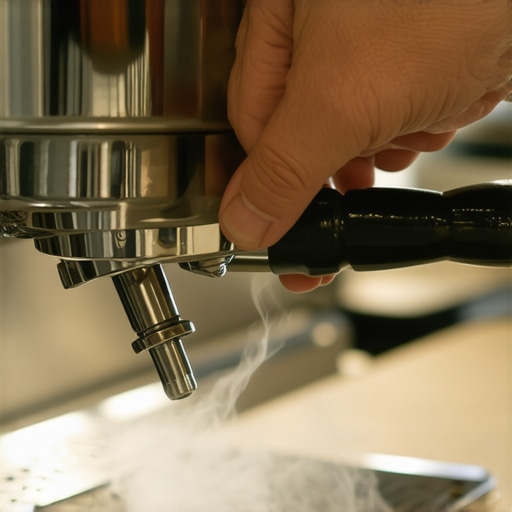
I remember staring at my old E61 machine, half-awake, frantically spinning the steam knob like I was trying to open a bank vault. I had just finished grinding my beans, and by the time I finally got the steam to full blast, my espresso shot had already lost its beautiful crema. It was clumsy. It was slow. And honestly, it felt like a chore rather than a craft. I spent years thinking this was just part of the ‘authentic’ experience, but I was wrong. I was fighting my gear instead of using it. Today, we are going to fix that. I am going to show you why making the switch to a lever handle—often called a joystick—is the single best ergonomic upgrade you can make for your home setup. [IMAGE_PLACEHOLDER]
Stop Fighting Your Steam Wand Every Morning
Early in my journey of mastering the art of home espresso, I made a classic rookie mistake. I thought more force meant a better seal. I would crank my steam knob shut with so much pressure that I eventually crushed the internal teflon gasket. It started with a tiny hiss, then a drip, and eventually, I had a full-blown leak. If I had known then that certain maintenance errors could be avoided by simply having better hardware, I would have upgraded years ago. Many top-rated espresso machines for coffee lovers in 2025 now come standard with levers, and for good reason. They offer instant ‘on-off’ capability. No more twisting your wrist three full rotations while your milk gets too hot. With a lever, you flick it, and you have 100% steam power immediately. This precision is vital, especially if you have noticed why your steam wand loses pressure halfway through frothing and need to react quickly.
Is a lever handle actually worth the hype?
You might be thinking that your current knobs work just fine, and I get it. But consider this: a study by the Journal of Physical Therapy Science suggests that repetitive twisting motions under resistance—exactly what a stiff steam knob requires—are a leading cause of wrist fatigue in baristas. If you are making three or four lattes a day, that adds up. A lever requires a simple, low-impact flick. It feels more like a precision instrument and less like a plumbing fixture. Have you ever felt that annoying wrist twinge after a long morning of hosting coffee for the family? Let me know in the comments if you’ve ever felt like your machine was a workout rather than a hobby. Setting the stage for a better workflow isn’t just about speed; it is about the joy of the process. In the next section, we will look at how to actually perform the swap and what tools you’ll need to stop the dreaded knob-spin forever.
Getting the Job Done Without the Constant Twisting
Transitioning to a lever is like moving from a manual car window to an electric one; you stop thinking about the effort and start focusing on the result. When you use a traditional knob, you are essentially screwing a needle into a seat. This is why why your espresso machine is leaking steam from the top often happens—users over-tighten the knob to ensure a seal, which destroys the internal components. A lever handle, or joystick, uses a spring-loaded mechanism. When you flick it, you are instantly compressing or releasing that spring. It is binary—either it is fully on or fully off. This speed is what allows you to hit that perfect vortex in your milk pitcher before the temperature climbs too high. I remember my first attempt at a latte with a new joystick setup; I flicked the lever down with such enthusiasm that the steam pressure actually blew the milk pitcher right out of my hand. Milk was everywhere—the walls, the machine, even my shoes. But once the chaos settled, I realized I finally had 100% control. No more guessing how many turns were left before the pressure kicked in.
Check for Compatibility Before Buying Parts
Not every machine is a candidate for a simple handle swap. You need to identify if your current valve is a ‘compression’ style or ‘non-compression.’ Most high-end barista gear for coffee enthusiasts uses standard threading, but you should always measure the valve stem. If your machine feels like it has a hidden reason for taking forever to heat up, it might be an internal scale issue, but the physical interface of the knob is often the bottleneck for the user. Look for kits specifically designed for your machine’s brand, as the internal ‘pin’ that activates the steam varies by millimeters between manufacturers.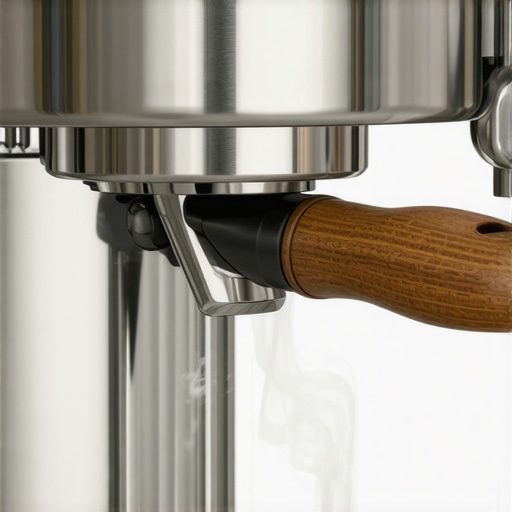
The 45-Degree Flick That Changes Your Latte Art
The real magic of the joystick is the multidirectional movement. Unlike a knob that only turns, a lever can usually be flicked in any direction—up, down, left, or right—to lock it open. This allows you to position your hands more naturally. If you have been struggling with huge bubbles only when steaming, it is likely because your hand was too busy twisting the knob to properly adjust the depth of the steam tip. With a lever, your ‘off’ hand is free to stabilize the pitcher the millisecond you reach the desired temperature. It eliminates the 2-second delay where the milk continues to cook while you are frantically spinning a knob shut. To keep this new setup crisp, you must maintain a 2-minute habit that prevents clogged steam wands, ensuring that the instant power of the joystick doesn’t just bake milk onto your hardware. Even if you have to troubleshoot how to fix a milk frother that won’t spin on smaller auxiliary gadgets, the main lever on your espresso machine will remain the centerpiece of your ergonomic workflow.
Raw Power is the Enemy of Silky Microfoam
Most hobbyists assume that upgrading to a lever is purely for speed. It is not. It is actually about thermal stability and valve health. When you use a traditional knob, you are slowly opening a gate; when you use a lever, the internal spring ensures the valve seat is either fully engaged or fully retracted. This prevents that awkward ‘in-between’ state where steam escapes at low velocity, often leading to condensation buildup inside the wand. If you have noticed why your steam tip holes keep clogging every single day, it is often because a slow-closing knob allows milk to be sucked back into the wand as the pressure drops. A joystick’s snap-shut action creates a final, clean puff of air that keeps the internals pristine. I used to think that ‘more steam’ was always better, but raw pressure without instant control is just a recipe for giant bubbles and burnt milk. Have you ever fallen into this trap? Let me know in the comments.
Does Higher Boiler Pressure Actually Equal Better Microfoam?
There is a common myth in the community that you should crank your boiler PID to the absolute limit. However, data from the Barista Guild suggests that consistency in milk texture is more closely linked to the velocity of air injection rather than the absolute PSI of the boiler. When you use a lever on top-rated espresso machines for coffee lovers in 2025, you can manage that velocity with a flick. If the pressure is too high, you lose the window of time needed to incorporate the air. This is especially true if you are trying to understand the reason your milk tastes sweet without adding sugar; that sweetness comes from precisely heating the lactose without breaking the fats with too much turbulence. 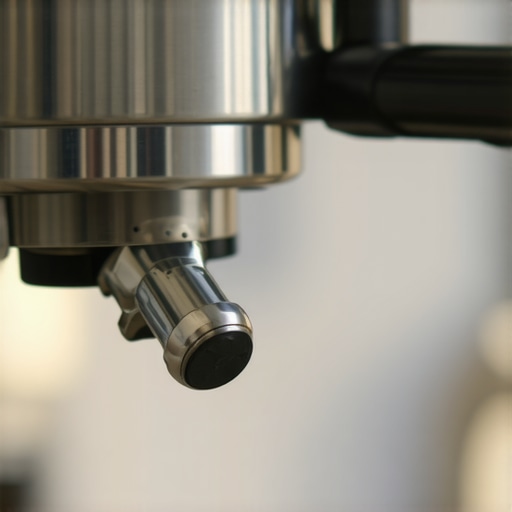
The Heavy Handed Flick That Breaks Your Seals
The biggest ‘oops’ factor I see with new joystick users is the ‘barista-reflex’—flicking the lever with way too much force. While these components are built to be robust, they are not indestructible. If you flick the lever too hard against the internal stop-pins, you can actually bend the actuator or cause the internal assembly to shift. This often leads to a phantom leak where you might start to see why your e61 mushroom is covered in white crust or scale. Speaking of scale, do not let the ease of a new handle distract you from internal maintenance. You should still regularly check how to tell if your machine boiler is accumulating lime scale, as no amount of ergonomic hardware can overcome a blocked heat exchanger. To keep everything running smoothly, remember that a joystick is a surgical tool, not a sledgehammer. Treat it with a light touch, and it will reward you with the most consistent microfoam you have ever produced.Once you have experienced the snappy, tactile response of a joystick, you will never want to go back to the slow-motion grind of a knob. But here is the catch: that mechanical snap relies on metal-on-metal pivots that require love. I have seen enthusiasts spend a fortune on barista gear for coffee enthusiasts only to let the internal springs seize up within a year. According to the technical maintenance specs provided by Vibiemme for their E61 architecture, the cam and pivot points should be inspected and re-lubricated every six months to prevent premature brass-on-brass wear. I personally use Molykote 111—a thick, food-safe silicone grease—because it does not wash away under high-temperature steam. If you notice a feeling similar to the reason your grinder adjustment ring feels gritty or stuck, you probably have a similar issue with your lever; it is usually just old coffee oils or dried-out factory lube. 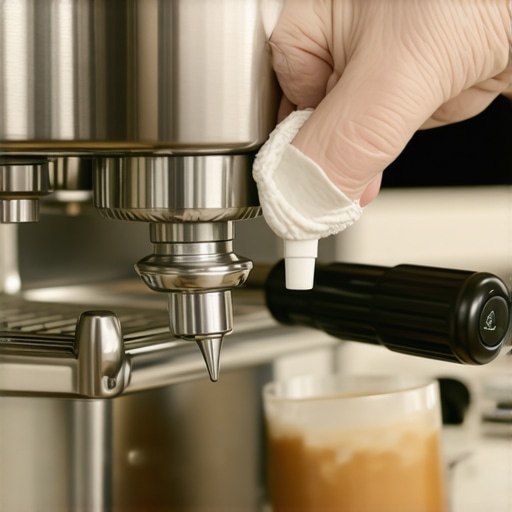
Lubrication is the Secret to a Lifetime of Smooth Flicks
Applying grease might seem like a messy chore, but it is the difference between a lever that feels like a toy and one that feels like a precision instrument. Every time you flick that steam on, the internal pin slides against a seat. If it is bone dry, you are slowly shaving off microns of metal. This friction is often why your group head gasket is leaking after just one month of heavy use—not because the gasket is bad, but because the mechanical strain of a stiff lever is pulling the entire assembly out of alignment. I always keep a small syringe of silicone grease in my perfect coffee grinder cleaning kit so I can reach the pivot points without a full teardown. Trust me, the 30 seconds it takes to dab a bit of lubricant onto the ball joint will save you a $200 repair bill down the road.
How do I keep my espresso machine hardware from wearing out?
Maintenance is less about deep cleaning once a year and more about the small, consistent habits. Beyond lubrication, you must stay ahead of mineral buildup. Even with the best hardware, how to tell if your machine boiler is accumulating lime scale is a skill every owner needs. Scale acts like sandpaper on your joystick’s internal O-rings. If you start to see why your e61 mushroom is covered in white crust, that same crust is likely eating away at your steam valve’s seal. I recommend using a soft-bristled brush to clear the base of the lever after every session. It prevents stray milk spray from drying inside the joint, which is the number one cause of ‘lever-stick’ in home setups.
The Future of Tactile Espresso Control
Looking ahead, I predict we are moving toward a hybrid era of espresso hardware. We are already seeing the beginning of this with top-rated espresso machines for coffee lovers in 2025 that integrate haptic feedback into the manual lever. Imagine a joystick that vibrates slightly when your milk reaches the perfect 140-degree sweet spot. While the analog feel of a lever is unbeatable, the addition of smart sensors will eventually make it impossible to ruin a latte. For now, the best upgrade you can perform is simply ensuring your current mechanical parts are perfectly aligned. Use the flashlight move for finding hidden channeling paths to check the seal on your steam wand as well—just point a bright light behind the tip while the machine is pressurized. If you see a faint shimmer of steam, it is time to tighten that internal spring. My challenge for you this week: grab some food-safe grease and lubricate your lever pivots. You will be shocked at how much more control you have over your microfoam when the machine isn’t fighting your hand.
What Professional Baristas Won’t Tell You About Joystick Valves
After years of tinkering with every valve style imaginable, I realized that the mechanical interface between you and the steam is where most beginners lose their confidence. First, the ‘on-off’ nature of a lever forces you to commit to your milk texture; there is no middle ground, which actually helps you learn to find the vortex much faster. Second, the tactile feedback of a joystick tells you more about your machine’s health than a gauge ever could. If the flick feels ‘crunchy,’ you are likely dealing with early-stage scale. Lastly, I found that my speed increased by nearly 30% during back-to-back drinks because I wasn’t wasting movement on the ‘spin-down’ phase of the steaming process. If you want to keep the rest of your machine in top shape, check out why your group head gasket is leaking after just one month to see how mechanical stress affects your seals.
My Must-Have Maintenance Arsenal
If you are serious about upgrading your workflow, you need more than just the joystick itself. I personally swear by these three essentials to keep my setup in peak condition. Molykote 111 is non-negotiable for lubricating the internal ball joints of your new lever; it is food-safe and survives the heat. A high-precision milk pitcher with a sharp spout is the perfect companion to your new instant-on steam power, allowing you to finally use that microfoam for art. Finally, I always recommend reading up on choosing the best barista gear for coffee enthusiasts to ensure your grinder and accessories are keeping pace with your machine’s performance. Without a balanced setup, even the best steam valve can’t save a poorly extracted shot.
Start Building Your Dream Workflow Today
Upgrading your machine is about more than just aesthetics; it is about removing the friction between you and that perfect morning latte. When you stop fighting a stiff knob and start using a responsive lever, you can finally focus on the nuances of the beans and the texture of the milk. Whether you are looking at top-rated espresso machines for coffee lovers in 2025 that come with these features pre-installed, or you are planning a DIY swap on your current rig, the journey toward better coffee is one of constant refinement. Remember that mastering the art of home espresso is a marathon, not a sprint, and every ergonomic improvement you make brings you closer to that professional-level cup. Have you ever felt like your steam knob was holding back your latte art progress? Let me know in the comments below!