Why Your Shots Taste Different on a Full Hopper
I stood in my kitchen, bleary-eyed, watching a stream of espresso gush from my portafilter like a broken fire hydrant. Just yesterday, those same beans yielded a thick, syrupy nectar that made me feel like a professional barista. The only difference? I had just dumped a fresh, heavy bag of beans into the hopper. I felt defeated. I spent twenty minutes twisting my grinder dial back and forth, wasting half a bag of expensive coffee, only to realize I was fighting a ghost. If you have ever wondered why your shot extraction time changes every single day, the answer might be sitting right on top of your machine.
The Invisible Weight Messing With Your Extraction
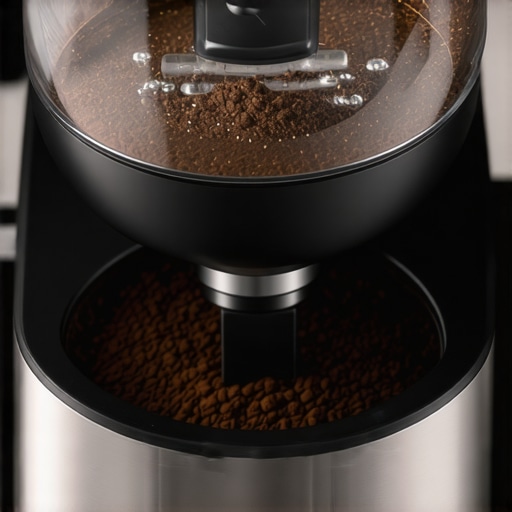
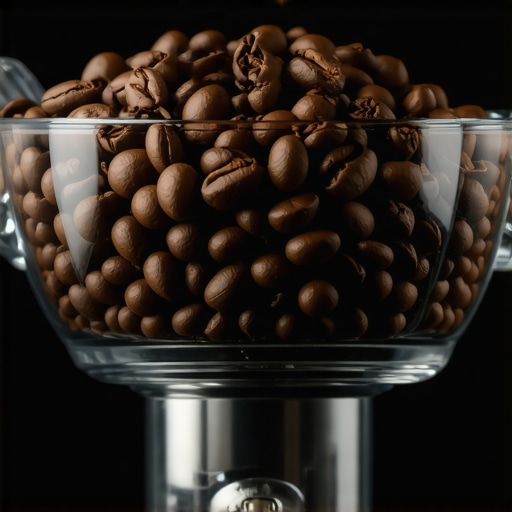
Most of us focus on the numbers—the grams, the seconds, the temperature. But I learned the hard way that the physical weight of the beans in your hopper, often called ‘column pressure,’ dramatically changes how your burrs take in coffee. When the hopper is full, that weight forces beans into the grinding chamber faster and with more force than when it is nearly empty. I used to think choosing the best coffee grinder was purely about the burrs, but it is also about how you manage the ‘popcorning’ effect. According to research by experts at Barista Hustle, the friction and feed rate of beans can significantly alter the particle size distribution, meaning your ‘fine’ setting isn’t actually the same when the weight changes. Have you ever felt like you were finally mastering the art of home espresso only to have the next morning’s shot taste completely different?
Is my grinder actually broken or am I just imagining things?
You aren’t crazy, and your machine likely isn’t dying. Early in my journey, I made the mistake of constantly adjusting my grind setting to compensate for a half-empty hopper, then forgetting to move it back when I refilled it. It led to a week of sour, undrinkable shots. Today, we are going to fix that cycle of frustration. I am going to show you how to stabilize your workflow so that whether you have three beans or three hundred in that plastic bin, your coffee stays delicious. We will look at why the first shot of the day is often the culprit and how to bypass the physics of the hopper. Stick with me, and you will stop wasting beans and start enjoying that morning cup again.
Stop Using Your Hopper as a Storage Bin
Most high-end hoppers are designed for aesthetics and convenience, but they are secretly the enemies of precision. If you want to stop the “fire hydrant” shots, you have to control the feed rate. Think of your grinder burrs like a revolving door at a busy hotel. If fifty people are shoving at once (a full hopper), the door spins faster and more aggressively. If only one person walks through (an empty hopper), the door moves differently. This is why single dosing has become the gold standard for home baristas. Instead of filling the hopper, you weigh exactly 18 grams, throw them in, and grind until empty. I remember the first time I tried this. I was using a grinder that had a massive chute. I put in 18 grams and only 14 came out. I was furious! I thought I was losing money with every shot. Then, on the second shot, 22 grams came out. The grinder was “holding onto” the coffee. This is where learning how to stop your grinder from retaining coffee without a bellows becomes a literal lifesaver. Once I cleared that internal blockage, my extraction times finally stabilized.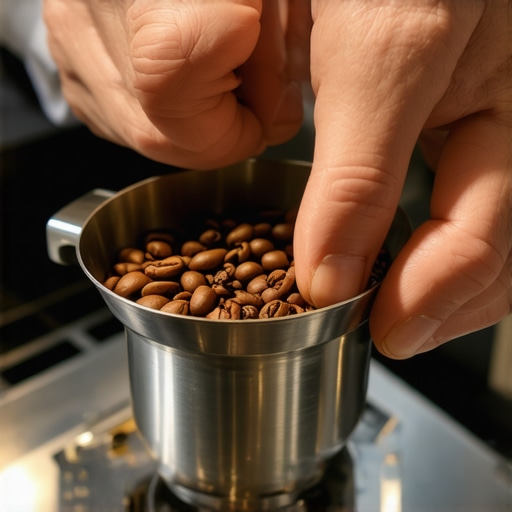
Keep the Weight Consistent If You Won’t Single Dose
If you prefer the look of a full hopper or your workflow demands it, consistency is your only shield. Never let your hopper dip below the half-way mark. When the bean pile gets low, the “popcorning” effect—where beans jump around the burrs rather than being fed into them—becomes chaotic. This is the primary reason why your grinders timer is never accurate. A timer-based grinder depends on a constant flow; if the weight on top changes, the amount of coffee ground in 5 seconds changes too. I now keep a small ceramic weight on top of my beans if I’m using a hopper, ensuring the pressure stays identical from the first bean to the last.
Purge the Chute Every Single Morning
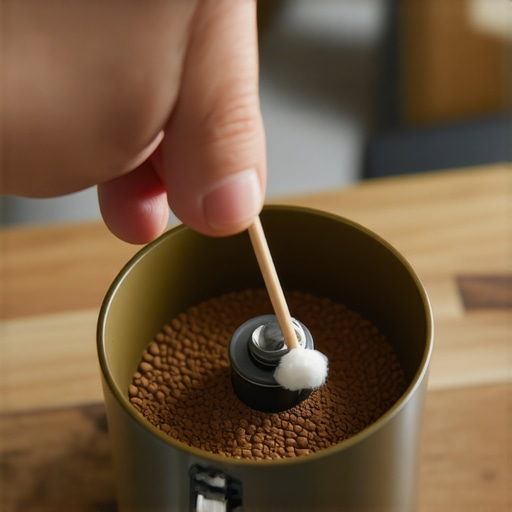
The first few grams of coffee inside your grinder are always stale and compressed differently than the rest. These “forgotten” grounds sit in the chute, absorbing moisture from the air. When you pull your first shot, you are actually getting a mix of yesterday’s stale dust and today’s fresh beans. This is exactly why the first shot of the day is always a throwaway. To fix this without wasting a whole double shot, I’ve developed a habit of “purging” about 2 grams of coffee before I ever weigh my dose. It sounds wasteful, but compared to throwing away a 36-gram double shot, it is a bargain. While you are at it, make sure you know how to clean the grinder chute without taking it apart to ensure no oily buildup is slowing down the exit of your fresh grounds. This simple move that saves your grinder from unnecessary wear also happens to be the secret to that syrupy, slow-flowing espresso you see in professional cafes. When you are choosing the best barista gear for coffee enthusiasts, always look for low-retention designs to make this process easier.Let’s address the elephant in the room: the ‘buy it once’ myth. Many people believe that the more you spend on your machine, the more ‘forgiving’ it is, but in my experience, it’s the exact opposite. A high-end setup actually amplifies your technical flaws rather than hiding them. I’ve seen enthusiasts struggle more with a massive commercial-grade unit than a entry-level setup because they don’t realize the trick to finding the true zero point on your grinder is more important than the brand name on the stainless steel. If your burrs aren’t perfectly parallel, you’ll get a mix of boulders and dust that no amount of fancy puck prep can fix.
Your High-End Grinder Might Be Lying to You
It is a common belief that larger burrs automatically mean better coffee. While surface area helps with heat dissipation in a high-volume cafe, a perfectly aligned 64mm burr set will outperform a misaligned 98mm set every single day in a home kitchen. If you are chasing that elusive ‘god-shot,’ learning the right way to align your flat burrs for better shots is a much better investment of your time than just buying a bigger motor. According to astrophysicist and coffee researcher Jonathan Gagné, even a microscopic tilt in your burrs causes ‘astigmatism’ in your particle size distribution, leading to extractions that are simultaneously sour and bitter. It’s a frustrating plateau that many home baristas hit without ever realizing their hardware is working against them.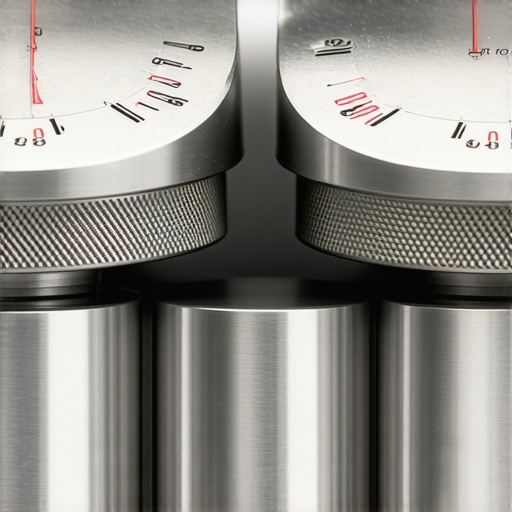
How can you tell if your burrs are actually dull?
This is the question that keeps coffee geeks up at night. If you’ve been brewing daily for a few years, you might start noticing that you have to grind significantly finer just to get the same flow rate you used to have at a coarser setting. Before you panic and buy a new machine, you need to check how to tell if your espresso grinder burrs are dull. Often, it’s not wear-and-tear but a lack of seasoning. If you’ve recently upgraded your gear, remember that the best way to season new grinder burrs fast is to run a few kilograms of older beans through them to smooth out factory-fresh microscopic burrs. This process stabilizes the friction and ensures your settings don’t ‘drift’ during those first few months of ownership.
Stop Putting Pure Distilled Water in Your Tank
This is the ‘oops’ factor that destroys more high-end machines than anything else. Beginners often think distilled water is the ultimate way to prevent scale because it is ‘pure,’ but it is actually chemically aggressive. Without minerals, the water will literally leach metal from your copper boiler and can fail to trigger the water-level sensors entirely. This mechanical ‘blindness’ is a leading reason why your espresso machine trips the circuit breaker or burns out its heating element. You must learn how to tell if your water hardness is damaging your boiler before the damage becomes a four-hundred-dollar repair bill. Even when your hardware is dialed in, remember that milk is the final frontier. While beginners obsess over bubbles, the pros focus on the ‘wetness’ of the foam. If you’re struggling to get that glossy finish, the secret to perfecting your milk texture on a single boiler is all about the purge and the roll—not just the steam pressure. Have you ever fallen into the distilled water trap or struggled with burr alignment? Let me know in the comments.
Give Your Machine a Sunday Reset
I used to be lazy about cleaning until I pulled a shot that tasted like a burnt rubber tire. That was the day I realized that oils build up inside the group head and turn rancid. You need to embrace the fact that your machine needs a backflush every single week or the flavor of your $20 bag of beans will be ruined by $0.02 worth of old residue. I block out twenty minutes every Sunday for the best routine for a weekend deep clean, which includes scrubbing the group head and soaking the portafilter baskets in specialized detergent. If you ignore this, you will eventually find that your espresso tastes like vinegar after cleaning because you have let the scale and oils reach a point of no return.
Replace Those Rubber Parts Before They Leak
Most people wait for a puddle on the counter to act, but I change my group gasket every six months regardless of how it looks. It is a cheap part that saves you from the frustration of a portafilter that keeps popping out mid-shot. Learning how to replace a group gasket without scratching the chrome is a rite of passage for any serious home barista. While you are in there, check your steam wand. If you notice a loss in pressure, you might need to know how to fix a steam wand that has lost its power before you host your next brunch. When you are choosing the best barista gear for coffee enthusiasts, always keep a spare set of gaskets on hand.
Why You Need a Dedicated Cleaning Kit
I used to use a kitchen towel and an old toothbrush, but that is a recipe for a mess. Now, I keep a dedicated drawer with a bent group brush and a prying tool. Using the trick for getting ground coffee out of tight corners with a specialized vacuum attachment has changed my workflow from a chore into a hobby. For those with manual grinders, remember that friction is your enemy; if you notice why your hand grinder is getting harder to turn, it is usually a sign that old oils have seized the bearings. Using high-quality milk frothers that transform your coffee experience also requires diligent cleaning of the steam tip holes to prevent milk protein buildup.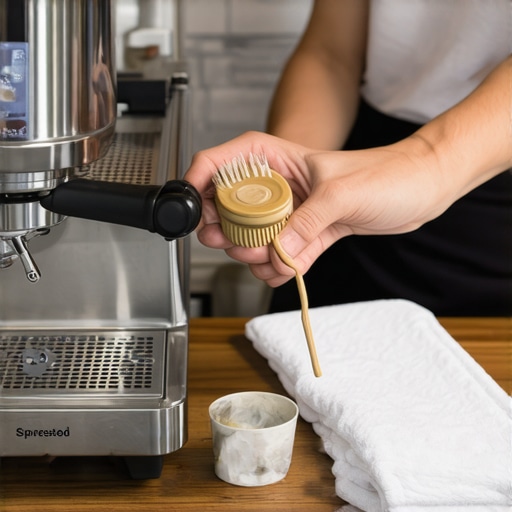
How do I maintain my espresso machine over the long haul?
Consistency is not just about the beans; it is about the mechanical health of your boiler and pump. According to the technical documentation from La Marzocco Home, “preventative maintenance is the only way to ensure thermal stability over years of use.” This means checking your expansion valve and ensuring your pump is not struggling. If you hear a weird noise, you should investigate the reason your pump makes a clicking sound immediately. If you have a more complex setup, you might even need to know how to fix a stuck steam valve on a prosumer machine before it leads to a total failure.
The Smart Future of Home Brewing
I predict we are moving toward a world where machines will have built-in sensors that alert your phone the second your burrs need sharpening or your water hardness changes. We are already seeing top-rated espresso machines for coffee lovers in 2025 that integrate flow-profiling and AI-driven extraction advice. It is an exciting time to be an enthusiast, but even the smartest machine still needs a human to keep it clean. You will still need to know how to select the perfect coffee grinder to pair with these high-tech units.
Stop Guessing and Start Measuring
My final advice for today is to stop relying on your eyes alone. Use a high-quality scale and a timer for every single shot. If you are seeing weird results, it might be why your coffee scale is giving you inconsistent readings—often just a low battery or a tilted surface. Go ahead and try one thing today: pull your shower screen and give it a deep clean. You will be shocked at what has been hiding behind that stainless steel. Mastering the art of home espresso is a marathon, not a sprint.I stood in my kitchen, bleary-eyed, watching a stream of espresso gush from my portafilter like a broken fire hydrant. Just yesterday, those same beans yielded a thick, syrupy nectar that made me feel like a professional barista. The only difference? I had just dumped a fresh, heavy bag of beans into the hopper. I felt defeated. I spent twenty minutes twisting my grinder dial back and forth, wasting half a bag of expensive coffee, only to realize I was fighting a ghost. If you have ever wondered why your shot extraction time changes every single day, the answer might be sitting right on top of your machine.
The Invisible Weight Messing With Your Extraction
Most of us focus on the numbers—the grams, the seconds, the temperature. But I learned the hard way that the physical weight of the beans in your hopper, often called ‘column pressure,’ dramatically changes how your burrs take in coffee. When the hopper is full, that weight forces beans into the grinding chamber faster and with more force than when it is nearly empty. I used to think choosing the best coffee grinder was purely about the burrs, but it is also about how you manage the ‘popcorning’ effect. According to research by experts at Barista Hustle, the friction and feed rate of beans can significantly alter the particle size distribution, meaning your ‘fine’ setting isn’t actually the same when the weight changes. Have you ever felt like you were finally mastering the art of home espresso only to have the next morning’s shot taste completely different?
Is my grinder actually broken or am I just imagining things?
You aren’t crazy, and your machine likely isn’t dying. Early in my journey, I made the mistake of constantly adjusting my grind setting to compensate for a half-empty hopper, then forgetting to move it back when I refilled it. It led to a week of sour, undrinkable shots. Today, we are going to fix that cycle of frustration. I am going to show you how to stabilize your workflow so that whether you have three beans or three hundred in that plastic bin, your coffee stays delicious. We will look at why the first shot of the day is often the culprit and how to bypass the physics of the hopper. Stick with me, and you will stop wasting beans and start enjoying that morning cup again.
Stop Using Your Hopper as a Storage Bin
Most high-end hoppers are designed for aesthetics and convenience, but they are secretly the enemies of precision. If you want to stop the “fire hydrant” shots, you have to control the feed rate. Think of your grinder burrs like a revolving door at a busy hotel. If fifty people are shoving at once (a full hopper), the door spins faster and more aggressively. If only one person walks through (an empty hopper), the door moves differently. This is why single dosing has become the gold standard for home baristas. Instead of filling the hopper, you weigh exactly 18 grams, throw them in, and grind until empty. I remember the first time I tried this. I was using a grinder that had a massive chute. I put in 18 grams and only 14 came out. I was furious! I thought I was losing money with every shot. Then, on the second shot, 22 grams came out. The grinder was “holding onto” the coffee. This is where learning how to stop your grinder from retaining coffee without a bellows becomes a literal lifesaver. Once I cleared that internal blockage, my extraction times finally stabilized.#IMAGE_PLACE_HOLDER_B#
Keep the Weight Consistent If You Won’t Single Dose
If you prefer the look of a full hopper or your workflow demands it, consistency is your only shield. Never let your hopper dip below the half-way mark. When the bean pile gets low, the “popcorning” effect—where beans jump around the burrs rather than being fed into them—becomes chaotic. This is the primary reason why your grinders timer is never accurate. A timer-based grinder depends on a constant flow; if the weight on top changes, the amount of coffee ground in 5 seconds changes too. I now keep a small ceramic weight on top of my beans if I’m using a hopper, ensuring the pressure stays identical from the first bean to the last.
Purge the Chute Every Single Morning
The first few grams of coffee inside your grinder are always stale and compressed differently than the rest. These “forgotten” grounds sit in the chute, absorbing moisture from the air. When you pull your first shot, you are actually getting a mix of yesterday’s stale dust and today’s fresh beans. This is exactly why the first shot of the day is always a throwaway. To fix this without wasting a whole double shot, I’ve developed a habit of “purging” about 2 grams of coffee before I ever weigh my dose. It sounds wasteful, but compared to throwing away a 36-gram double shot, it is a bargain. While you are at it, make sure you know how to clean the grinder chute without taking it apart to ensure no oily buildup is slowing down the exit of your fresh grounds. This simple move that saves your grinder from unnecessary wear also happens to be the secret to that syrupy, slow-flowing espresso you see in professional cafes. When you are choosing the best barista gear for coffee enthusiasts, always look for low-retention designs to make this process easier.Let’s address the elephant in the room: the ‘buy it once’ myth. Many people believe that the more you spend on your machine, the more ‘forgiving’ it is, but in my experience, it’s the exact opposite. A high-end setup actually amplifies your technical flaws rather than hiding them. I’ve seen enthusiasts struggle more with a massive commercial-grade unit than a entry-level setup because they don’t realize the trick to finding the true zero point on your grinder is more important than the brand name on the stainless steel. If your burrs aren’t perfectly parallel, you’ll get a mix of boulders and dust that no amount of fancy puck prep can fix.
Your High-End Grinder Might Be Lying to You
It is a common belief that larger burrs automatically mean better coffee. While surface area helps with heat dissipation in a high-volume cafe, a perfectly aligned 64mm burr set will outperform a misaligned 98mm set every single day in a home kitchen. If you are chasing that elusive ‘god-shot,’ learning the right way to align your flat burrs for better shots is a much better investment of your time than just buying a bigger motor. According to astrophysicist and coffee researcher Jonathan Gagné, even a microscopic tilt in your burrs causes ‘astigmatism’ in your particle size distribution, leading to extractions that are simultaneously sour and bitter. It’s a frustrating plateau that many home baristas hit without ever realizing their hardware is working against them.#IMAGE_PLACE_HOLDER_C#
How can you tell if your burrs are actually dull?
This is the question that keeps coffee geeks up at night. If you’ve been brewing daily for a few years, you might start noticing that you have to grind significantly finer just to get the same flow rate you used to have at a coarser setting. Before you panic and buy a new machine, you need to check how to tell if your espresso grinder burrs are dull. Often, it’s not wear-and-tear but a lack of seasoning. If you’ve recently upgraded your gear, remember that the best way to season new grinder burrs fast is to run a few kilograms of older beans through them to smooth out factory-fresh microscopic burrs. This process stabilizes the friction and ensures your settings don’t ‘drift’ during those first few months of ownership.
Stop Putting Pure Distilled Water in Your Tank
This is the ‘oops’ factor that destroys more high-end machines than anything else. Beginners often think distilled water is the ultimate way to prevent scale because it is ‘pure,’ but it is actually chemically aggressive. Without minerals, the water will literally leach metal from your copper boiler and can fail to trigger the water-level sensors entirely. This mechanical ‘blindness’ is a leading reason why your espresso machine trips the circuit breaker or burns out its heating element. You must learn how to tell if your water hardness is damaging your boiler before the damage becomes a four-hundred-dollar repair bill. Even when your hardware is dialed in, remember that milk is the final frontier. While beginners obsess over bubbles, the pros focus on the ‘wetness’ of the foam. If you’re struggling to get that glossy finish, the secret to perfecting your milk texture on a single boiler is all about the purge and the roll—not just the steam pressure. Have you ever fallen into the distilled water trap or struggled with burr alignment? Let me know in the comments.
Give Your Machine a Sunday Reset
I used to be lazy about cleaning until I pulled a shot that tasted like a burnt rubber tire. That was the day I realized that oils build up inside the group head and turn rancid. You need to embrace the fact that your machine needs a backflush every single week or the flavor of your $20 bag of beans will be ruined by $0.02 worth of old residue. I block out twenty minutes every Sunday for the best routine for a weekend deep clean, which includes scrubbing the group head and soaking the portafilter baskets in specialized detergent. If you ignore this, you will eventually find that your espresso tastes like vinegar after cleaning because you have let the scale and oils reach a point of no return.
Replace Those Rubber Parts Before They Leak
Most people wait for a puddle on the counter to act, but I change my group gasket every six months regardless of how it looks. It is a cheap part that saves you from the frustration of a portafilter that keeps popping out mid-shot. Learning how to replace a group gasket without scratching the chrome is a rite of passage for any serious home barista. While you are in there, check your steam wand. If you notice a loss in pressure, you might need to know how to fix a steam wand that has lost its power before you host your next brunch. When you are choosing the best barista gear for coffee enthusiasts, always keep a spare set of gaskets on hand.
Why You Need a Dedicated Cleaning Kit
I used to use a kitchen towel and an old toothbrush, but that is a recipe for a mess. Now, I keep a dedicated drawer with a bent group brush and a prying tool. Using the trick for getting ground coffee out of tight corners with a specialized vacuum attachment has changed my workflow from a chore into a hobby. For those with manual grinders, remember that friction is your enemy; if you notice why your hand grinder is getting harder to turn, it is usually a sign that old oils have seized the bearings. Using high-quality milk frothers that transform your coffee experience also requires diligent cleaning of the steam tip holes to prevent milk protein buildup.#IMAGE_PLACE_HOLDER_D#
How do I maintain my espresso machine over the long haul?
Consistency is not just about the beans; it is about the mechanical health of your boiler and pump. According to the technical documentation from La Marzocco Home, “preventative maintenance is the only way to ensure thermal stability over years of use.” This means checking your expansion valve and ensuring your pump is not struggling. If you hear a weird noise, you should investigate the reason your pump makes a clicking sound immediately. If you have a more complex setup, you might even need to know how to fix a stuck steam valve on a prosumer machine before it leads to a total failure.
The Smart Future of Home Brewing
I predict we are moving toward a world where machines will have built-in sensors that alert your phone the second your burrs need sharpening or your water hardness changes. We are already seeing top-rated espresso machines for coffee lovers in 2025 that integrate flow-profiling and AI-driven extraction advice. It is an exciting time to be an enthusiast, but even the smartest machine still needs a human to keep it clean. You will still need to know how to select the perfect coffee grinder to pair with these high-tech units.
Stop Guessing and Start Measuring
My final advice for today is to stop relying on your eyes alone. Use a high-quality scale and a timer for every single shot. If you are seeing weird results, it might be why your coffee scale is giving you inconsistent readings—often just a low battery or a tilted surface. Go ahead and try one thing today: pull your shower screen and give it a deep clean. You will be shocked at what has been hiding behind that stainless steel. Mastering the art of home espresso is a marathon, not a sprint.
What I Learned the Hard Way About My Daily Routine
After years of chasing the perfect shot, I realized that even the most expensive barista gear won’t save you from a lack of process. First, the “set and forget” mentality is the fastest way to frustration; because coffee is an organic product, it reacts to humidity and age just as much as you do. Second, I finally accepted that the best routine for a weekend deep clean is non-negotiable if you want to taste the nuanced notes promised on the bag. Lastly, precision isn’t about being a perfectionist—it is about respecting the craft. When you are dialing in your morning cup, remember that the most important tool is your own curiosity and your willingness to learn from a “bad” shot.
My Essential Toolkit for Better Brews
If you want to move past the guessing game, I highly recommend investing in a few key resources. A high-resolution scale is the only way to diagnose why your coffee scale is giving you inconsistent readings and ensure your yield is spot on every time. I also suggest keeping a copy of “The World Atlas of Coffee” on your counter; it completely changed how I view origin and roast levels. For those who love milk drinks, look into milk frothers that transform your coffee experience to bridge the gap between a basic latte and cafe-quality microfoam. Finally, never underestimate a simple WDT tool to keep your extractions even and spray-free.
Your Journey Toward the Perfect Cup Starts Now
Stepping into the world of high-end extraction can feel like learning a new language, but every sour shot is just a data point on your path to greatness. Don’t let the technical jargon discourage you from mastering the art of home espresso. With the right coffee grinder and a bit of patience, you will soon be pulling shots that rival your favorite local shop. Have you ever struggled with inconsistent extraction times even when you didn’t change your settings? Let me know in the comments below!