How to Fix a Portafilter That Keeps Popping Out
It happened at 7:00 AM on a Tuesday. I was bleary-eyed, desperate for caffeine, and just starting to feel like I was finally mastering the art of home espresso. I locked the handle, hit the brew button, and turned my back for a split second to grab a spoon. Then, a sound like a muffled gunshot echoed through my kitchen. Hot water and wet grounds sprayed everywhere—the backsplash, the toaster, and right into my fresh bowl of oatmeal. My portafilter hadn’t just leaked; it had physically ejected itself from the group head like a pressurized projectile. It was humiliating, messy, and honestly, a little scary. If you are reading this because your machine is doing the same thing, take a deep breath. You don’t need a new machine, but you do need to stop what you’re doing before you get burned. Today, I am going to show you exactly why this happens and how to fix it using the lessons I learned the hard way.
The Morning My Portafilter Decided to Fly
When I first started out, I made the classic rookie mistake of thinking that if the handle felt loose, I should just crank it harder. I ignored the signs. I thought why your portafilter handle should never be tightened too far was just a suggestion for people with cheaper gear. I was wrong. By over-tightening, I was actually shredding the very seal meant to keep the pressure in check. It’s a violent wake-up call when nine bars of pressure—which, according to the Specialty Coffee Association, exerts over 130 psi of force—decides it has found a path of least resistance. That path is usually straight down and out, taking your expensive beans with it. Have you ever had a portafilter ‘sneezing’ or flying off mid-shot? Tell me I am not the only one who has spent twenty minutes cleaning coffee off the ceiling.
Does this mean my machine is officially broken?
It feels like a catastrophic failure, doesn’t it? You start looking at top-rated espresso machines for coffee lovers in 2025 because you’re convinced your current unit is a lemon. But most of the time, the machine is fine; it’s just crying out for a little maintenance. The culprit is almost always a worn-out, dried-up, or coffee-caked group gasket. When that rubber ring loses its elasticity, it can’t grip the ears of your portafilter anymore. Under pressure, the handle literally vibrates and slides until it clears the lugs and launches.
Stop Muscling the Handle and Check the Gasket
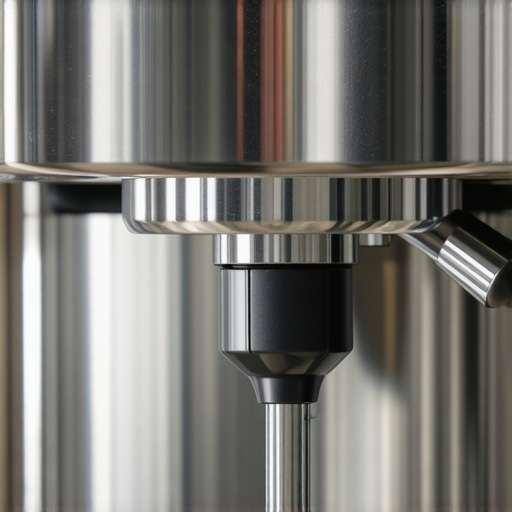
Before you try to pull another shot, we need to talk about the ‘why’ behind the pop. If your gasket is old, it becomes as hard as a hockey puck. No matter how strong you are, you won’t get a safe seal. I remember trying to ‘fix’ mine by just wiping the rim of the basket, but the real issue was the gunk hidden up inside the group head. If you haven’t checked our guide on how to replace a group gasket without scratching the chrome, that is your very next step. We’re going to look at the three most common reasons for the ‘eject button’ effect—from worn rubber to the wrong basket size—and get you back to brewing without the backsplash. [image_placeholder_1]
Stop the Slip by Degreasing the Lugs
The first thing you need to realize is that coffee oils are essentially a high-temperature lubricant. When you brew, those oils escape and coat the internal rim of your group head. If you haven’t performed a thorough cleaning recently, your portafilter lugs (the ‘ears’ that lock in) are basically trying to hold onto a greased pole while 130 pounds of force pushes against them. I found this out the hard way during a busy Sunday morning when I tried to pull three shots in a row without wiping the group. On the third shot, the handle slowly rotated toward the ‘open’ position before it eventually gave up and launched coffee grounds across my white kitchen wall.
Scrub the Group Head Until it Shines
You need to take a stiff nylon brush and get into the tracks where the portafilter ears sit. If there is a build-up of old, carbonized coffee, the ears won’t seat deeply enough to lock securely. This is often why your machine needs a backflush every single week—it is not just about the internal valves; it is about keeping the locking mechanism clean and friction-heavy. I use a damp microfiber cloth to wipe the gasket area after every single session to ensure those oils do not bake onto the metal.
When Your Gasket Turns into a Hockey Puck
If cleaning doesn’t stop the rotation, your group gasket is likely to blame. In a new machine, the rubber is soft and ‘grippy,’ grabbing the portafilter basket and holding it tight. Over time, the constant heat cycles from your boiler turn that rubber into a hard, brittle ring. It loses its ability to compress. When you lock the handle, it feels like it is tight, but it is actually just bottoming out against a hard surface with zero friction. If you have noticed that your handle has to be pulled further and further to the right just to get a seal, you are definitely at risk for an ejection. 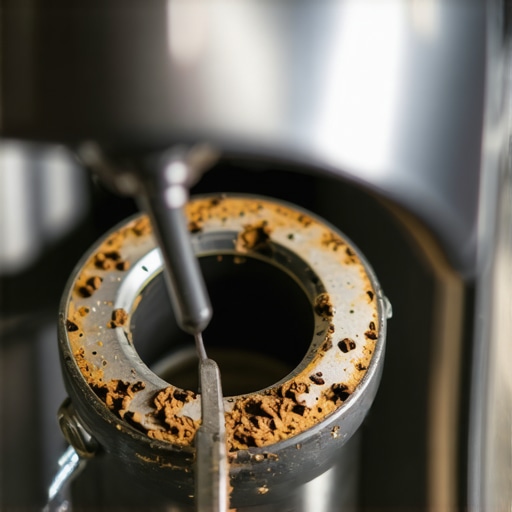
The Dry-Fit Test Before You Brew
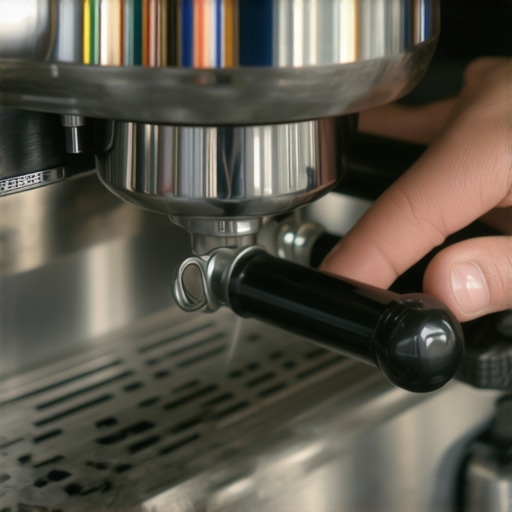
Before you waste your expensive beans, perform a dry-fit test. Lock your empty portafilter into the machine and try to wiggle the handle. If it feels like it has ‘play’ or if it slides back toward the center on its own, your gasket is shot. This is a common issue when people are mastering the art of home espresso and forget that rubber is a consumable part. If you have a prosumer machine, you might even need to learn how to adjust the expansion valve on your prosumer machine if your pressure is spiking too high, putting undue stress on the seal.
Check for Basket and Lug Mismatches
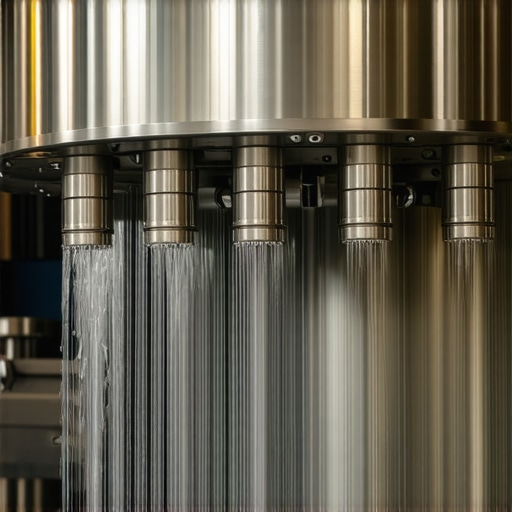
Sometimes the hardware itself is the problem. If you recently bought a new precision basket, it might be slightly taller than your stock one. This prevents the portafilter from rotating far enough into the ‘locked’ zone. I once swapped to a 22g triple basket and did not realize it was hitting the shower screen before the lugs were fully engaged. The result was a face full of steam. Always ensure your choosing the best barista gear for coffee enthusiasts includes baskets that are specifically compatible with your machine’s depth. If the basket is too deep, the portafilter might feel ‘tight,’ but it is actually just jammed against the screen, leaving the lugs barely hanging on by a thread.Most home baristas think that if they just buy the most expensive gear, their shots will magically become world-class. But I have learned that even the most high-end kit is only as good as your understanding of its hidden nuances. For example, there is a massive misconception about distribution. People spend a fortune on fancy spinning tools thinking it solves channeling once and for all. In reality, why your distribution tool might be ruining your extraction is a topic that does not get enough attention; if you do not use it correctly, you are often just compressing the top layer while leaving air pockets underneath, leading to a shot that looks good for five seconds before it starts spraying.
Stop Blindly Trusting Your Distribution Tool
The contrarian truth is that simple is often better. I have seen enthusiasts spend minutes obsessing over puck prep, only to wonder why their shots are still inconsistent. Over-manipulating the grounds can actually cause fines to migrate to the bottom of the basket, leading to a clogged shot or uneven flow. If you are choosing the best barista gear for coffee enthusiasts, do not let the gadgets replace good old-fashioned technique. A quick stir with a needle tool (WDT) is usually all you need. 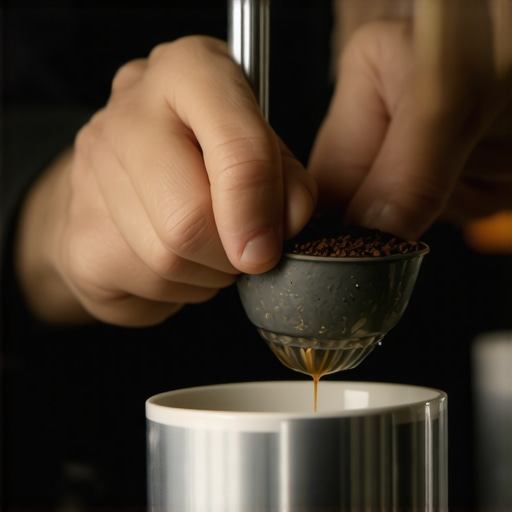
Why does my shot time change even when I haven’t touched the dial?
This is the ultimate frustration for many. You dialed in your beans yesterday, but today the shot is running five seconds faster. It is rarely the machine’s fault. Factors like ambient humidity and the way beans degas over time play a huge role. Furthermore, why your shot extraction time changes every single day often comes down to grinder retention—the small amount of old coffee left in the chute from yesterday. According to a study by Jonathan Gagné on coffee physics, even a one-degree Celsius shift in your grinder’s burr temperature can significantly alter the particle size distribution.
The Distilled Water Trap and Your Boiler
One major ‘oops’ factor I see constantly is the use of 100% distilled water. People think pure water is the best way to keep their machine clean, but it is actually a slow killer. Distilled water is ‘hungry’ and can leach minerals directly from your metal components. Moreover, most espresso machine sensors rely on the conductivity of minerals to know when the boiler is full. If you use distilled water, the sensor might not trigger, causing your heating element to fire in a dry boiler. Understanding the truth about using distilled water in your machine is vital for long-term survival of your gear.
Your New Grinder Needs a Break-In Period
If you just unboxed a brand-new unit, do not expect perfection on day one. Many people return machines because the shots are ‘messy,’ not realizing they are in the ‘break-in’ phase. You need to learn the best way to season new grinder burrs fast by running several pounds of cheap beans through them. New burrs have microscopic burrs and sharp edges that produce too many fines until they are properly seasoned. Once you have smoothed them out, you will find it much easier to how to select the perfect coffee grinder for your brew and stick with it. Another pro-tip: how to stop using a wet cloth on your steam wand—use a dry microfiber to prevent milk proteins from baking onto the metal during the purge. Have you ever fallen into the distilled water or over-distribution trap? Let me know in the comments.
It’s one thing to get a great shot today; it’s another to keep your machine purring for the next decade. I’ve seen too many friends buy top-rated espresso machines for coffee lovers in 2025 only to let them turn into expensive paperweights within two years because they ignored the invisible maintenance. The biggest killer isn’t the beans—it’s the water. If you aren’t sure where to start, you should learn the easy way to test your machines water hardness at home. If your water is even slightly too hard, scale will build up on your heating elements, leading to why your espresso machine takes longer to heat up recently. I personally use a simple titration kit because those little paper strips you get for free are notoriously inaccurate and can lead to a false sense of security.
Keep Your Boiler From Scaling Up Fast
Scale is the silent enemy of the home barista. It doesn’t just slow down your machine; it can eventually block the tiny passages in your group head. According to the technical specifications from Slayer Espresso, maintaining a consistent flow rate depends heavily on the cleanliness of the gicleur—a tiny orifice that can clog with a single speck of scale or debris. This is why I always recommend the best routine for a weekend deep clean. It sounds like a chore, but ten minutes on a Saturday saves you a $400 repair bill and a week without caffeine in the future. Don’t wait for the steam wand to lose power; be proactive with your descaling cycles.
How do I keep my gear running like new for years?
The secret is consistency and the right accessories. I used to think a coffee mat was just for show, but after ruining my laminate counters with coffee stains, I learned that choosing a coffee mat that doesn’t absorb odors is a game-changer for hygiene. It provides a dedicated space for your portafilter and keeps the mess contained. Additionally, you should be mindful of your grinder’s health. I’ve adopted the move that saves your grinder from unnecessary wear, which involves purging the chute before every session. It’s a simple trick that prevents old, stale oils from clogging the burrs and causing the motor to strain. 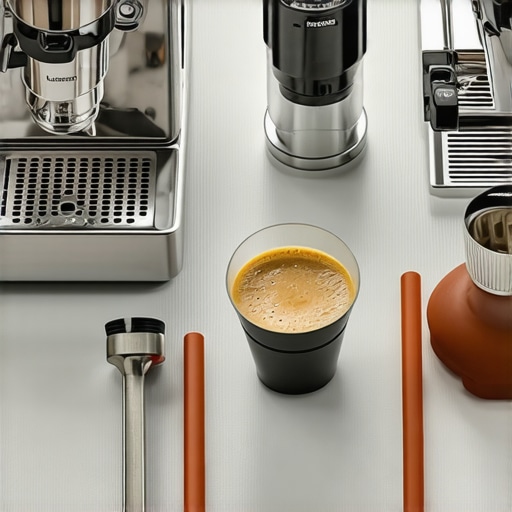
The One Tool That Saves My Countertop From Damp Chaos
Beyond the machine itself, your workflow tools dictate your long-term success. If you are still choosing the best barista gear for coffee enthusiasts, don’t overlook the humble pressure gauge. Knowing your actual output is vital for troubleshooting. If your shots are suddenly sour or watery, the easy way to test your pump pressure at home can tell you if your vibratory pump is failing before you spend hours adjusting your grind size in vain. I predict that in the next few years, we will see a massive shift toward fully integrated smart-sensors in mid-range machines that will alert your phone the second they detect scale or pressure loss.
If you really want to take control of your coffee’s consistency, I challenge you to perform a pressure test this weekend. It’s the ultimate way to verify that your gear is performing at its peak. If you have any questions about the specific tools I use for my daily workflow, feel free to visit our contact us page.
The Hard Truths I Learned While Mopping Coffee Off the Ceiling
After years of tweaking my setup, I’ve realized that mastering the art of home espresso is as much about mechanical empathy as it is about taste. Here are the lightbulb moments that saved my kitchen from future explosions:
- Force is your enemy: If you find yourself leaning your whole body weight into the handle, something is wrong. You’re likely compressing a dirty gasket or using a basket that doesn’t fit.
- The First Shot is a Teacher: I used to get frustrated when the first pull failed, but why the first shot of the day is always a throwaway taught me that the machine needs to stabilize thermally and mechanically before it performs safely.
- Pressure isn’t just a number: If your machine is older, the move for more consistent puck compression helps ensure the water flows through the coffee rather than finding a weak spot in the seal.
- Oils are slippery: I can’t stress this enough—a clean group head is a safe group head. If you haven’t scrubbed the lugs this week, you’re brewing on a literal slide.
The Gear That Saved My Sanity and My Countertop
You don’t need a thousand-dollar budget to fix these issues. When you are choosing the best barista gear for coffee enthusiasts, focus on these three things first:
First, swap your rubber gasket for a silicone one. Silicone doesn’t turn into a “hockey puck” and maintains its grip for years. Second, get a reliable scale. I struggled for months because why your espresso scale turns off right before the shot ends was causing me to over-fill my baskets, leading to the ejection issues we talked about. Finally, keep a dedicated set of dry microfiber cloths nearby. Wiping the group head lugs dry before locking in the portafilter provides the friction needed to keep everything in place. [image_placeholder_final]
Don’t Let One Bad Morning Stop Your Progress
It is easy to feel defeated when coffee is dripping from your ceiling, but every mess is a lesson in how these incredible machines actually work. If you stay diligent with your cleaning and respect the pressure inside that group head, you will find that mastering the art of home espresso is one of the most rewarding hobbies you can have. Your machine isn’t a lemon; it’s just a precision instrument that needs a little bit of love to keep the pressure where it belongs—inside the puck, not all over your kitchen. Keep brewing, keep learning, and most importantly, keep your hands clear when you hit that button!
Have you ever had a portafilter “sneeze” on you or fly off mid-shot? Let me know your messiest stories in the comments below.