The Reason Your Pump Pressure Drops When You Engage the Steam Wand
The steam hissed, but the pressure needle fell. I stood there in the quiet of my kitchen, a half-pulled shot of expensive Ethiopian beans turning sour in the cup. If you’ve ever felt that cold pit in your stomach when your machine’s heartbeat seems to skip, you aren’t alone. I’ve been there, usually at 6:30 AM when my brain isn’t even fully online yet. You spend all this time choosing the best barista gear, thinking you’ve finally reached coffee nirvana, only to have the pressure drop the second you try to froth your milk. It feels like the machine is gasping for air, and it’s enough to make any home barista want to throw their portafilter out the window. The sound of a pump struggling is something you feel in your teeth—a low, rhythmic thrumming that tells you the hydraulic pressure is venting elsewhere. Today, we’re going to peel back the casing and figure out exactly why this happens and how you can stop it. We aren’t just talking about a minor technical glitch; we’re talking about the soul of your morning routine. If your pressure is fluctuating, your extraction is suffering, and your milk is going to end up as a bubbly mess instead of silky microfoam.
Stop Panic-Watching the Pressure Gauge
The first time I saw my pressure needle plummet, I panicked. I was convinced I had a massive leak or that my pump had finally given up the ghost. I even went as far as researching how to fix a broken boiler temperature sensor, thinking the heat was the culprit. It wasn’t. The reality is that most home espresso machines are designed with a single pump that has to decide where to send its energy. When you open that steam valve, you’re basically telling the machine to redirect its ‘blood flow’ away from the brew head. It’s a classic case of demand exceeding supply. According to James Hoffmann in The World Atlas of Coffee, the stability of pressure is the most critical factor in achieving a balanced extraction, and even a 1-bar drop can radically change the flavor profile of your shot. If you are mastering the art of home espresso, you have to learn to anticipate this hand-off between brewing and steaming. I spent months frustrated by why your espresso pressure drops suddenly during the shot before I realized that my specific machine model just couldn’t handle the ‘simultaneous’ workflow I was forcing on it. If you want true stability, you might need to look into the secret to getting consistent shots on a dual boiler machine. [image]
Is Your Espresso Machine Actually Breaking Down?
This is the fear that keeps us up at night, isn’t it? That every little dip in pressure is a sign of an impending four-hundred-dollar repair bill. Early in my journey, I actually replaced a vibration pump that was perfectly healthy because I didn’t understand how the solenoid valve worked. I was so sure the pump was failing that I didn’t even check if I was just dealing with a simple flow-rate issue. Unless you hear a terrifying rattling noise during heat up or notice that your steam wand only blows out weak air even when the brew head is off, you’re likely just seeing the physical limitations of your boiler’s capacity. Think of your machine like a garden hose; if you turn on the sprinkler and the nozzle at the same time, neither one is going to give you the spray you need. Have you ever caught yourself staring at that needle, praying it stays above nine bars while you start your milk? Tell me I’m not the only one who does this!
Hunt Down Hidden Leaks in the Piping
If your needle is diving, you need to verify where the water is actually going. In most consumer machines, a faulty three-way solenoid valve is the usual suspect. It acts like a traffic cop for your water flow, and when it fails, it starts leaking pressure back into the drip tray instead of holding it against the coffee puck. You can usually diagnose this by watching the return line; if you see a constant stream of water while you’re trying to build pressure, you’ve found your leak. It’s worth learning how to spot a failing solenoid valve before it floods your kitchen because once they go completely, you won’t just have a pressure drop—you’ll have a puddle. I remember a Saturday morning where I spent three hours chasing a ghost leak, only to realize a tiny grain of sand was propping the valve open. It felt like open-heart surgery on a kitchen appliance. If you aren’t sure if the volume is right, you should how to check your espresso machines group head flow rate to rule out a dying pump. 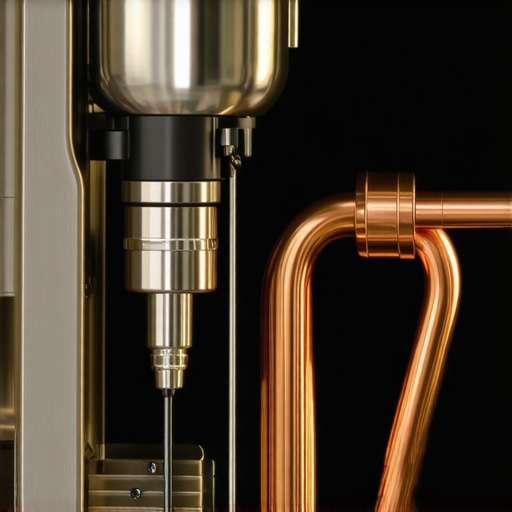
Keep Your Steam Wand Tip Crystal Clear
We often focus on the big mechanical failures, but sometimes the pressure drop is simply the machine struggling against back-pressure from a clog. If your steam wand has even one hole blocked by dried milk, the steam back-up can confuse the pressure-stat. I once had a frantic morning where I thought my boiler was dying, only to realize my guest hadn’t wiped the wand properly the night before. This is why your steam wand tips keep getting blocked by milk residue and why it’s the first thing you should check before unscrewing the casing. A quick poke with a paperclip can sometimes restore your bars instantly.
Make Your Single Boiler Act Like a Dual
If your hardware is healthy but you’re still seeing that drop, it’s likely a thermal management issue. On a single boiler, you are asking one tank to be two temperatures at once. When you flip that steam switch, the heater goes into overdrive. If you pull your shot too late into the heating cycle, the boiler has already started to create a steam pocket at the top, which effectively acts as a cushion that saps your pump’s punch. When mastering the art of home espresso, the ‘temperature surfing’ technique is your best friend. Always make sure to use the best way to purge your steam wand without getting burned to clear out the initial condensation, as that ‘wet’ start often causes a temporary pressure dip.
When the Pressure Stat Starts to Fail
In older machines, a mechanical pressure-stat might be sticking. This is the component that tells the boiler when to stop heating. If it’s coated in mineral deposits, it responds slowly, leading to wild swings in pressure. You might need to learn how to fix a stuck pressure stat in an older machine if you notice the needle stays low for several seconds before the heater finally kicks in.
Fight the Scale Before It Fights Your Pump
Calcium is the silent killer of pressure. Scale doesn’t just block tubes; it coats the sensors and the heating element, making the machine ‘think’ it has reached pressure when it’s actually just trapped air. If you notice why your espresso machine steam is wet and spluttery, it’s a red flag that your water level is too high because the probe is scaled over. You must learn how to tell if your machine boiler is accumulating lime scale before the buildup becomes a permanent blockage. A clean boiler provides a much more stable environment for the pump to do its job.While chasing mechanical ghosts in your boiler is necessary, the truth is that your machine’s pressure is only half the battle. Let’s dig deeper into where the real flavor is lost.
The Grinder Matters More Than Your Machine
Most people think the shiny chrome box is the MVP of their kitchen counter. I’m going to tell you something that might hurt: your machine is basically just a glorified, pressurized kettle. The real heavy lifting—the science and the magic—is done by your grinder. Everyone says you should buy the most expensive machine you can afford, but in my experience, a solid mid-range machine paired with a world-class grinder beats a high-end dual-boiler with a budget grinder every single time. When you are how to select the perfect coffee grinder for your brew, you’re actually choosing your flavor ceiling. If you invest in top-rated espresso machines for coffee lovers in 2025 but skimp on the burrs, you’ll never taste the potential of your beans. 
Stop Chasing the Myth of Zero Fines
A common trap I see is the ‘fines’ obsession. In the high-end coffee world, we’re often told that fines—those microscopic coffee dust particles—are the enemy of a clean shot because they clog the filter. However, a study by the team at Socratic Coffee suggests that a specific percentage of fines is actually necessary to create the hydraulic resistance needed for proper body and crema. Without them, your water would just rush through the puck without picking up any oils. If you’re constantly worried about why your coffee grinder retains more grounds than it should, remember that some retention and fine-generation are part of a healthy extraction. You aren’t looking for perfect uniformity; you’re looking for a controlled mess.
Why Is Your Precision Basket Giving You Messy Extractions?
You spent fifty bucks on a high-flow precision basket thinking it would fix everything, yet why your bottomless portafilter shows channels every time remains a mystery. The nuance here is the gap between the tamper and the basket wall. Even a 0.5mm difference can lead to ‘edge channeling,’ which is why your espresso shot is extracting from only the edges of the basket. Precision baskets have straighter walls and more holes, which means they are actually less forgiving than the cheap ones your machine came with.
Don’t Let Your Cleaning Routine Ruin Your Flavor
Here is the ‘oops’ factor that ruins more mornings than a broken pump: the post-descaling disaster. I’ve seen enthusiasts perform a deep clean only to find the reason your espresso tastes metallic after descaling is that they stripped away the seasoning of the boiler. Over-cleaning with harsh chemicals can actually lead to tiny leaks or components seizing up. Sometimes the best maintenance is simply the the simple shim fix for a loose portafilter handle or a basic backflush rather than a full teardown. Before you buy more choosing the best barista gear for coffee enthusiasts, make sure you aren’t over-engineering your maintenance. Have you ever fallen into this trap? Let me know in the comments.Once you’ve stopped over-cleaning and started listening to your machine, the next step is building a toolkit that actually works for you rather than against you. I’ve learned the hard way that a little bit of food-safe lubricant goes a long way in preventing mechanical pressure drops. If you have an E61 group head, that lever should feel like butter. If it starts to squeak or feel gritty, you’re literally grinding metal-on-metal inside the cam. I personally use Molykote 111, which is the gold standard recommended in many Rocket Espresso technical manuals. Learning how to properly lubricate your e61 group head cam is a ten-minute job that can save you a hundred-dollar repair down the line. It isn’t just about the ‘feel’—a sticky cam can prevent the internal valves from seating properly, leading to that dreaded pressure bleed we discussed earlier. 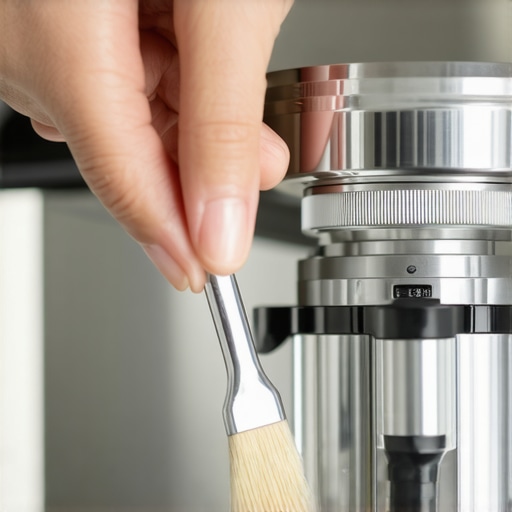
How do I keep my gear running like new for years?
The most important factor in the longevity of your machine is water chemistry. Scale is a ghost that haunts your boiler, and by the time you see it on your wand, it’s already thick inside your heat exchanger. I highly recommend using a dedicated scale-inhibiting filter or, even better, making your own ‘espresso water’ using distilled water and added minerals. If you don’t want to become a chemist, at least perform a regular check to see how to check if your portafilter gasket is actually sealed. A hardened gasket will force you to over-tighten the handle, which eventually warps the group head ears. Looking toward the future, we are seeing a massive shift toward IOT-integrated machines. I predict that within five years, even mid-range home machines will feature built-in sensors that alert your smartphone the moment a mineral deposit begins to restrict flow, taking the guesswork out of maintenance entirely.
The Three Tools I Refuse to Brew Without
If you are looking for the move for better espresso without buying a new machine, start with a WDT tool and a puck screen. I used to think puck screens were just a gimmick, but they keep your shower screen remarkably clean and help disperse water evenly across the puck. Just be prepared for the minor annoyance of why your puck screen keeps falling into the knock box every time you clear a shot. Additionally, if you frequently make milk drinks, stop settling for the ‘okay’ foam your machine’s default wand might provide if it’s struggling. There are specific milk frothers that transform your coffee experience by allowing you to focus on the shot while they handle the texture. Lastly, pay attention to your physical form; I’ve found that the simple hack for a more ergonomic tamping position saved me from a summer of wrist fatigue. I challenge you this week to take five minutes to inspect your group head gasket and shower screen—you might be surprised by what’s hiding in there.
Lessons Learned from a Hundred Sour Shots
After years of obsessing over the perfect shot, I realized that chasing the gear is often secondary to mastering the subtle nuances of the brewing process. I’ve had countless mornings where I was ready to call a repairman, only to find that a simple seal check would have solved the problem. It is vital to learn how to check if your portafilter gasket is actually sealed because even a microscopic leak can compromise the thermal stability of your entire group head. Also, don’t let the technical hiccups discourage you. For instance, if you experience the reason your espresso tastes metallic after descaling, remember it is often just a temporary result of the boiler’s reaction to the cleaning agents, not a permanent failure of your machine components.
The Few Tools That Actually Earned Their Counter Space
If you want to move past troubleshooting and spend more time enjoying your morning latte, focus on a high-quality maintenance routine rather than just shiny accessories. I always keep a tube of Molykote 111 nearby; knowing how to properly lubricate your e61 group head cam will extend the life of your internal mechanical valves significantly. Beyond maintenance, your choice in hardware defines your flavor ceiling. While how to select the perfect coffee grinder for your brew remains the most critical decision for overall cup quality, don’t overlook specialized milk frothers that transform your coffee experience if your machine’s built-in wand struggles to provide the consistency you need for microfoam.
[image]
Your Journey Toward the Perfect Crema
The pursuit of the ultimate shot is a marathon, not a sprint. Whether you are operating entry-level equipment or pulling shots on top-rated espresso machines for coffee lovers in 2025, the secret lies in consistency and a willingness to understand the physics happening inside your portafilter. Mastering home espresso is about developing a deep relationship with your gear and learning to hear the difference between a healthy pump and one that’s struggling for air. Have you ever had a pressure drop that turned out to be a shockingly simple fix? Let me know your success stories in the comments below!