How to Fix a Wobbly Tamper Handle
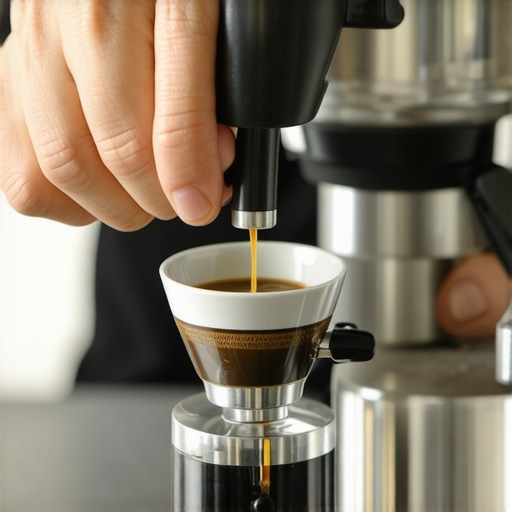
It was 6:45 AM, and the kitchen was filled with the aroma of beans I had just spent a week seasoning my new steel burrs for. I reached for my favorite walnut-handled tamper, pressed down with purpose, and felt a sickening *clunk*. The handle shifted under my palm. My first thought? I’d ruined a fifty-dollar piece of kit. My second thought? There goes my morning extraction. A loose handle isn’t just an annoyance; it’s a direct threat to your coffee quality. If your handle isn’t seated perfectly, you are likely creating uneven pressure, which is exactly why your shots start running fast after two seconds. Today, I am going to walk you through the quick fixes to get that grip solid again so you can get back to mastering the art of home espresso. [image placeholder]
Your Puck Deserves a Stable Foundation
When I first started out, I made the amateur mistake of thinking I could just “adjust” my grip to compensate for a wobbly tamper. I spent weeks wondering why my shots were channeling despite choosing the best barista gear I could afford. The truth is, even a tiny bit of play in the handle prevents you from feeling if the base is level. This instability is often why your plastic tamper is making your espresso sour—it simply lacks the rigidity needed for a flat bed. A stable tamper ensures that the 30 pounds of pressure you’re aiming for is distributed across the entire surface of the coffee, not just the side your handle happens to be leaning toward.
Is a slightly loose handle actually going to ruin my morning brew?
You might think I’m being a bit dramatic, but precision is everything in the world of top-rated espresso machines. According to the Barista Institute, a perfectly level tamp is the only way to ensure the water finds a uniform path through the puck. If your handle wobbles, your hand naturally tilts to compensate, leading to a sloped coffee bed. I’ve seen beautiful machines produce swamp water just because the tamper handle had a quarter-turn of slack. Have you ever noticed your tamper feeling “off” right before a particularly messy shot? Tell me I’m not the only one who has faced this pre-caffeine frustration! We’re about to fix that rattle once and for all.
Stop the Spin by Checking the Core Bolt
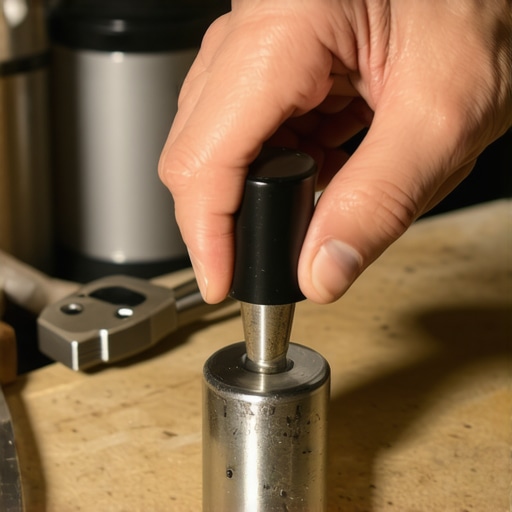
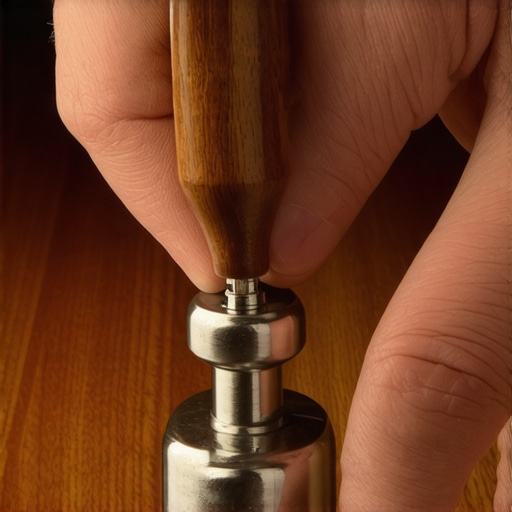
Most wobbly handles are caused by a simple mechanical retreat: the internal bolt is backing out. Think of it like a loose screw on a pair of glasses; it doesn’t seem like much until the lens drops out. With a tamper, that “lens” is your puck consistency. I remember one frantic morning when my walnut handle felt like a swivel chair. I tried to tighten it mid-shot, over-torqued it, and nearly stripped the internal housing—a mistake as costly as ignoring why your espresso machine is leaking from the steam valve. To fix this properly, unscrew the handle entirely. Look at the threads. If they are dry and shiny, they lack the friction needed to stay put under the repetitive twisting motion of a barista’s wrist. Just like how to fix a grinder adjustment ring that wont budge, you need the right amount of resistance without forcing the metal.
The Two-Wrap Teflon Trick
This is my favorite hack for any piece of barista gear that relies on threaded parts. Grab a roll of white PTFE (plumber’s) tape. Wrap the male thread of the tamper base twice—no more, no less. This tape creates a “soft lock” that fills the microscopic gaps between the threads. When you screw the handle back on, it will feel snug and dampens the vibration that naturally occurs when you’re locking the portafilter into the group head. This tiny layer of protection prevents the metal-on-metal grinding that can lead to permanent damage, similar to the move that saves your grinder from unnecessary wear. 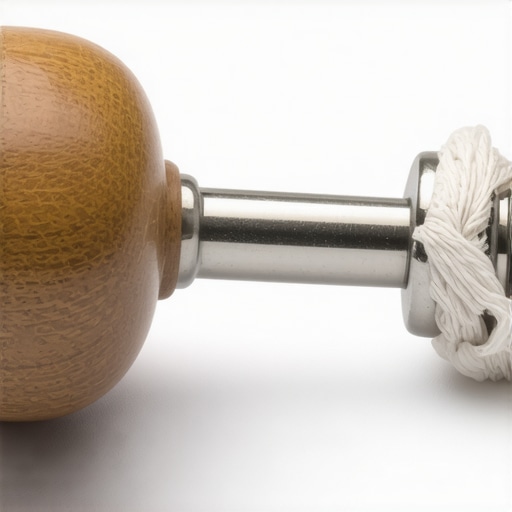
Account for Humidity and Wood Swell
If you are using a high-end wood handle, you aren’t just dealing with mechanics; you’re dealing with biology. Wood is porous. If your coffee station is right next to a steaming kettle or your machine’s purge valve, that handle is drinking up moisture and then drying out. This cycle causes the wood to shrink away from the metal insert. This is why cleaning a wood-handled portafilter or tamper requires a “dry-only” mindset. If the handle has shrunk significantly, the teflon tape trick is mandatory, as it bridges the gap caused by the environmental shifts in your kitchen. This stability prevents the uneven pressure that is often why your bottomless portafilter is making a huge mess during extraction.
Verify Your Alignment After the Fix
Once the handle is tight, you must ensure the base is still perfectly perpendicular to the handle’s axis. A tight handle that sits at a slight angle is just as dangerous as a loose one. This misalignment is a silent killer of quality and is often why your shot extraction time changes every single day. Test it by tamping on a flat, hard surface and rotating the tamper 360 degrees. If the base wobbles against the mat, your handle isn’t seated flat. It is better to have a slightly looser handle that sits flat than a rock-solid handle that is crooked. Proper alignment ensures you are truly mastering the art of home espresso. Don’t let a simple mechanical slip-up ruin your flow; take five minutes to secure your tools so they can do their job while you focus on the beans.
Beyond the simple mechanical fix of a loose handle lies the deeper reality of extraction physics that many enthusiasts overlook. There is a massive misconception in the home brewing community that more downward force equals a better shot. In reality, once you have compressed the puck enough to remove the air pockets, the density is essentially set. Renowned coffee expert Scott Rao has often noted that consistency in the levelness of the puck is far more influential on extraction quality than whether you pushed with 20 or 40 pounds of force. If your handle is loose, you lose the vital tactile feedback needed to ensure a perfectly horizontal bed. This lack of control is often why your distribution tool might be ruining your extraction, as you are likely using it to mask a fundamental flaw in your tamping technique. Have you ever fallen into this trap? Let me know in the comments.
Protect Your Threads From Over-Torquing
One advanced mistake I see often is the ‘Tightening Tantrum.’ When a handle feels loose, the instinct is to grab a pair of pliers and crank it down. This is a dangerous move. Most top-rated espresso machines and their corresponding accessories are made from soft metals like brass or aluminum. Using heavy tools can mar the finish or, even worse, cross-thread the base. This principle is as critical as knowing how to tighten a loose steam wand nut without scratching the chrome. Hand-tightening with a single layer of PTFE tape is the professional standard because it creates a secure bond without risking permanent structural damage to your equipment.
Does the diameter of your tamper matter more than the handle stability?
While fixing the wobble is the immediate priority, advanced baristas also focus on the ‘precision fit.’ Many stock tampers are exactly 58mm, but professional-grade baskets often have a 58.5mm internal diameter. That tiny half-millimeter gap at the edges allows for ‘side channeling,’ where water bypasses the coffee puck entirely. If you are mastering the art of home espresso, you will eventually find that a rock-solid, oversized tamper base provides better results than a heavy, loose-fitting one. 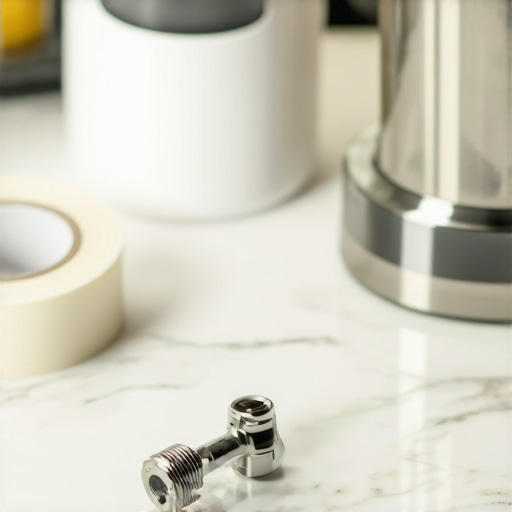 Ensuring your gear is properly maintained is the only way to avoid the move for better espresso distribution without fancy tools becoming a daily struggle against your own equipment. When every component of your workflow is stable, you can finally focus on the nuances of the bean rather than the failures of your hardware.
Maintaining your gear isn’t just about making it look shiny on your countertop; it is about preventing a total system failure at 7 AM. I have learned the hard way that ignoring the internal state of your equipment leads to a morning where nothing works. To stay ahead of the curve, I follow the best routine for a weekend deep clean religiously. One tool I cannot live without is a simple group head brush with angled bristles. It is infinitely better than any chemical soak for removing daily debris from the shower screen. If you are serious about your hardware, understanding why your machine needs a backflush every single week should be your new operational mantra.
Your Tap Water is Quietly Killing Your Boiler
Beyond the physical scrubbing of baskets and portafilters, you must look at your water. Water is 98% of your espresso, and it is the primary killer of top-rated espresso machines. I use a simple drop-test kit every month because the easy way to test your machines water hardness at home prevents lime-scale before it turns into a concrete-like blockage. According to technical documentation from La Marzocco Home, failing to manage water chemistry can void warranties and cause permanent heating element failure. This proactive approach is often how to diagnose a faulty espresso machine thermostat before the component actually dies; often, the sensor is simply buried under calcium deposits. 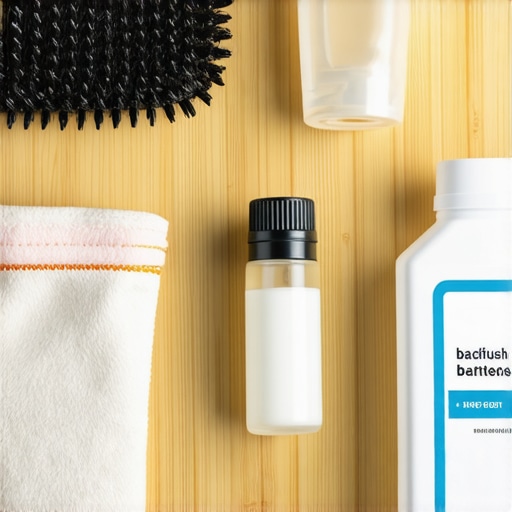
How do I keep my home espresso setup running like day one for years?
Consistency in maintenance is boring but highly effective. Every single evening, I purge the group and wipe the steam wand with a dedicated cloth. Knowing why you should never leave water in your reservoir overnight is a rule I live by to prevent biofilm buildup and stale tastes. If your steam wand starts to feel sluggish, try the one way to fix a clogged steam wand without chemicals before you consider replacing the whole assembly. I predict we are heading toward a future of ‘Smart Maintenance’ where barista gear will sync with our phones to alert us the second a gasket perishes or a pump loses 0.5 bars of pressure.
Rely on Your Senses Over the Gauges
For now, you must rely on your own eyes and ears to scale your home cafe operations. Listen for the reason your pump pressure drops when you engage the steam wand, as this can signal an internal leak or a failing three-way solenoid. If you hear a hiss where there should be silence, your seals are crying for help. My best advice for long-term results? Take that roll of PTFE tape I mentioned earlier and secure every loose fitting today. It is the simplest way to feel like a professional technician without needing a degree in mechanical engineering. Start by inspecting your tamper handle right now—if there is even a millimeter of play, fix it before your next shot. You will thank me when your extraction times finally stabilize and you are truly mastering the art of home espresso.
Why My Fingers Are Better Sensors Than My Pressure Gauge
[image placeholder]
After years of tinkering, I realized that a loose handle is actually a message from your machine. First, remember that sheer mass doesn’t equal quality; a light but stable tamper is infinitely superior to a heavy, wobbly one. Second, the ‘dead zone’ in a loose handle masks the subtle tactile resistance of the coffee bed, which is exactly why your espresso shot tastes like paper sometimes—you simply aren’t feeling the uneven seal. Finally, never ignore a new rattle. A loose handle allows the base to vibrate against the counter or portafilter, leading to microscopic metal fatigue. Fixing these small issues is the real secret to mastering the art of home espresso.
The Zero-Fluff Kit for Every Coffee Station
I don’t believe in buying every gadget on the market, but I do keep a small stash of ‘survival’ gear for my daily workflow. I always keep a roll of PTFE tape for thread security; it is easily the most underrated tool in the choosing the best barista gear handbook for stopping mechanical creep. I also swear by a simple liquid drop-test kit for water quality—it remains the easy way to test your machines water hardness at home without relying on potentially uncalibrated digital meters. Lastly, a dedicated angled brush saves my shower screen from the oily buildup that even a standard backflush can’t quite scrub away.
Your Next Shot Could Be Your Best
Don’t let a tiny mechanical slip-up keep you from the perfect crema. Whether you are currently upgrading to top-rated espresso machines or you are nursing a vintage lever machine back to life, the care you put into your tools is reflected in every cup. Go check your tamper right now. If there is even a millimeter of play in the grip, you have work to do before the kettle boils. Have you ever had a piece of gear fail right when you were trying to impress a guest? Let me know your worst coffee-tech horror stories below.