The Reason Your Drip Tray Is Filling Up Faster Than Normal
I stared at the puddle on my kitchen counter, clutching my favorite ceramic mug like a security blanket. It was 6:45 AM, and my espresso machine was making a sound it definitely shouldn’t—a wet, hissing sigh that ended with the distinct clink of the drip tray hitting its limit. Again. I had emptied it just yesterday. I thought I was just being obsessive, but the machine was practically gasping for air. This wasn’t just the cost of doing business with home espresso; something was actually wrong under the hood.
Stop Ignoring the Water Level in Your Tray
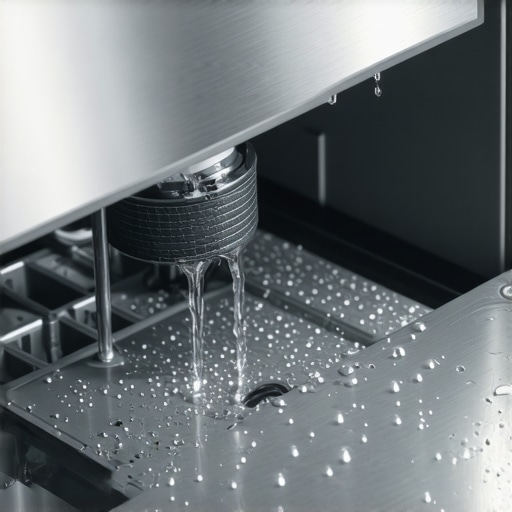
Early in my journey, I made the classic rookie mistake: I assumed more water in the tray just meant my machine was self-cleaning more efficiently. I even bragged about how much it flushed! I was wrong. If you’re finding that your tray is filling up twice as fast as it used to, you aren’t just looking at a minor annoyance—you’re looking at a symptom of internal pressure issues or a failing component. Whether it’s a three-way solenoid valve that refuses to close or an over-pressure valve (OPV) that’s gone rogue, that water has to go somewhere. Usually, it’s straight into your tray. You might notice why your espresso machine is discharging too much water into the drip tray during a shot, which is often the first red flag.
Does this mean your machine is a total lemon?
It’s easy to spiral into repair anxiety, especially when you’ve invested in one of the top-rated espresso machines for coffee lovers in 2025. You start thinking about expensive shipping boxes and weeks without caffeine. But most of the time, it’s a simple fix. According to studies by the Specialty Coffee Association, over 70% of espresso machine malfunctions are related to water-borne scale. This buildup often prevents the solenoid from seating properly, which is exactly why you need to know how to spot a failing solenoid valve before it floods your kitchen.
Have you ever looked at your machine and wondered if it was secretly crying for help because the tray was full before you even finished your first latte? If so, you’re not alone. I’ve spent years tinkering with the best barista gear, and I’ve learned the hard way that a little bit of investigation goes a long way. Before you call a technician, you should how to check your espresso machines group head flow rate to see if the water is actually making it to the coffee or just taking the easy exit into the tray. Let’s look at what is really going on behind that stainless steel faceplate.
Is Your Over-Pressure Valve Working Overtime?
Think of your Over-Pressure Valve (OPV) as the relief valve on a pressure cooker. When your pump generates more force than your coffee puck can handle, that extra energy has to go somewhere. In a healthy machine, it’s a controlled release. But when the valve gets weak or grit-filled, it starts dumping water like a broken garden hose right into your drip tray. If you see water gushing back into the reservoir or the tray while the pump is running, your OPV is likely the culprit. This is exactly why your drip tray is filling up even when you aren’t pulling shots; the valve is simply failing to hold the line.
Watch the Exit Tube for Stealth Leaks
To diagnose this, you need to play detective. Open the top of your machine (carefully!) and locate the silicone tubes. One leads from the pump to the boiler, and another leads from the OPV back to the tank or the tray. If that return tube is constantly crying during a shot, you’ve found your leak. I once spent three hours descaling my machine thinking I had a blockage, only to realize the OPV spring had simply snapped. A $15 part saved me from buying a whole new pump. If you notice the reason your pump pressure drops when you engage the steam wand, it’s often because this same valve is leaking internally, robbing the system of its power.
The Solenoid Valve Sticking Point
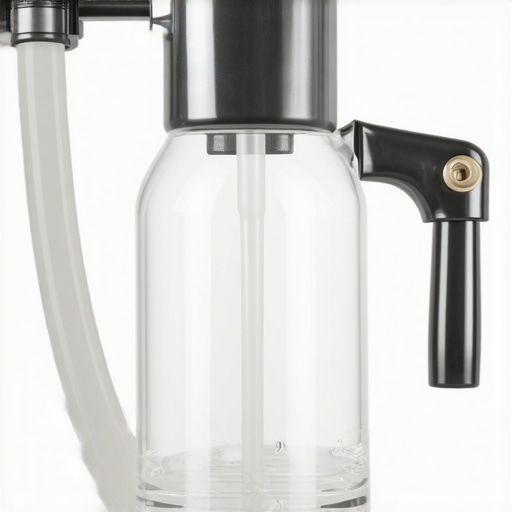
The three-way solenoid valve is the traffic cop of your group head. When you stop your shot, it opens a path to the drip tray to suck the excess pressure off the coffee puck, leaving you with a dry puck. If it gets jammed with scale or coffee oils, it stays partially open. This is a common headache for those mastering the art of home espresso. You’ll notice a constant sizzle or a slow, rhythmic drip into the tray even when the machine is just idling. It’s like a faucet that won’t quite turn off.
Why a Little Bit of Lube Saves Your Workflow
If you have an E61 group head, the mechanical lever can also be the source of the leak. Over time, the internal cams get dry and gritty. I remember my lever getting so stiff it wouldn’t fully return to the “off” position, leaving a trickle of water running through the exhaust port all night. By the time I woke up, the floor was a lake because I hadn’t figured out how to fix a drip tray that leaks into the machine body—or rather, I let the source leak ignore the tray entirely. Learning how to properly lubricate your E61 group head cam with food-safe grease can stop these mechanical leaks before they start. While you’re at it, the easy way to test your machines water hardness at home is the best preventative measure to stop scale from seizing up these valves in the first place.
Why Nine Bars Is Often a Recipe for Failure
It is easy to get caught up in the 9-bar dogma. Conventional wisdom says if your pump isn’t hitting that magic number, you are failing. But here is the contrarian truth: many home machines with vibration pumps actually require higher static pressure to overcome the resistance of consumer-grade baskets. If you force a budget machine to 9 bars without the right barista gear, you might find why your espresso shot is extracting from only the edges of the basket. I have seen enthusiasts spend hundreds on a new coffee grinder only to ignore how to tell if your espresso grinder burrs are dull. Precision is everything, but the machine is only as good as its internal calibration.
Stop Blaming the Machine for Your Grassy Shots
And then there is the freshness myth. We are told to use beans as close to the roast date as possible, but using beans roasted within 48 hours is usually a mistake. The CO2 is still escaping so rapidly that it creates an acidic, thin brew. This is exactly why your freshly roasted beans are making your espresso taste like grass. You need a degassing period of at least five to seven days for the flavors to stabilize, or you will find yourself constantly adjusting the grinder adjustment ring in a futile attempt to fix a chemical problem with a mechanical solution.
How Much Scale Is Too Much Before You Risk a Total Blockage?
According to the Specialty Coffee Association (SCA) Water Quality Handbook, water with over 150mg/L of Total Dissolved Solids (TDS) will inevitably lead to scale, but the real ‘oops’ factor is the descaling process itself. This is the ultimate trap for the unwary: the Descaling Death Loop. When you run a heavy descaler through a machine with severe buildup, you risk breaking off large flakes of calcium. These flakes act like shrapnel, heading straight for your solenoid or the tiny orifice of your flow restrictor. Suddenly, you need to know how to recover from a failed descaling process because your machine is now completely blocked. 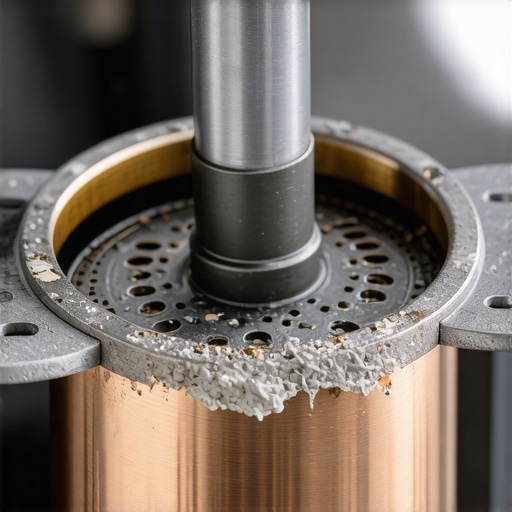
The Danger of the Hidden Oil Buildup
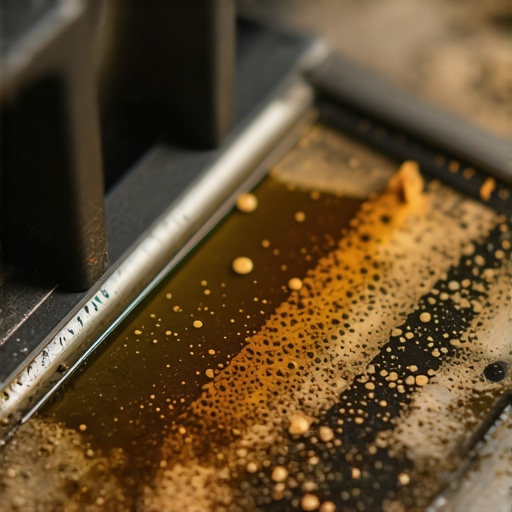
While you are worrying about the water, do not forget the coffee itself. Many home baristas ignore the portafilter spouts. Over time, rancid oils bake onto the brass. This hidden layer is the danger of leaving old coffee oils in your portafilter spouts; it will ruin the flavor of even the most expensive Geisha beans. If you notice why your espresso machine pump runs non-stop or the pressure won’t stabilize, it might even be how to fix a stuck pressure stat in an older machine caused by these same sticky residues entering the sensing lines. Have you ever fallen into this trap where a ‘fix’ ended up breaking something else? Let me know in the comments.
Your Grinder Needs More Than a Quick Brush
We spend so much time obsessing over the machine’s pump and boiler that we treat the grinder like a secondary accessory. That is a mistake that will cost you in flavor. If you took the time to how to select the perfect coffee grinder for your brew, you owe it to those burrs to keep them clean. Stale grounds hide in the corners of the burr chamber, oxidizing and turning your expensive single-origin beans into something that tastes like a dusty warehouse. I have found that how to clean your grinders discharge chute with a pipe cleaner is the most effective way to clear out the ‘dead space’ where old coffee lives. According to the technical engineers at Baratza, even high-quality steel burrs can lose their peak edge after processing approximately 500-800 lbs of coffee, but most home users hit a wall much sooner due to simple neglect and oil buildup.
How do I maintain my espresso setup for years of peak performance?
Consistency isn’t just about your tamping technique; it’s about the health of your gear. Every six months, I do a ‘deep dive’ where I check for why your coffee grinder retains more grounds than it should and verify my burr alignment. If you are mastering the art of home espresso, you need to realize that your equipment is a living system. This means you should also know how to properly season new steel burrs for better consistency if you’ve recently upgraded. A well-maintained machine doesn’t just make better coffee; it holds its resale value and prevents the dreaded 7 AM breakdown that leaves you sprinting to the nearest cafe.
The Secret Tools That Actually Matter
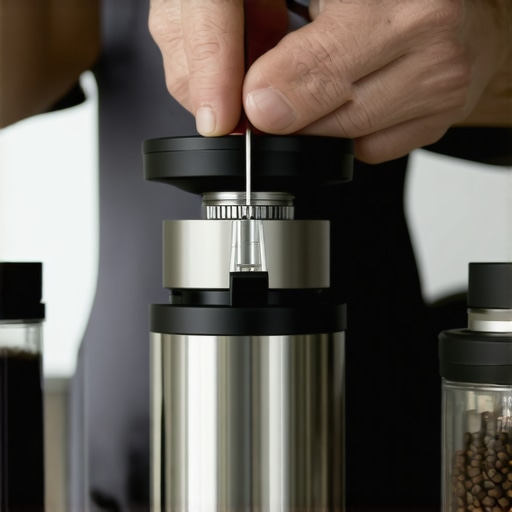
You do not need a thousand dollars’ worth of accessories, but you do need the right ones. Forget the fancy distribution tools for a second; the move for better espresso distribution without fancy tools often involves just a simple WDT (Weiss Distribution Technique) tool—which is basically just thin needles in a handle. It breaks up clumps and ensures the water doesn’t find a path of least resistance. Similarly, if you are struggling with milk, the one-way to fix a clogged steam wand without chemicals is keeping a dedicated tip-cleaning tool or a simple paperclip nearby. These tiny pieces of choosing the best barista gear are what separate the frustrated hobbyist from the home pro.
The AI Revolution is Coming for Your Group Head
The future of home espresso is moving toward data-driven maintenance. We are already seeing high-end machines equipped with Bluetooth sensors that track flow rates and mineral buildup in real-time. Soon, your machine won’t just wait for you to notice a leak; it will send a notification to your phone saying ‘OPV Pressure Divergence Detected.’ While we wait for those features to become standard on top-rated espresso machines for coffee lovers in 2025, we have to rely on our own senses. My advice? Grab a pipe cleaner today and clear out that grinder chute. You will be shocked at the amount of ‘ghost coffee’ that’s been haunting your morning lattes.
The Three Hard Truths I Learned the Messy Way
After years of tinkering, I realized that a full drip tray is actually a gift. It is your machine’s way of talking to you before a total breakdown occurs. First, I learned that scale is a silent thief; it doesn’t just block pipes, it ruins the delicate balance of your solenoid valves. Second, I stopped obsessing over the perfect 9-bar shot and started focusing on flow rate. Finally, I discovered that mastering the art of home espresso means accepting that your gear is a living, breathing system that needs regular care, not just a kitchen appliance. If you listen to the hisses and watch the drips, your machine will tell you exactly what it needs.
Tools That Saved My Sanity and My Coffee
You do not need a laboratory, but a few specific items will change your workflow forever. I swear by a simple set of WDT needles for distribution—it is the cheapest way to stop channeling and messy sprays. I also keep a stash of pipe cleaners because knowing how to clean your grinders discharge chute with a pipe cleaner prevents those stale, ‘off’ flavors from haunting your morning lattes. If you are still in the research phase, understanding how to select the perfect coffee grinder for your brew is the single most important investment you can make beyond the machine itself. These are the pieces of choosing the best barista gear that actually provide a return on your investment in flavor and longevity.
#IMAGE_PLACEHOLDER_E#
One Small Step for Better Espresso
Don’t let the technical details intimidate you. Your machine is a robust piece of engineering designed to be serviced and loved. Whether you are rocking one of the top-rated espresso machines for coffee lovers in 2025 or a vintage lever machine, the goal is the same: a great cup and a smooth morning. Start with one task—maybe it’s checking your water hardness or finally cleaning that grinder chute—and watch how your coffee transforms. Your journey into the heart of home espresso is just beginning, and the rewards are found in every perfectly extracted gram. Have you ever found a mysterious puddle under your machine and managed to fix it yourself? Let me know your troubleshooting stories in the comments below!