The trick to steaming soy milk without it curdling
I stood there, bleary-eyed at 6:30 AM, watching a five-dollar carton of organic soy milk turn into what looked like chunky cottage cheese inside my favorite ceramic mug. I had just finished mastering the art of home espresso tips for beginners, or so I thought. My espresso was dialed in, my crema was thick, but the moment the milk hit the coffee, it was game over. It felt like a personal insult from the universe. If you have ever had to pour a freshly made latte down the drain because it looked like a science experiment gone wrong, you know the heartbreak I am talking about. Today, we are ending that frustration for good. I am going to show you exactly how to balance temperature and acidity so your milk stays silky and integrated every single time, even on those tricky top-rated espresso machines for coffee lovers in 2025 that have more steam power than we know what to do with.
Stop the Curdle Before It Even Starts
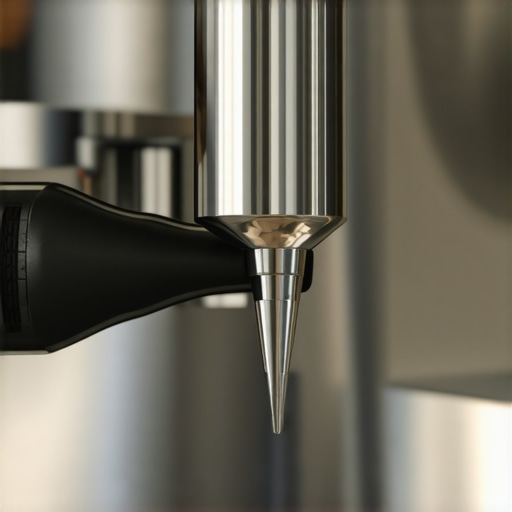
The biggest mistake I made early on was treating soy exactly like dairy. I would purge the wand, bury the tip, and blast it until the pitcher was too hot to touch. I did not realize that soy protein is a sensitive soul; it hates sudden changes. When you combine the natural acidity of a light roast espresso with the heat of the steam, the proteins in the soy milk lose their structure and clump together. It is a chemical reaction called denaturation. According to research published by the American Chemical Society, soy milk is significantly more prone to coagulation when the pH of the coffee is low and the temperature exceeds 65°C. I used to think the reason your milk smells like its burning before the temp is right was just my imagination, but it was actually the soy proteins giving up the ghost. To win this battle, you have to play it cool. You need to introduce the milk to the coffee slowly, and you must keep your temperature strictly below that 150°F (65°C) danger zone. Have you ever noticed your latte art looks great for three seconds before the whole thing starts to flake and separate? [image_placeholder_1]
Is Soy Milk Actually Worth the Extra Effort?
I know what you are thinking: is it really worth the hassle of a slower steam and a thermometer check just for a dairy alternative? When you get it right, the answer is a resounding yes. The creaminess of a perfectly textured soy latte rivals any whole milk counterpart. If you are using milk frothers that transform your coffee experience, you might have an easier time, but for those of us on a traditional steam wand, the secret lies in the ‘temper.’ I found that if I swirl a tiny bit of the cold soy milk into the espresso first to bring the coffee’s temperature down and its pH up slightly, the rest of the steamed milk behaves much better. This is a game-changer for anyone trying to figure out the secret to perfecting your milk texture on a single boiler. We are not just making coffee; we are managing a delicate chemical bridge between two very different liquids.
Kill the Acidity with a Peace Offering
To stop soy milk from turning into a science project, you must first neutralize the ‘acid bath’ that is your espresso shot. Soy proteins are incredibly sensitive to the low pH of coffee. I remember a Tuesday morning when I was in a rush and dumped perfectly textured soy into a bright, citrusy Ethiopian roast; the result was a chunky, separated mess that looked like wet cardboard. Now, I use the ‘buffer method’ to keep the peace. Before you even think about pouring your steamed milk, add a tiny splash—about half an ounce—of cold, un-steamed soy milk directly into your espresso shot. Give it a gentle swirl to integrate. This simple move raises the pH and slightly lowers the temperature of the coffee, creating a much friendlier environment for the hot foam. If your shots are coming out too acidic to begin with, knowing how to select the perfect coffee grinder for your brew is your first line of defense against the sharp notes that trigger curdling.
Stretch for Seconds Not Minutes
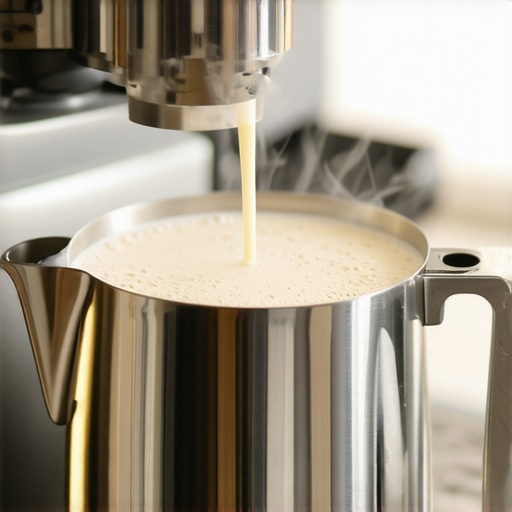
Soy milk does not require nearly as much air as dairy. If you over-stretch it, you end up with a stiff, dry meringue that refuses to pour. When using high-end barista gear for coffee enthusiasts, the steam pressure is often much higher than you expect. You only want to hear that ‘paper tearing’ sound for a maximum of two seconds at the very beginning of the process. Think of it like inflating a delicate balloon; you want just enough air to give it structure without over-expanding the proteins. Once you have that slight volume increase, submerge the tip of the wand just deep enough to start the whirlpool. Mastering the trick to getting the perfect swirl in your milk pitcher is vital because soy separates almost instantly. If that milk isn’t moving in a tight, aggressive vortex, the foam will sit on top while the hot liquid lurks beneath, ready to clump the moment it hits the cup. 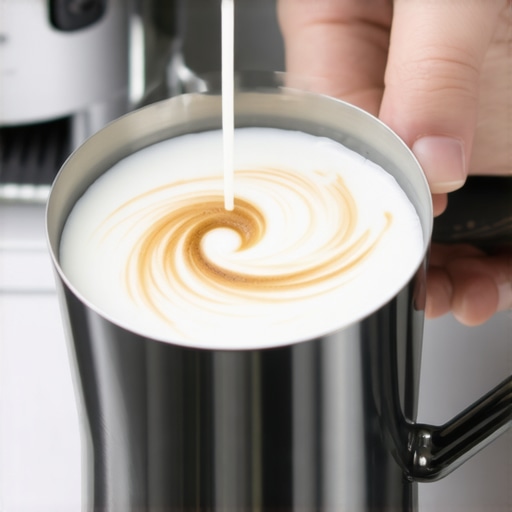
Keep Your Cool for Better Foam
The biggest trap in home espresso is the ‘hotter is better’ mentality, but with soy, heat is the enemy. While dairy can often handle 160°F, soy proteins begin to break down and coagulate the moment they cross the 145°F mark. I keep my palm firmly against the bottom of the pitcher throughout the entire process; as soon as the metal feels slightly too hot to hold comfortably, I shut the steam valve off immediately. This usually happens around 140°F (60°C). For those working with entry-level setups, you might need to practice the secret to perfecting your milk texture on a single boiler to ensure the temperature does not spike while you are trying to find the right angle. Once the steam is off, do not let the pitcher sit still. Keep it moving in a circular motion like you are trying to keep paint from drying. If you let it rest for even ten seconds while you purge your wand, the soy will ‘set,’ and you will lose that glossy, wet-paint finish needed for art. If your machine’s steam power feels inconsistent, it might be why you are struggling with the secret to silky microfoam on a single boiler machine, as a slow heating process gives the soy more time to destabilize.Beyond the temperature, we need to talk about the ‘pressure trap.’ Many enthusiasts assume that more steam power equals better microfoam, but when dealing with plant-based proteins, raw power is often the enemy. On those high-end top-rated espresso machines for coffee lovers in 2025, the steam can be so aggressive that it denatures the soy protein before you even have a chance to create a whirlpool. This is where most people get it wrong: they try to fight the machine instead of adjusting their technique. If you are struggling, it might be the reason your steam pressure dips when you open the valve that is actually saving your latte from curdling, as a slower heat ramp-up gives you more control.
Why High Steam Pressure Isn’t Always Your Friend
In my years of trial and error, I have found that the biggest ‘oops’ moment for baristas is neglecting the purge. If you do not clear the condensation, you are injecting a shot of hot water into your milk, which further destabilizes the soy. Also, let’s kill the myth that you need fancy tools to fix bad texture; sometimes why your distribution tool might be ruining your extraction is exactly what is making your espresso too bitter and acidic, which in turn causes the soy to separate instantly.
Does the Coffee Roast Actually Dictate the Curdle?
Many believe that any ‘good’ bean should work with any milk, but food science says otherwise. A study in Food Research International (2018) highlighted that the high chlorogenic acid content in lighter roasts significantly lowers the pH, acting as a catalyst for protein aggregation in soy milk. If you are finding that why your espresso shot tastes like cardboard or curdles regardless of your steaming technique, you might need to look at your grinder. Knowing how to select the perfect coffee grinder for your brew can help you achieve a more balanced extraction that will not wage war on your milk. Have you ever fallen into the trap of blaming your milk when it was actually your shot? Let me know in the comments. 
The One Habit That Destroys Your Steam Wand Health
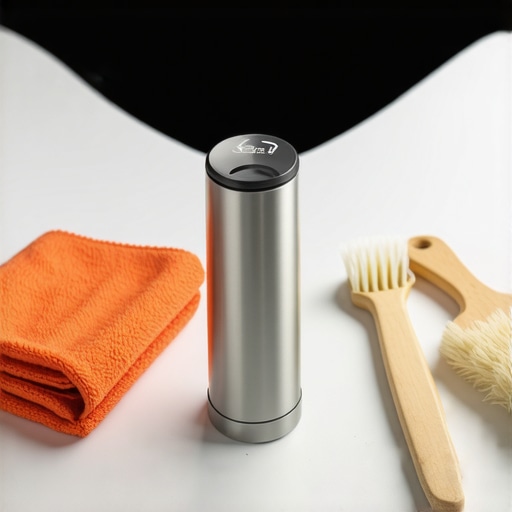
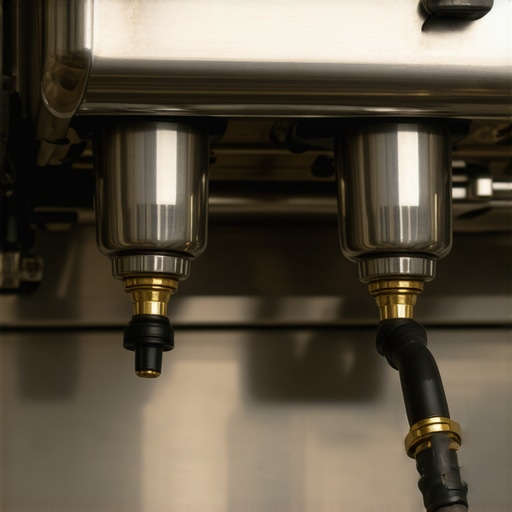
Finally, let’s talk about maintenance. I see so many people using a dripping wet rag to clean their wand, but you should learn how to stop using a wet cloth on your steam wand to prevent bacteria and hard water buildup. If your wand is not clean, the steam flow becomes turbulent. This turbulence creates those big, ugly bubbles that ruin your art. It is also worth remembering why the first shot of the day is always a throwaway—not just for the coffee flavor, but because the thermal stability of the group head affects the initial temperature of your milk integration. When you are choosing the best barista gear for coffee enthusiasts, look for equipment that offers consistency over raw power. Your soy lattes will thank you.Soy proteins are not just difficult to texture; they are genuinely aggressive toward your hardware. Unlike dairy, which rinses away fairly easily, soy leaves a protein film that polymerizes under high heat, essentially ‘baking’ onto the metal. I learned this the hard way when I noticed why your steam wand tip holes keep getting clogged even after a superficial wipe. If you aren’t deep cleaning, you’re slowly losing the pressure needed for that vortex. According to technical bulletins from La Marzocco Home, neglecting to clear milk residue leads to a decrease in thermal conductivity at the tip, which is often why your espresso machine takes longer to heat up recently or struggles to maintain pressure.
How do I keep my steam power consistent over time?
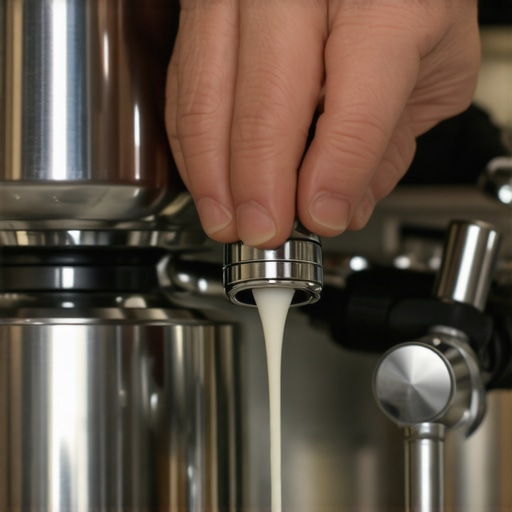
The answer isn’t a fancier machine; it’s a better routine. Every three months, I perform a full teardown of the wand. Learning how to clean the inside of your steam wand pipe is the difference between a machine that lasts two years and one that lasts twenty. If you ignore the ‘gritty’ feeling in the valve, you’ll eventually deal with the reason your steam wand is leaking water into your milk, which ruins the texture of your soy before you even start steaming. For a quick fix that doesn’t involve heavy acids, I often use the one way to fix a clogged steam wand without chemicals: a long soak in specialized enzymatic cleaner that specifically targets plant proteins. #IMAGE_PLACE_HOLDER_D#
Upgrade Your Workflow Not Just Your Gear
We often get obsessed with buying top-rated espresso machines for coffee lovers in 2025, but the best baristas I know focus on the ‘health’ of their current setup. For instance, I’ve noticed that how to tell if your espresso grinder burrs are dull is just as important for milk drinks as it is for straight shots; dull burrs produce more fines, creating a muddy espresso that soy milk just can’t bond with. Looking ahead, I predict we will see more machines with ‘smart sensors’ that detect the specific viscosity of plant-based milks and adjust the steam flow automatically. But until then, you are the pilot. If you’re feeling overwhelmed by the technical side, start with something small. My best advice? Take five minutes today to check your wand. If you see even a tiny speck of brown residue, it’s time for a deep clean. Trust me, your next soy latte will taste significantly cleaner once the steam path is clear.
The Hard Truths About Steaming Soy That No One Mentions
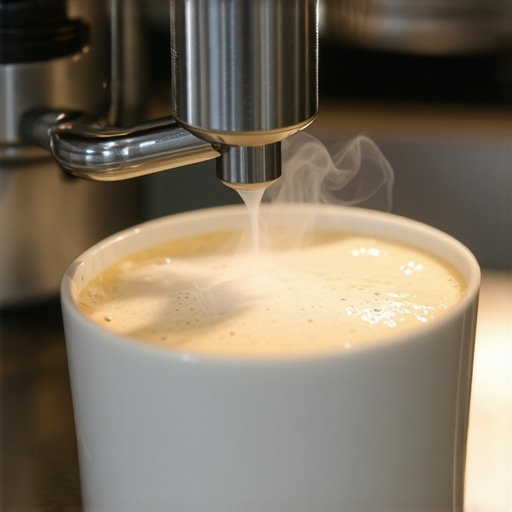
Over the years, I’ve realized that the chemistry in your cup is often more important than the brand on your machine. First, soy milk age is a silent killer; even if it hasn’t technically ‘spoiled,’ the dropping pH in an older carton makes it much more reactive to espresso acidity. Second, the ‘Barista Edition’ label isn’t just marketing; those added stabilizers are your best friend when you are mastering the art of home espresso tips for beginners. Lastly, remember that a confident, fast pour helps keep the emulsion stable, whereas a slow, hesitant drizzle encourages the milk to break apart before it even hits the bottom of the cup. [image_placeholder_final]
My Personal Essentials for a Flawless Morning Latte
If you want to move beyond guesswork and start producing cafe-quality drinks, I highly recommend keeping a few specific tools in your cabinet. I never steam without a fast-read digital thermometer; relying on hand-feel is simply too risky when soy proteins break down so quickly. When I was first choosing the best barista gear for coffee enthusiasts, I found that a heavy-gauge stainless steel pitcher helped maintain a more even temperature ramp-up. For a deeper dive into the science, I always point people toward the ‘Professional Barista’s Handbook’—it is the definitive source for understanding fluid dynamics. And finally, never skip the deep clean; knowing how to clean the inside of your steam wand pipe with an enzymatic soak will keep your steam pressure sharp and your milk tasting sweet.
Take the Leap and Pour with Confidence
It is easy to get frustrated when a five-dollar carton of milk ends up in the drain, but every failed latte is a lesson in chemistry. Whether you are using high-end professional equipment or milk frothers that transform your coffee experience, the key is consistency and temperature control. You have the tools and the technique now—go out there and turn your morning routine into a masterpiece. Your home espresso journey is just getting started, and the perfect soy flat white is well within your reach. Have you ever had a specific brand of soy milk that just refuses to behave no matter what you do? Let me know your biggest struggle in the comments below!