Why Your Machine’s Boiler Pressure Is Pulsing
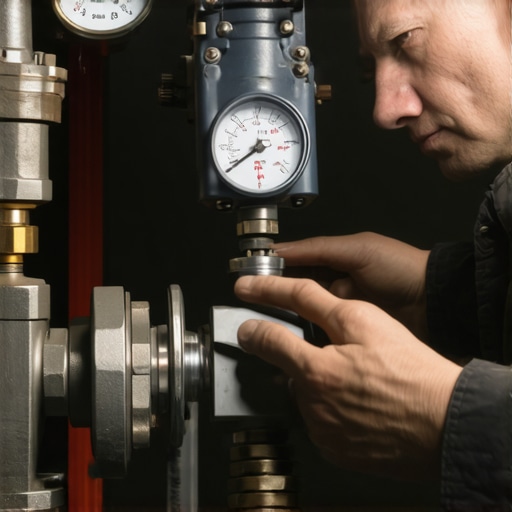
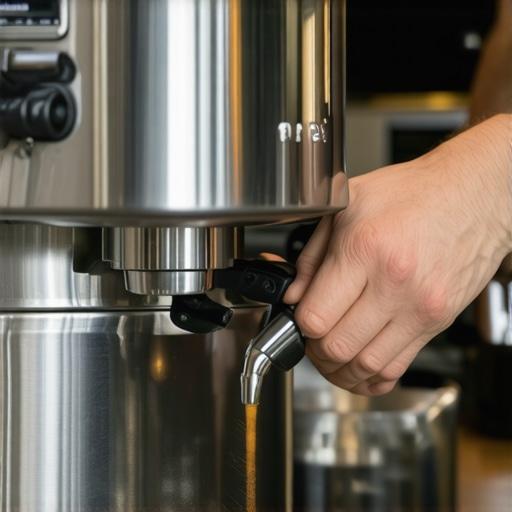
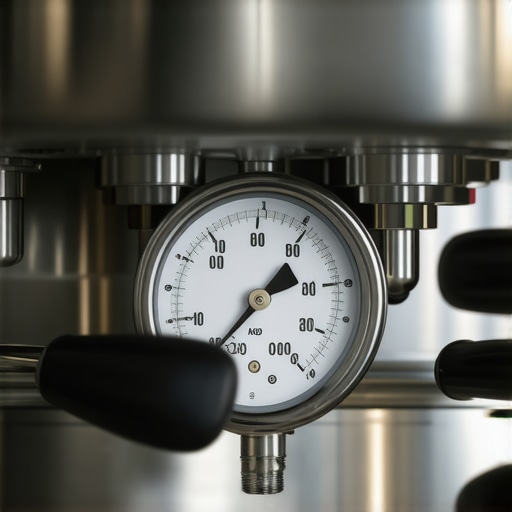
I was standing in my kitchen at 6:15 AM, still half-asleep and clutching my favorite ceramic mug, when I heard it. A strange, rhythmic thumping coming from inside my machine. I looked at the boiler pressure gauge, and instead of its usual steady rest, the needle was twitching frantically. It looked like a heartbeat—fast, erratic, and utterly terrifying for someone who just wants a caffeine fix. I’ve spent years mastering the art of home espresso, but in that moment, I felt like a total amateur again. I panicked, thinking my expensive dual-boiler was about to turn into a kitchen-destroying steam bomb. Have you ever stood there, steam pitcher in hand, wondering if your machine was about to launch a bolt across the room? It is a gut-wrenching feeling that can ruin a perfectly good morning. Today, I am going to walk you through exactly why your machine is acting like it has a nervous tick and how we can get it back to its smooth, steady self. [image_placeholder_1]
Why Your Gauge is Acting Like a Nervous Wreck
The truth is, a pulsing needle is rarely a sign of an impending explosion, though it certainly sounds like one. Most of the time, your machine is just struggling with a basic physical interruption in its workflow. Early in my journey, I made the massive mistake of assuming every weird noise meant a total hardware failure. I once spent an entire Saturday morning completely descaling a boiler when the actual culprit was just a tiny air bubble trapped in the intake line. I felt like a fool, and I wasted a lot of expensive descaling solution! But that is how we learn. When your gauge starts bouncing, it is often a sign of cavitation or a check valve that has seen better days. You might even find the reason your pump makes a clicking sound is directly tied to this pressure instability. It is frustrating, but it is solvable. I will show you the easy way to tell if your pump is sucking air, which is the most common reason for that rhythmic pulsing.
Is my machine actually going to explode?
That is the number one question I get when someone sees their needle bouncing. The short answer is: No. Modern espresso machines are built with multiple safety redundancies, like over-pressure valves (OPVs) and vacuum breakers. According to technical documentation from industry leaders like La Marzocco, pressure fluctuations are often related to cavitation or scaling rather than catastrophic structural failure. So, take a deep breath. You are not in danger, but your espresso’s quality certainly is. When your pressure is inconsistent, your shots will be too. You might find that the first shot of the day is always a throwaway simply because the pressure was not stable enough to saturate the coffee puck properly. We need to tackle this now because ignoring a pulsing gauge puts unnecessary strain on your pump, which is a much pricier fix down the line. Whether you are using one of the top-rated espresso machines for coffee lovers in 2025 or a trusty old workhorse, consistency is the name of the game. If the pressure is jumping, your water temperature is probably jumping too, and you will end up wondering why your machines water temperature fluctuates every few minutes. Have you noticed your needle bouncing during the warm-up phase or only while you are pulling a shot? Drop a comment below and let me know—it helps us narrow down the fix.To stop that needle from dancing, the first thing you need to do is verify your water intake. Think of your pump like a heart; if it is pulling in air instead of pure water, it will skip beats, causing that rhythmic twitch on the gauge. If you are using a reservoir-fed machine, check if the silicone intake tube is fully submerged and not sucking against the side of the tank. You can use the easy way to tell if your pump is sucking air by watching for tiny bubbles moving through the translucent line. If you see air pockets, your pump is essentially gasping for breath, which translates to that erratic pressure reading.
Bleed the Lines to Remove Trapped Air
Sometimes the solution is as simple as running a significant amount of water through the system. Think of it like bleeding a radiator. Open your steam wand and engage the pump simultaneously (if your machine allows) or simply run a long water-only shot without the portafilter attached. This helps push any trapped air pockets out of the heat exchanger and into the drip tray. I remember a particularly humid Tuesday when my machine started ‘coughing.’ I spent twenty minutes worrying about a broken boiler, but after a 30-second purge of the group head, the needle settled right back to its 9-bar home. 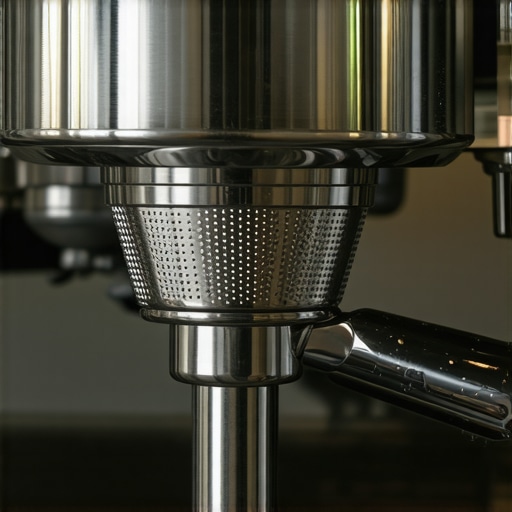
Dial in the Expansion Valve for Total Stability
If the intake is clear, we move to the expansion valve, also known as the Over-Pressure Valve (OPV). This little brass component is the gatekeeper of your water flow. If the internal spring is dirty or out of alignment, it will open and close rapidly, creating a vibration you can see on the dial. I once spent an entire morning disassembling my group head, only to realize the vibrating gauge was just a loose spring in the expansion valve seat. A half-turn with a screwdriver was all it took to quiet the beast. Learning how to adjust the expansion valve on your prosumer machine is a vital skill for anyone chasing that perfect shot.
Check for Hidden Scale in the Check Valves
Scale is the silent killer of consistency. A single flake of calcium can get stuck in a check valve, preventing a tight seal and causing pressure to bleed back into the reservoir. This creates a feedback loop where the pump works overtime to maintain pressure, only for it to drop instantly. You should definitely investigate how to tell if your water hardness is damaging your boiler before these micro-fluctuations become a permanent hardware failure. Regular maintenance is your best defense here. This is exactly why your machine needs a backflush every single week—it clears out the oils and debris that can gum up these sensitive valves. Finally, perform a static pressure test using a blind basket. If the gauge holds steady at full resistance with a blind filter, but pulses during a real shot, the issue is likely your coffee grind or puck prep rather than the machine itself. Use the easy way to test your pump pressure at home to confirm if your internals are truly healthy or if they are just reacting to a poor grind.Beyond just the basic hardware adjustments, I want to talk about the ‘9-bar myth’ that sends so many enthusiasts down a rabbit hole of unnecessary repairs. Most beginners believe that higher pressure equals better crema, often cranking their OPV to 11 or 12 bars. In my experience, this is the quickest way to induce cavitation and an erratic needle. When you exceed the physical limits of the pump’s bypass, you aren’t getting better coffee; you’re getting turbulence. Fluid dynamics studies, such as those found in the Journal of Food Engineering, suggest that excessively high pressure can actually compress the coffee puck so tightly that flow becomes restricted and uneven, leading to those rhythmic needle jumps. If you’ve already experimented with how to adjust the expansion valve on your prosumer machine, try backing it down to a soft 8.5 or 9 bars. You’ll likely see that needle settle into a smooth, professional sweep. 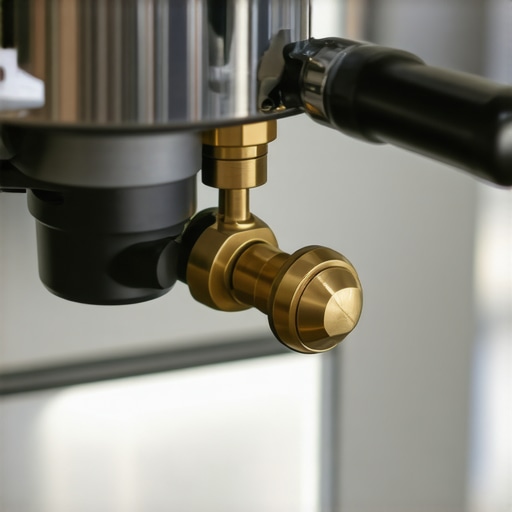
Stop Chasing the 12-Bar Dream
Many home baristas mistakenly assume their machines are underperforming if the gauge isn’t pinned to the max. However, chasing high pressure is a trap. If your needle is bouncing, your pump is essentially fighting the water. I’ve found that high-pressure settings often cause the internal check valves to oscillate at a high frequency. This isn’t a failure of the machine, but rather a sign that the system is operating outside its ideal efficiency curve. Before you start replacing expensive components, check if your grind size is simply too fine for the pressure you’ve set.
The Purity Trap That Kills Your Sensors
Let’s talk about an ‘Oops’ factor that almost bricked my first E61. I thought I was being a genius by using zero-TDS distilled water to avoid scale buildup forever. Big mistake. You might think you’re saving the boiler, but the mistake of using distilled water in your boiler is that it is actually corrosive and lacks the mineral conductivity needed for your water level sensors to work properly. This can cause the autofill to malfunction or trigger ‘dry-run’ pulses in the pump as it struggles to detect water. Always check the truth about using distilled water in your machine before you pour it in. Have you ever fallen into this ‘pure water’ trap? Let me know in the comments.
Why does the gauge only pulse when the shot starts?
If your needle is steady at idle but starts dancing the moment you engage the brew lever, the culprit might not be the machine at all. Many enthusiasts overlook the fact that why your distribution tool might be ruining your extraction is often the root of pressure feedback. If your puck has micro-channels, the resistance against the pump is constantly shifting, causing the gauge to react to the rapid changes in flow. This is where the easy way to test your pump pressure at home with a blind basket becomes essential. If the needle is rock-solid against a blind filter but pulses during a real shot, your machine’s internals are perfectly healthy—it’s your puck prep that needs a refine.I’ve realized that owning high-end gear is only half the battle; the other half is preventing it from turning into a paperweight. I learned the hard way that a beautiful stainless steel exterior can hide a nightmare of calcification and rancid oils. If you want your setup to last a decade, you need to commit to the boring stuff. This is exactly why your machine needs a backflush every single week. I use Cafiza cleaner because it is the industry standard for a reason—it strips away those bitter oils that survive a water-only rinse. Beyond the chemicals, I keep a dedicated set of microfiber cloths nearby, and I’ve found the best move for keeping your barista rags smelling fresh is to soak them in a light vinegar solution overnight once a month. Trust me, your kitchen will thank you for getting rid of that ‘old coffee’ scent that lingers on damp fabrics.
How do I keep my gear running like new for years?
The secret is a staggered maintenance schedule. Daily, you purge the wand; weekly, you backflush; and monthly, you deep clean the grinder. For those of you who want to go the extra mile, the best routine for a weekend deep clean involves removing the shower screen and checking for stray grounds that might be clogging the dispersion plate. I personally use a small brass brush to scrub the group head threads. It is a tiny detail, but it prevents leaks and saves you from a messy cleanup later when choosing the best barista gear for coffee enthusiasts to upgrade your setup. If you are still struggling with consistency, look at your grinder. Most people buy a machine and forget that how to select the perfect coffee grinder for your brew is just the first step. You have to maintain it. If your shots are suddenly running fast or tasting muddy, it is time to check how to tell if your espresso grinder burrs are dull. I use the Sharpie alignment method to ensure my burrs are perfectly parallel. Learning the right way to align your flat burrs for better shots can literally make a $500 grinder perform like a $2,000 one. It is the ultimate pro-level hack that most people are too intimidated to try.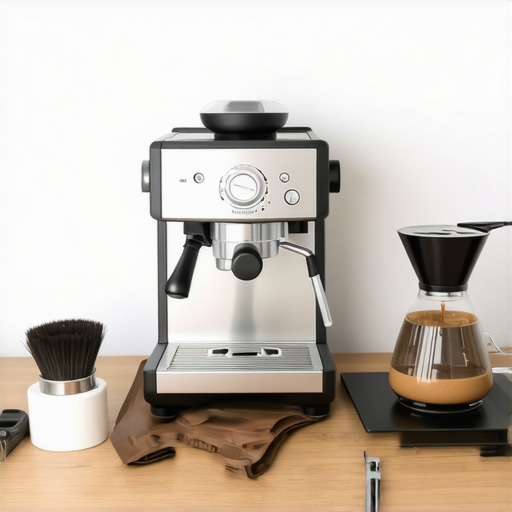 I predict that in the next few years, we will see more home machines incorporating ‘smart’ maintenance sensors that tell you exactly when the scale buildup is reaching a critical level, much like how modern cars signal an oil change. Until then, we have to rely on our own diligence. When looking at top-rated espresso machines for coffee lovers in 2025, always prioritize units that are user-serviceable. According to the Rancilio Silvia technical service documentation, neglecting simple group gasket replacements is the leading cause of internal water damage in home units. Don’t let a $10 rubber ring destroy your $1,000 investment. My challenge for you this week: pull your shower screen off and see what’s hiding behind it—it is the first step toward true shot consistency.
What My Early Morning Pressure Panics Actually Taught Me
After years of tinkering, I’ve realized that the needle on your gauge is more than just a tool; it is the machine’s way of breathing. One of the biggest myths is that a rock-steady needle is the only sign of quality. In reality, micro-vibrations are normal, but rhythm is the key. If it pulses like a drum, listen to it. I also learned that why your portafilter handle should never be tightened too far is directly linked to maintaining a consistent seal that prevents pressure leaks. Another lightbulb moment was realizing that why your espresso puck sticks to the shower screen can actually create a vacuum effect that disturbs the pressure reading of your next shot. Finally, never underestimate the power of cleanliness; a tiny grain of sand can ruin a expensive pump if you aren’t careful.
The Gear That Keeps My Workflow Rock Solid
You don’t need a degree in engineering to maintain your setup, but you do need the right kit. First, a high-quality blind basket is non-negotiable for performing the easy way to test your pump pressure at home. This is the only way to isolate the pump from the coffee and see what is really happening inside. Second, I always recommend choosing the best barista gear for coffee enthusiasts that includes a set of group head brushes and a dedicated backflushing detergent. Keeping the pathways clear ensures your pressure stays where it belongs. Lastly, if your shots are still acting up, it is time to look at how to select the perfect coffee grinder for your brew, because even the best pump can’t overcome a clumpy, inconsistent grind.
Master Your Machine Before it Masters You
Home espresso is a journey of constant learning and occasional frustration. When you finally understand why your espresso machine pressure gauge is acting up, you transition from being a casual user to a true home barista. Don’t let a twitchy needle discourage you from mastering the art of home espresso. With a little patience and the right maintenance routine, you will be pulling cafe-quality shots that are as steady and delicious as they look. Have you ever seen your needle jump and feared the worst? Let me know your experience in the comments below!