Why your coffee scale is giving you inconsistent readings
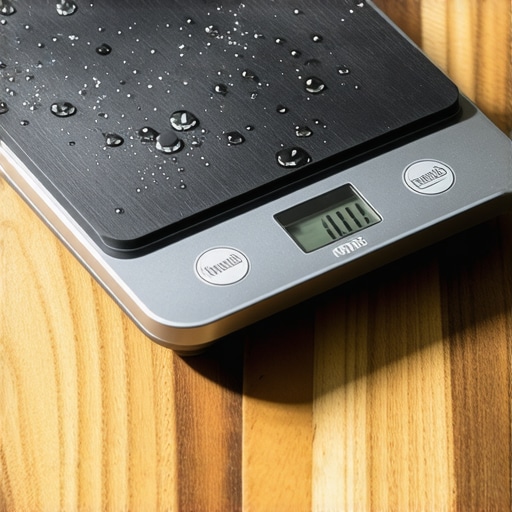
I’m standing in my kitchen at 6:30 AM, bleary-eyed and desperate for caffeine. I place my portafilter on the scale, hit tare, and watch the zeros. Suddenly, without me even breathing on it, the display jumps to 0.4g. Then 1.2g. Then back to 0.8g. It’s enough to make any sane person think their house is haunted or, worse, that their expensive barista gear is failing them. I’ve been there. I remember one morning specifically where I wasted nearly half a bag of high-end beans because I couldn’t get a stable reading, leading to shots that were either mouth-puckeringly sour or bitter enough to strip paint. [image]
Stop Blaming the Beans for Your Inconsistent Shots
The truth is, your scale is the most honest piece of equipment in your workflow, but it’s also the most sensitive. When I first started mastering the art of home espresso, I assumed a scale was just a scale. If it turned on, it worked. Boy, was I wrong. I spent weeks adjusting my grinder—thinking I was dealing with massive retention—when in reality, my scale was just reacting to the vibrations of the fridge or a slight breeze from the window. We’re going to stop that cycle of frustration today. We’ll look at why your scale jumps numbers while the shot is pulling and how to stabilize your station for good.
Is an expensive smart scale actually worth the investment?
You might be wondering if your budget scale is the root of all evil. It’s a valid fear. Many of us worry that unless we drop $200 on an Acaia, we’re doomed to mediocrity. While high-end scales offer better shielding and faster refresh rates, even the cheapest digital scales rely on strain gauge load cells that are incredibly susceptible to environmental factors. According to the National Institute of Standards and Technology (NIST), even minute changes in temperature or air currents can significantly alter the output of high-precision digital balances. So, before you open your wallet, let’s see if we can fix what you already have.
The Hidden Gremlins Ruining Your Morning Precision
Early in my journey, I made the classic mistake of placing my scale directly on the drip tray of a vibrating espresso machine without any dampening. I wondered why my shot volume varied so wildly every single day. It wasn’t the pump; it was the scale literally getting confused by the micro-vibrations. If you’ve ever seen your numbers drift while the machine is warming up, you’re likely dealing with heat transfer through the base of the device. Have you ever felt that surge of rage when your scale shuts off right as the first drip hits the cup? I’ve certainly been there, and here is why that happens. Tell me, has your scale ever made you question your own sanity in the middle of a brew? Let’s dive into the physics of why this happens and how to turn your finicky device back into a precision tool.
Kill the Ghost in Your Machine
To stop your scale from dancing, you have to treat it like a lab instrument, not a kitchen toy. The load cell inside your scale is essentially a piece of metal that bends ever so slightly under weight, translating that physical stress into an electrical signal. Anything that interferes with that signal—vibration, heat, or even static—will cause the numbers to jump. I remember one humid Tuesday when I couldn’t get my dose within a whole gram of my target. I was ready to toss my barista gear out the window. It turned out the culprit was my grinder’s motor creating micro-vibrations across the marble countertop.
Put your scale on a silent foundation
If your countertop isn’t perfectly level or if it transmits every hum of your fridge, your scale will never be still. You need to decouple the scale from the surface. A heavy-duty silicone mat is your best friend here. Beyond just protecting your counter, knowing how to pick a coffee mat that doesn’t absorb odors ensures you have a stable, non-slip base that absorbs those tiny frequency jitters. I once saw a guy use a folded-up microfiber cloth, but that just made the scale tilt. Stick to dense rubber or silicone for true isolation. If your machine itself is the source of the shakes, you might need to learn how to stop your espresso machines feet from vibration walking to stabilize the whole station.
Block the heat before it fries your logic
Heat is the silent killer of accuracy. Most scales are rated for room temperature, but we place them directly under a 200-degree group head. This causes ‘thermal drift,’ where the metal in the load cell expands and changes the electrical resistance. If you’re pulling back-to-back shots on one of the top rated espresso machines for coffee lovers in 2025, that heat builds up fast. Use a small cork coaster or a specialized heat-resistant pad between your scale and your cup. This acts as a thermal break. It’s a similar logic to the move for better temperature stability on budget machines; you have to manage the energy flow to keep the results consistent.
Dealing with the Invisible Weight of Air
You’d be surprised how much a simple AC vent or a cracked window can throw off a high-precision scale. A standard espresso scale measures to 0.1g, which is roughly the weight of a single blade of grass. A direct breeze hitting the weighing platform acts like a physical finger pressing down on it.
Kill the static before it kills your precision
Static electricity is another invisible force that pulls on your scale’s platform. This is especially common when how to stop static from ruining your grinding workflow becomes a struggle during winter months. When dry coffee particles fly around, they create a charge that can actually attract or repel the metal platform of the scale. If you see why your coffee grounds are clumping like little rocks, you’re likely dealing with high static. A quick RDT (Ross Droplet Technique)—spritzing your beans with a tiny drop of water before grinding—grounds that charge and keeps your scale from acting possessed. If all else fails and your scale is truly dead in the water, you’ll need to know how to measure your espresso yield without a scale in an emergency just to get through your morning.It’s easy to get obsessed with the decimals on your screen, but there’s a nuance most home baristas miss: your gear needs to ‘wake up’ just as much as you do. You might think that once the light on your top rated espresso machines for coffee lovers in 2025 stops blinking, you’re ready to pull a God-shot. In reality, the thermal mass of the portafilter and the group head are still lagging behind. This leads to the ‘first shot frustration’ where the scale seems to behave, but the coffee tastes like battery acid. The truth is, why the first shot of the day is always a throwaway has more to do with the temperature of the internal metal than the beans themselves.
Stop chasing the perfect number on a cold machine
A common myth in the community is that a high-end scale will automatically fix your consistency issues. I’ve seen enthusiasts drop hundreds on barista gear only to realize their numbers are still drifting. In my experience, the problem isn’t the scale—it’s the lack of a thermal equilibrium. As highlighted in research by Jonathan Gagné, an expert in coffee physics, small changes in water temperature alter the viscosity of the liquid, which directly impacts flow rate and how the scale interprets the ‘load’ during a shot. If you don’t account for why your machines water temperature fluctuates every few minutes, no amount of precision weighing will save your extraction.
Is your PID lying to you about the actual brewing temperature?
You see a steady 200°F on the display and assume everything is perfect. However, there is often a significant offset between the boiler probe and the actual water hitting the coffee. This discrepancy can cause your scale to show a ‘stalling’ shot even when the pump pressure is high. To mitigate this, you should always perform the benefit of pre-warming your portafilter head by running a blank shot first. This stabilizes the environment around the scale and the puck. Have you ever noticed your second shot of the morning tastes infinitely better than the first? Let me know in the comments if you’ve fallen into this trap!
Avoid the new burr consistency trap
If you’ve just invested in a high-end coffee grinder and find your weights are all over the place, don’t return it yet. You likely need to learn how to properly season new steel burrs for better consistency. Raw burrs have microscopic ‘teeth’ that cause massive static and irregular friction until they’ve processed a few kilograms of coffee. This static is exactly what makes your scale jump as the grounds fly into the bin. Beyond the scale, make sure you know the trick to finding the true zero point on your grinder so you aren’t fighting the equipment’s mechanical limits while trying to dial in your recipe. Precision is a lifestyle, not just a purchase.
I’ve spent many Sundays scrubbing coffee oils off my counter, but the most important work happens inside the machines. If you think the scale jumping is annoying, wait until you experience the heartbreak of a calcified boiler. Precision is a lifestyle, but maintenance is the insurance policy that protects your investment. Even if you have one of the top rated espresso machines for coffee lovers in 2025, it will eventually fight you if you don’t treat it like the high-end lab equipment it is. I remember the first time I realized I hadn’t cleaned my grinder chute in months; I was wondering why my weights were so inconsistent, and it turned out to be a literal wall of old, stale coffee blocking the path.
Stop the gunk before it stops the pump
Maintenance isn’t just about descaling once a year. It’s about the weekly rituals. For example, I’ve found that you really need to backflush every single week to keep the three-way solenoid valve from sticking. If you skip this, your pressure will eventually drop, and your scale will show you a stalling shot that tastes like burnt rubber. While you’re at it, don’t forget the small stuff. I always keep a dedicated pipe cleaner in my drawer to clean your grinder’s discharge chute with a pipe cleaner. This prevents the clumping that throws off your dose-in weights. 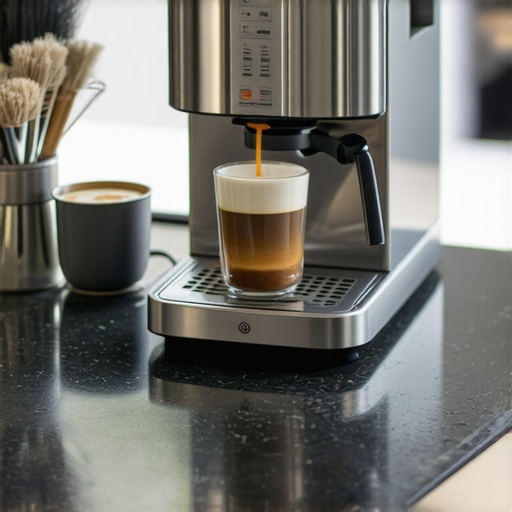
How do I maintain my espresso setup over time?
To keep everything running for a decade, you need to go beyond the surface. For those of us with enthusiast-grade machines, learning how to properly lubricate your E61 group head cam is a game-changer for lever feel and longevity. Beyond mechanical lubrication, your water is the biggest factor. The Specialty Coffee Association (SCA) water standards suggest a total hardness of 50-175 ppm CaCO3 for the best flavor and machine health. I highly recommend you test your machine’s water hardness at home to ensure you aren’t feeding your boiler liquid rock. If your water is too hard, you’re just counting down the days until a massive repair bill.
The tiny tools that change everything
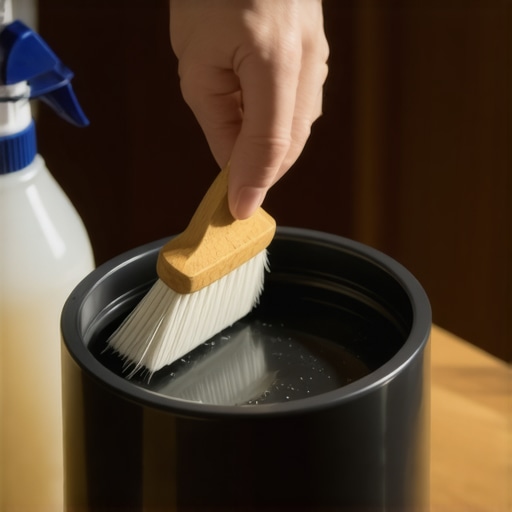
I’m a firm believer in the right tool for the job. Instead of a messy wet rag, I’ve switched to specialized brushes and microfibers. You should also learn how to clean the inside of your steam wand pipe because milk proteins can migrate surprisingly far up the tube. It’s these small maintenance habits—like the move that saves your grinder from unnecessary wear by purging a few beans—that separate a hobbyist from a pro home barista. Looking ahead, I predict we’ll see more barista gear with built-in sensors that alert us to scale buildup or burr dullness before we even taste the difference.
I want you to try one thing tomorrow morning: pull your shower screen and give it a deep clean. You’ll be shocked at the difference in flow consistency. Precision starts with a clean slate, so don’t let a little bit of old coffee oil ruin your hundred-dollar beans.
Hard Truths About Chasing Decimal Points
After years of obsessing over every 0.1 gram, I realized that precision is a mindset, not just a hardware spec. The biggest lightbulb moment for me was accepting that the environment is always in flux. You can’t control the humidity in your kitchen, but you can control your response to it. If you suspect your gear is the culprit, check how to tell if your espresso grinder burrs are dull before blaming the scale’s load cell. I also learned that “ghosting” numbers often come from air currents; sometimes just closing the kitchen window is more effective than buying a more expensive scale. Finally, remember that while the scale helps you repeat success, your palate is the final judge. Don’t let a 0.2g drift ruin your mood if the shot tastes incredible.
Gear and Guides for a Precise Station
I’ve tested dozens of setups, and these are the anchors of my routine. First, the Acaia Lunar remains the gold standard because of its speed, but I always pair it with a heavy silicone base to prevent vibration. If you are still building your setup, my guide on choosing the best barista gear for coffee enthusiasts covers the essentials that actually impact flavor. For the grinder side, I trust the Niche Zero for its low retention, which makes weighing so much easier. If you find your grinds are acting up despite a good scale, you should look into how to clean the grinder chute without taking it apart to ensure every gram you weigh actually makes it into the basket. I also swear by the SCA water standards—consistent water means consistent extraction, regardless of the scale.
Take Back Control of Your Brew
Mastering home espresso is a marathon, not a sprint. It’s easy to feel defeated when your equipment seems to have a mind of its own, but every jumping number is just a data point telling you something about your environment. By isolating vibrations, managing heat, and keeping your gear clean, you turn that finicky scale into a reliable partner. You’ve got the knowledge now—go pull a shot that makes all this troubleshooting worth it. Have you ever had a scale “ghost” on you right in the middle of a perfect pull? Let me know in the comments how you fixed it!