The Move for Better Temperature Stability on Entry-Level Units
I remember standing in my kitchen at 6:30 AM, staring at a shot of espresso that looked more like murky pond water than liquid gold. I had spent twenty minutes prepping, weighing, and tamping, only to be met with a cup that tasted like a sour battery. It was heartbreaking. I’d followed all the tips for beginners, yet my entry-level machine felt like a wild horse I couldn’t tame. The culprit? Temperature. Or rather, the lack of any stability whatsoever. My little boiler was swinging 15 degrees in either direction, and I was just along for the ride. Today, I’m going to show you how to take control back. [image]
Why Your Entry-Level Machine is Lying to You
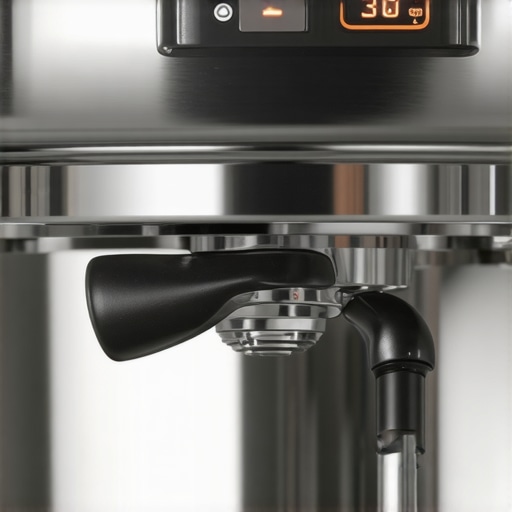
Most budget-friendly units use simple bimetallic thermostats. They’re cheap, but they’re also wildly inaccurate. One second you’re brewing at 190°F, and the next, the heater kicks in and shoots you up to 205°F. This is exactly why your water temperature fluctuates so much. Early on, I made the massive mistake of thinking I could just “time” it perfectly by counting seconds after the light went off. I wasted pounds of expensive beans trying to outsmart a machine that didn’t have the hardware to keep up. I even ignored the benefit of pre-warming your portafilter head, thinking it wouldn’t matter much. I was wrong. These small thermal losses add up fast on a small boiler.
Is chasing stability actually worth the effort?
You might wonder if you should just throw in the towel and save up for a dual-boiler behemoth instead. But here’s the secret: you can actually bridge the gap without spending a fortune. According to the Specialty Coffee Association, even a variance of 1 degree Celsius (about 1.8 degrees Fahrenheit) can noticeably shift the acidity and bitterness of your cup. That means if your machine is swinging by 10 degrees, you have zero chance of consistency. Today, we are diving into the move for better temperature stability that finally fixed my morning routine. Have you ever felt like you were doing everything right, but your machine just refused to cooperate? Let’s get into the practical ways we can stop that cycle once and for all.To get consistency out of a small boiler, you have to treat it like a temperamental stovetop rather than a smart appliance. You cannot simply flip a switch and expect the water to hover at a perfect 200°F. The first core technique is turning your entire machine into a heat sink. This involves running a full ‘blank’ shot—hot water through the portafilter without any coffee—to ensure every piece of metal the water touches is pre-heated. This is a big reason why the first shot of the day is always a throwaway if you skip the warm-up routine. Early on, I thought ten minutes of idle time was plenty, but my shots were consistently thin and sour until I embraced the benefit of pre-warming your portafilter head. The heavy brass of the group head is a thermal vampire; if it is cold, it will suck the heat right out of your brew water before it even hits the coffee puck.
Force the Heater to Work on Your Schedule
Instead of waiting for the machine to tell you it is ready, you need to tell the machine when to heat. This is known as ‘Temperature Surfing.’ Since you already know why your water temperature fluctuates, the goal is to trigger the heating element right before you pull your shot. I do this by engaging the steam switch for a precise five to seven seconds, then turning it off and immediately starting the brew. This ‘surges’ the boiler temperature into the ideal range. I remember one specific Tuesday where I got distracted by a phone call and left that steam switch on for thirty seconds. When I finally hit the brew button, the water came out as a violent, hissing spray that scorched the grounds instantly. The kitchen smelled like a burnt tire, and the espresso was undrinkable. It was a stark lesson that when working with top-rated espresso machines for coffee lovers in 2025 that lack digital controllers, your internal clock is the most important tool you own.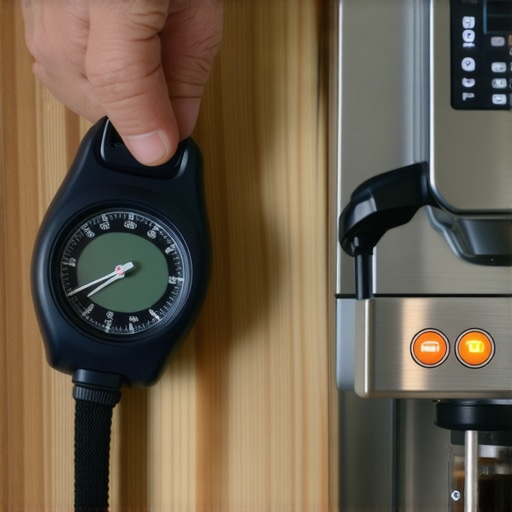
Match Your Grind to the Thermal Reality
Your technique with the beans must adapt to the limitations of the hardware. If you know your machine is running on the cooler side of its cycle, you might be tempted to compensate by grinding finer, but this can lead to channeling. Instead, focus on consistency. Knowing how to select the perfect coffee grinder for your brew is vital because a uniform particle size ensures that the water—even if it is a few degrees off—extracts the coffee evenly. This synergy between the grinder and the boiler is part of the move for better temperature stability that finally made my shots repeatable. Think of your machine like a vintage car; it won’t drive itself, but if you learn its quirks, you can still win the race.One of the biggest lies told in the home barista community is that distilled water is the ‘gold standard’ for machine longevity. It sounds logical: no minerals, no scale, no problems. However, if you are following the truth about using distilled water in your machine, you will realize it is a recipe for flat, hollow espresso and potential hardware failure. Water needs minerals—specifically calcium and magnesium—to ‘grab’ the flavor compounds from the coffee. Without them, you are just drinking hot, brown water. Even worse, ultra-pure water is chemically ‘hungry’ and can actually cause pitting in your metal components. A study by Maxwell Colonna-Dashwood and chemist Christopher Hendon in their book ‘Water for Coffee’ proved that the specific ratio of magnesium to calcium fundamentally alters which acids are extracted. If you have noticed why your espresso shot tastes like paper, your water chemistry is likely the culprit rather than your beans.
Stop trusting your spinny distribution tool
Then there is the common ‘spinning tool’ trap. We have all seen those shiny, adjustable levelers that look so professional. It is easy to think choosing the best barista gear for coffee enthusiasts means buying every gadget available. But why your distribution tool might be ruining your extraction is actually quite simple: they often only groom the top two millimeters of the coffee puck. Underneath that smooth surface, you might have a cavernous mess of uneven density. I used to rely on them religiously until I realized my bottomless portafilter was still spraying wildly. I had to learn the move for better espresso distribution without fancy tools—specifically the Weiss Distribution Technique (WDT)—to truly fix my channeling. These tools are often a cosmetic fix for a structural problem. #IMAGE_PLACE_HOLDER_C#
Can you really taste a three-degree temperature drop mid-shot?
For the advanced brewer, the answer is a resounding yes. A three-degree variance is the difference between a bright, floral acidity and a sharp, vinegary sourness. When working with top-rated espresso machines for coffee lovers in 2025, we often assume the machine handles the heavy lifting, but the thermal mass of your portafilter plays a massive role. If you are struggling with why your milk frother creates bubbles instead of foam or why your shots lack body, you have to look at the micro-interactions of heat. When it comes to milk, people obsess over the ‘whirlpool,’ but they ignore the temperature at which proteins break down. If you have noticed the reason your milk smells like its burning before the temp is right, it is usually because you are re-steaming milk or your wand tip is partially blocked. Precision is not just about the numbers on a screen; it is about the consistency of your workflow. Have you ever fallen into the trap of buying a shiny new tool only to find it made your coffee worse? Let me know in the comments below.
It’s one thing to pull a god-shot once; it’s an entirely different beast to keep that machine performing at peak levels for five or ten years. Most people treat their espresso machine like a toaster—something you plug in and ignore until it breaks. But a boiler is a living environment of heat, pressure, and mineral deposits. If you aren’t careful, that liquid gold will eventually taste like a metallic swamp. I’ve learned the hard way that maintenance isn’t a chore; it’s an insurance policy for your morning sanity. One of the most critical habits I picked up was realizing why your machine needs a backflush every single week. Even if the outside looks pristine, the internal 3-way solenoid valve is likely caked in rancid coffee oils that will ruin the flavor of even the most expensive beans.
Stop the scale before it stops your pump
Scale is the silent killer of the home barista world. If you live in a hard-water area, your boiler is slowly turning into a limestone cave. I’ve seen prosumer machines completely seized because the owner ignored how to tell if your water hardness is damaging your boiler. According to the technical experts at Chris’ Coffee, transitioning to a silicone group gasket is one of the smartest longevity moves you can make; unlike traditional rubber that gets brittle and cracks under constant heat, silicone stays pliable, ensuring you never have to deal with how to replace a group gasket without scratching the chrome after it’s already fused to the metal. It’s these small, proactive swaps that separate the hobbyists from the lifers.
How do I maintain my espresso setup over time?
The secret is a staggered schedule. Daily, you wipe the wand and flush the group. Weekly, you backflush with detergent. Monthly, you look at your grinder. People often forget that the mess-free way to clean a conical burr grinder involves more than just puffing some air into the chute. You need to physically inspect the burrs for chips or oil buildup. If you’ve just upgraded, don’t forget the best way to season new grinder burrs fast—running a few pounds of cheap, stale beans through them will smooth out the factory edges and lead to much more consistent shots immediately. 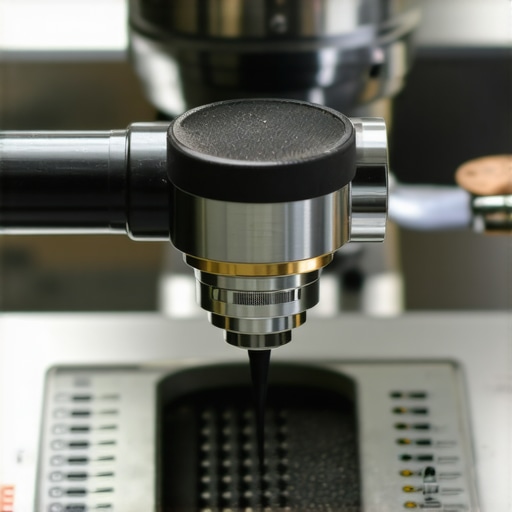
The future of home espresso is data-driven
Looking ahead, I see the industry moving away from the ‘guessing game’ of old-school machines. We are already seeing the rise of smart-scales that talk to your grinder and machines with built-in flow profiling. While it’s fun to geek out on choosing the best barista gear for coffee enthusiasts, the real win is in the workflow. I’ve spent way too much time hunting for a specific tool, so learning how to organize your barista tools in a single drawer was a genuine game-changer for my 15-minute morning window. Before you buy another gadget, I challenge you to try this: pull a shot, then immediately backflush your machine with water and see what comes out. If the water isn’t crystal clear, your machine is holding onto the past—and it’s time to get cleaning.
What I Finally Realized About the Espresso Learning Curve
After years of wrestling with boilers and burrs, I’ve had one major lightbulb moment: the machine is a tool, but you are the conductor. Most beginners blame their hardware when their coffee tastes off, but often it’s a simple matter of workflow. I spent months frustrated until I looked into why your espresso shot tastes salty and how to fix it, realizing my yield was simply too low for the temperature I was running. Another hard-learned truth? Don’t let your tools become a crutch. While the move for more consistent puck compression will save your extraction, it only works if you’ve handled the basics of heat management first. True mastery is knowing your machine’s personality—its quirks, its warm-up time, and even the way it sounds when the pump is struggling. It is about the subtle feedback the gear gives you every morning. [image]
The Gear and Guides That Actually Moved the Needle
If you’re looking to deepen your knowledge, there are a few resources I swear by. First, always go back to the basics with mastering the art of home espresso tips for beginners; it’s easy to forget the foundation when you’re chasing advanced profiles. For hardware, I’ve found that choosing the best barista gear for coffee enthusiasts isn’t about buying the most expensive item, but the one that fits your specific workflow. If you’re struggling with texture, I highly recommend checking out the secret to silky microfoam on a single boiler machine. I trust these methods because they focus on physics and chemistry rather than marketing hype. Lastly, keep your space tidy—using the trick for getting ground coffee out of tight corners keeps your station from becoming a grimy mess that affects your mood and your coffee quality.
Your Journey Toward the Perfect Morning Cup Starts Now
The beauty of this hobby is that there is always something new to learn, whether it’s a better way to steam milk or a more efficient cleaning routine. Even if you aren’t using the latest top-rated espresso machines for coffee lovers in 2025, you can still produce world-class coffee in your own kitchen by mastering the variables you can control. Don’t be afraid to fail, to pull a sour shot, or to make a mess; it’s all part of the process that leads to that one perfect, syrupy extraction. Home espresso is as much about the ritual as it is about the caffeine. Have you ever struggled with your machine’s temperature fluctuating mid-shot? Let me know in the comments below!