Why Your Grinder’s Static Gets Worse in Winter
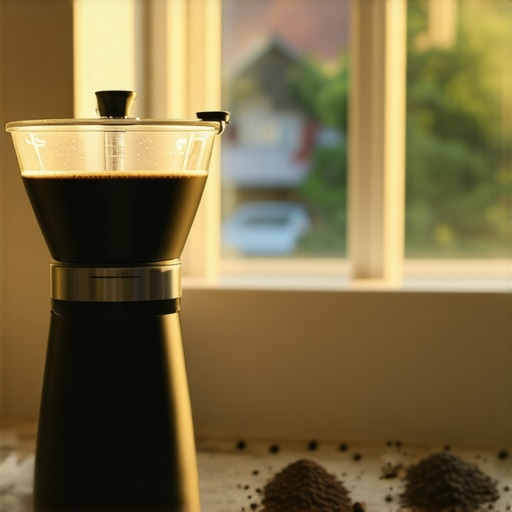
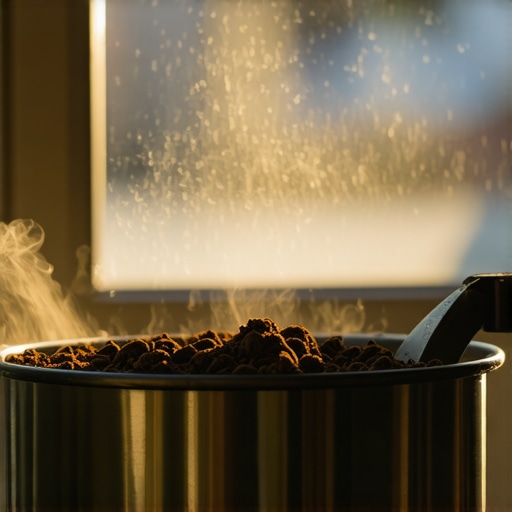
The sun hadn’t even come up, but there I was, staring at my portafilter in disbelief. Instead of a neat mound of fluffy grounds, my counter looked like a scene from a coffee-themed horror movie. Tiny brown flakes were clinging to the hopper, the underside of the cabinet, and even my own forearms. It was mid-January, and my usually reliable setup had turned into a static-fueled nightmare. If you’ve ever felt that spike of frustration when your morning ritual turns into a 15-minute cleanup session, you’re not alone. I’ve been there, wiping grounds off my shoes before I’ve even had a sip of espresso, and I promise there is a way to reclaim your clean workspace.
The Invisible Culprit Ruining Your Morning Workflow
The reason your beans are suddenly behaving like rebellious teenagers is actually simple physics. When the temperature drops, the moisture in the air vanishes. Dry air is a perfect insulator, meaning the static electricity generated by those spinning burrs has nowhere to go but… everywhere. I remember when I first started out, I thought my equipment was failing. I actually spent an hour trying to clean the grinder chute thinking it was just a simple clog. Big mistake. I even once tried to wipe the chute with a dryer sheet, which made my coffee taste like synthetic lavender for a week. It turns out, the problem wasn’t my gear—it was the physics of the season. Today, we are going to fix that mess once and for all. We’ll look at why choosing the perfect coffee grinder involves understanding your local climate just as much as the motor specs.
Is a high-end grinder actually worth the investment if it still makes a mess?
Look, I get it. You might have spent a month’s rent on top-rated barista gear, and it’s still acting up. You might be wondering if those expensive burrs are even helping. While premium machines often have better grounding, nothing is 100% immune to the laws of nature. According to findings published in the Journal of Electrostatics, the absence of surface moisture in low-humidity environments allows static charges to accumulate rapidly on organic particulates like coffee. This is exactly why your burr grinder is throwing chaff everywhere even if it worked perfectly back in July. Have you noticed your grounds sticking to the sides of your dosing cup like they’re magnetized lately? I’m going to show you how a single drop of water can be the best tool in your arsenal to stop static from ruining your workflow without spending a dime on new equipment. It’s time to stop the ‘coffee snow’ and get back to the craft.
The One-Drop Solution That Actually Works
The single most effective weapon against the winter static nightmare is a method known as the Ross Droplet Technique, or RDT. It sounds like high-level lab science, but it’s essentially just adding a microscopic amount of moisture to your beans before they hit the burrs. This moisture acts like a bridge, allowing the static electricity to dissipate rather than building up and turning your coffee into a chaotic cloud of dust. When you how to stop static from ruining your grinding workflow, you realize that you don’t need fancy anti-static ions or expensive machinery—you just need a tiny spray bottle. I remember the first time I heard about this; I was skeptical. I actually dipped a teaspoon handle into water and stirred my beans with it. I was way too heavy-handed, and the water turned the first few grams of my dose into a sticky paste that gummed up my machine. I had to spend the next hour learning the mess free way to clean a conical burr grinder because I’d essentially made coffee cement. The key is a fine mist, not a soak.
Mastering the Art of the Shake
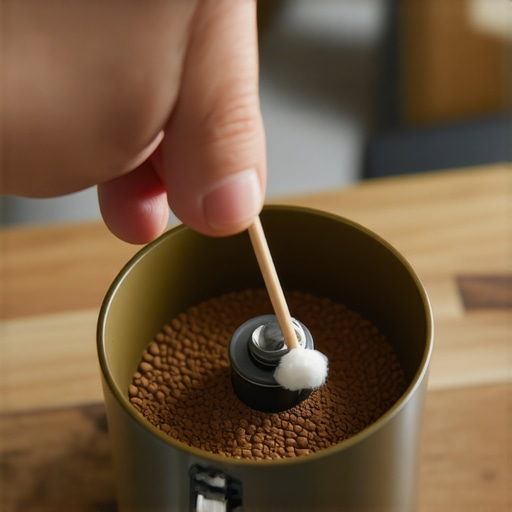
To do this right, place your beans in a dosing cup or small container. Give them one—and only one—spritz from a small atomizer filled with filtered water. If you don’t have a spray bottle, the ‘wet finger’ method works too: just dampen your finger and stir the beans. You want the beans to look slightly glossy, not wet. Once misted, shake the container vigorously. This ensures the moisture is distributed evenly across every single bean. This simple the move that saves your grinder from unnecessary-wear also prevents internal clumping. When the beans pass through the burrs, the humidity level inside the grinding chamber remains just high enough to keep the grounds falling straight down into your basket. If you are mastering the art of home espresso tips for beginners, you’ll find that this one-second step eliminates about 90% of your cleanup time.
Don’t Let Your Equipment Fight You
Sometimes the static isn’t just about the beans; it’s about the friction caused by misaligned parts. If your burrs aren’t sitting perfectly flush, they can generate more heat and friction than necessary, which supercharges the static effect. This is why learning the right way to align your flat burrs for better shots is crucial for more than just extraction quality—it’s about workflow sanity. Also, consider the material of your dosing cup. Plastic is a notorious static magnet. Switching to a stainless steel dosing cup can help ground the charge before the coffee ever reaches your portafilter. If you still see grounds jumping around, it might be time to check if how to tell if your espresso grinder burrs are dull, as dull burrs shatter the beans rather than cutting them, creating more fine dust and, consequently, more static surface area. By combining RDT with properly maintained gear, you turn a frustrating morning mess into a clean, professional ritual.The sun hadn’t even come up, but there I was, staring at my portafilter in disbelief. Instead of a neat mound of fluffy grounds, my counter looked like a scene from a coffee-themed horror movie. Tiny brown flakes were clinging to the hopper, the underside of the cabinet, and even my own forearms. It was mid-January, and my usually reliable setup had turned into a static-fueled nightmare. If you’ve ever felt that spike of frustration when your morning ritual turns into a 15-minute cleanup session, you’re not alone. I’ve been there, wiping grounds off my shoes before I’ve even had a sip of espresso, and I promise there is a way to reclaim your clean workspace.
The Invisible Culprit Ruining Your Morning Workflow
The reason your beans are suddenly behaving like rebellious teenagers is actually simple physics. When the temperature drops, the moisture in the air vanishes. Dry air is a perfect insulator, meaning the static electricity generated by those spinning burrs has nowhere to go but… everywhere. I remember when I first started out, I thought my equipment was failing. I actually spent an hour trying to clean the grinder chute thinking it was just a simple clog. Big mistake. I even once tried to wipe the chute with a dryer sheet, which made my coffee taste like synthetic lavender for a week. It turns out, the problem wasn’t my gear—it was the physics of the season. Today, we are going to fix that mess once and for all. We’ll look at why choosing the perfect coffee grinder involves understanding your local climate just as much as the motor specs.
Is a high-end grinder actually worth the investment if it still makes a mess?
Look, I get it. You might have spent a month’s rent on top-rated barista gear, and it’s still acting up. You might be wondering if those expensive burrs are even helping. While premium machines often have better grounding, nothing is 100% immune to the laws of nature. According to findings published in the Journal of Electrostatics, the absence of surface moisture in low-humidity environments allows static charges to accumulate rapidly on organic particulates like coffee. This is exactly why your burr grinder is throwing chaff everywhere even if it worked perfectly back in July. Have you noticed your grounds sticking to the sides of your dosing cup like they’re magnetized lately? I’m going to show you how a single drop of water can be the best tool in your arsenal to stop static from ruining your workflow without spending a dime on new equipment. It’s time to stop the ‘coffee snow’ and get back to the craft.
The One-Drop Solution That Actually Works
The single most effective weapon against the winter static nightmare is a method known as the Ross Droplet Technique, or RDT. It sounds like high-level lab science, but it’s essentially just adding a microscopic amount of moisture to your beans before they hit the burrs. This moisture acts like a bridge, allowing the static electricity to dissipate rather than building up and turning your coffee into a chaotic cloud of dust. When you how to stop static from ruining your grinding workflow, you realize that you don’t need fancy anti-static ions or expensive machinery—you just need a tiny spray bottle. I remember the first time I heard about this; I was skeptical. I actually dipped a teaspoon handle into water and stirred my beans with it. I was way too heavy-handed, and the water turned the first few grams of my dose into a sticky paste that gummed up my machine. I had to spend the next hour learning the mess free way to clean a conical burr grinder because I’d essentially made coffee cement. The key is a fine mist, not a soak.
Mastering the Art of the Shake
To do this right, place your beans in a dosing cup or small container. Give them one—and only one—spritz from a small atomizer filled with filtered water. If you don’t have a spray bottle, the ‘wet finger’ method works too: just dampen your finger and stir the beans. You want the beans to look slightly glossy, not wet. Once misted, shake the container vigorously. This ensures the moisture is distributed evenly across every single bean. This simple the move that saves your grinder from unnecessary-wear also prevents internal clumping. When the beans pass through the burrs, the humidity level inside the grinding chamber remains just high enough to keep the grounds falling straight down into your basket. If you are mastering the art of home espresso tips for beginners, you’ll find that this one-second step eliminates about 90% of your cleanup time.
Don’t Let Your Equipment Fight You
Sometimes the static isn’t just about the beans; it’s about the friction caused by misaligned parts. If your burrs aren’t sitting perfectly flush, they can generate more heat and friction than necessary, which supercharges the static effect. This is why learning the right way to align your flat burrs for better shots is crucial for more than just extraction quality—it’s about workflow sanity. Also, consider the material of your dosing cup. Plastic is a notorious static magnet. Switching to a stainless steel dosing cup can help ground the charge before the coffee ever reaches your portafilter. If you still see grounds jumping around, it might be time to check if how to tell if your espresso grinder burrs are dull, as dull burrs shatter the beans rather than cutting them, creating more fine dust and, consequently, more static surface area. By combining RDT with properly maintained gear, you turn a frustrating morning mess into a clean, professional ritual.
Stop Chasing Gear and Start Managing Variables
Many people think that throwing four figures at top-rated espresso machines for coffee lovers in 2025 will magically fix their sour shots. It’s a comforting lie. In reality, the more sophisticated your gear, the more it demands from you in terms of maintenance and environmental awareness. I’ve seen enthusiasts spend thousands only to wonder why your shot extraction time changes every single day. The truth is, your machine is a delicate instrument, not a toaster. One of the biggest traps is the ‘Set and Forget’ mentality. You spend an hour learning how to calibrate your machines volumetric settings and assume you’re done for the month. But did you account for the beans degassing or the change in humidity? Professional baristas aren’t just pushing buttons; they are constantly ‘dialing in.’ If you aren’t prepared to adjust your grind daily, even the best gear will produce mediocre results.
Why does the first shot of the day always taste like battery acid?
This is where the ‘oops’ factor really hits home. Many home baristas wake up, wait for the light to turn green, and pull their first shot. It’s almost always a disaster. This happens because old coffee grounds from the previous day are still sitting in your grinder’s chute, and the water in the group head hasn’t reached thermal equilibrium. I’ve learned the hard way that why the first shot of the day is always a throwaway is a rule, not a suggestion. Then there’s the water. You might think tap water is fine, but the chemistry is brutal. Research by Maxwell Colonna-Dashwood in ‘Water For Coffee’ demonstrates how specific ion balances dramatically alter extraction efficiency. If you aren’t careful, you’ll find yourself researching how to tell if your water hardness is damaging your boiler sooner than you think. 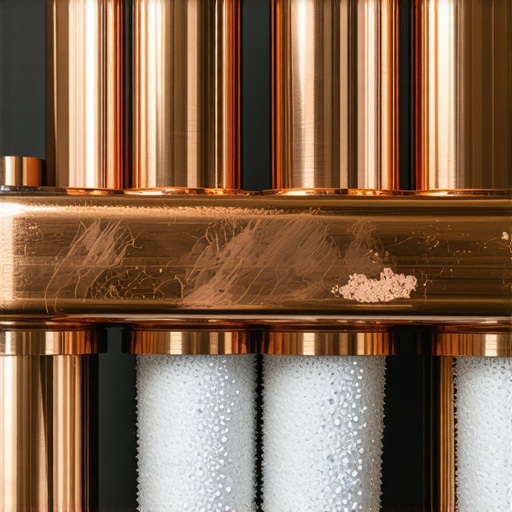 Please, don’t just switch to pure distilled water—the truth about using distilled water in your machine reveals that it can actually leach minerals from your metal components, potentially becoming the reason your espresso machine is tripping the breaker. Have you ever fallen into the trap of thinking a new gadget would fix a technique problem? Let me know in the comments. We’ve all been there, and usually, the fix is much cheaper than a new machine.
Spend Twenty Minutes Now to Save Two Hundred Dollars Later
I used to think that as long as the water was hot and the pump was humming, my machine was happy. I was wrong. The reality of high-end top-rated barista gear is that it’s essentially a high-pressure plumbing system that lives in a state of constant chemical warfare. Coffee oils are incredibly sticky and, over time, they turn into a rancid varnish that coats your shower screen and internal valves. I didn’t realize this until my shots started tasting like burnt rubber. Now, I follow the best routine for a weekend deep clean religiously. This includes using a blind filter and specialized detergent to purge those oils. If you skip this, you’ll eventually find out why your machine needs a backflush every single week the hard way—usually when a solenoid valve sticks and sprays hot water all over your counter.
How do I keep my gear running like day one for a decade?
The secret to longevity isn’t expensive upgrades; it’s preventative parts replacement. Most people wait until they see a leak to act, but I prefer a proactive approach. Every six months, I swap out my group gasket. It’s a five-minute job, but learning how to replace a group gasket without scratching the chrome saved me from a massive headache when the old rubber inevitably turned into brittle plastic. Jim Schulman, a veteran contributor to the Home-Barista community, famously notes that ‘scale is the silent killer of heat-exchanger boilers,’ often causing thermal imbalances long before the machine actually stops working. This is why you must learn how to tell if your water hardness is damaging your boiler. I personally use a BWT Bestsave pouch in my reservoir to pull minerals out of the water before they ever hit the heating element. It’s a low-tech solution that prevents high-cost repairs. 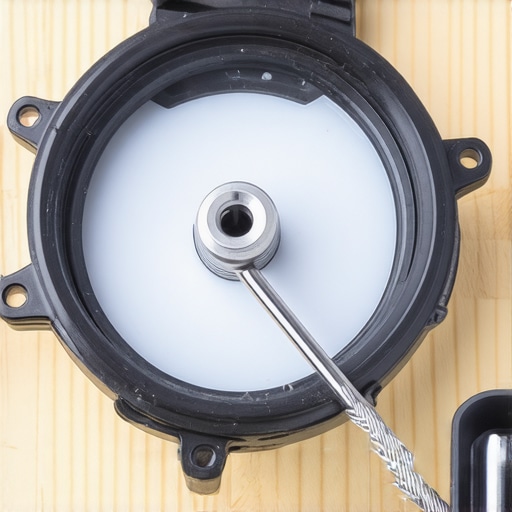
Don’t Ignore the Gunk Hiding in Your Steam Wand
If you’ve noticed your milk isn’t quite as silky as it used to be, the culprit is likely a buildup of milk proteins inside the tip. This is a common issue when people wonder why your milk frother creates bubbles instead of foam. I make it a point to purge the wand for at least three seconds both before and after every use. Even then, once a month, I soak the tip in a milk-specific cleaning solution. This is especially important for the secret to silky microfoam on a single boiler machine where the steam pressure might be lower. Looking ahead, I suspect we are going to see a massive shift toward AI-integrated maintenance sensors in top-rated espresso machines for coffee lovers in 2025. We’re already seeing grinders that can detect burr wear, and soon, your machine will likely send a notification to your phone the second it detects even a milligram of scale buildup. For now, we have to rely on our own eyes and a solid routine. Before you pull your next shot, take a look at your shower screen—if it isn’t sparkling, take five minutes to scrub it. Your taste buds will thank you.
It took me several years of messy counters and sour shots to realize that high-end equipment doesn’t make the coffee—the barista’s habits do. While we’ve covered the physics of static and the necessity of cleaning, the real breakthrough happens when you stop fighting your equipment and start working with its quirks.
The Hardest Lessons I Learned Managing High-End Gear
- Consistency is a moving target: I used to think I could dial in once a week. The reality is that why your shot extraction time changes every single day is often due to subtle shifts in humidity or bean age. Now, I adjust my grind slightly every single morning without fail.
- Mechanical sympathy saves money: I used to crank my portafilter until it was tight, not realizing why your portafilter handle should never be tightened too far until I crushed my group gasket in record time. Gentle pressure is always better.
- Tools are not a substitute for technique: If your puck prep is sloppy, a fancy leveler won’t save you. In fact, why your distribution tool might be ruining your extraction usually comes down to uneven density beneath the surface that no tool can fix from the top.
My Non-Negotiable Kit for a Flawless Setup
Over the years, I have narrowed down my toolkit to a few items that I believe are essential for anyone serious about the craft. First, a dedicated spray atomizer for RDT is mandatory—it is the only way to effectively stop static from ruining your grinding workflow. Second, I swear by a high-quality stainless steel dosing cup; it is far superior to plastic for grounding static charges. Finally, I never start a session without a clean microfiber cloth. It sounds simple, but how to stop using a wet cloth on your steam wand and switching to a dedicated dry-steam-purge routine was a game-changer for my milk texture. These small choices are what allow you to achieve the secret to a perfect flat white at home every single time.
Your Journey to the Perfect Home Cafe Starts Today
The transition from a coffee drinker to a home barista is a journey of a thousand small adjustments. Don’t be discouraged by a messy counter or a shot that doesn’t hit the mark. Every mistake is just data that helps you better understand your top-rated barista gear. By maintaining your equipment and respecting the variables, you turn a morning chore into a rewarding ritual. Your setup is an extension of your craft—treat it well, and it will reward you with the best coffee of your life. Have you ever struggled with a messy grinder or a sour first shot? Let me know in the comments below!